




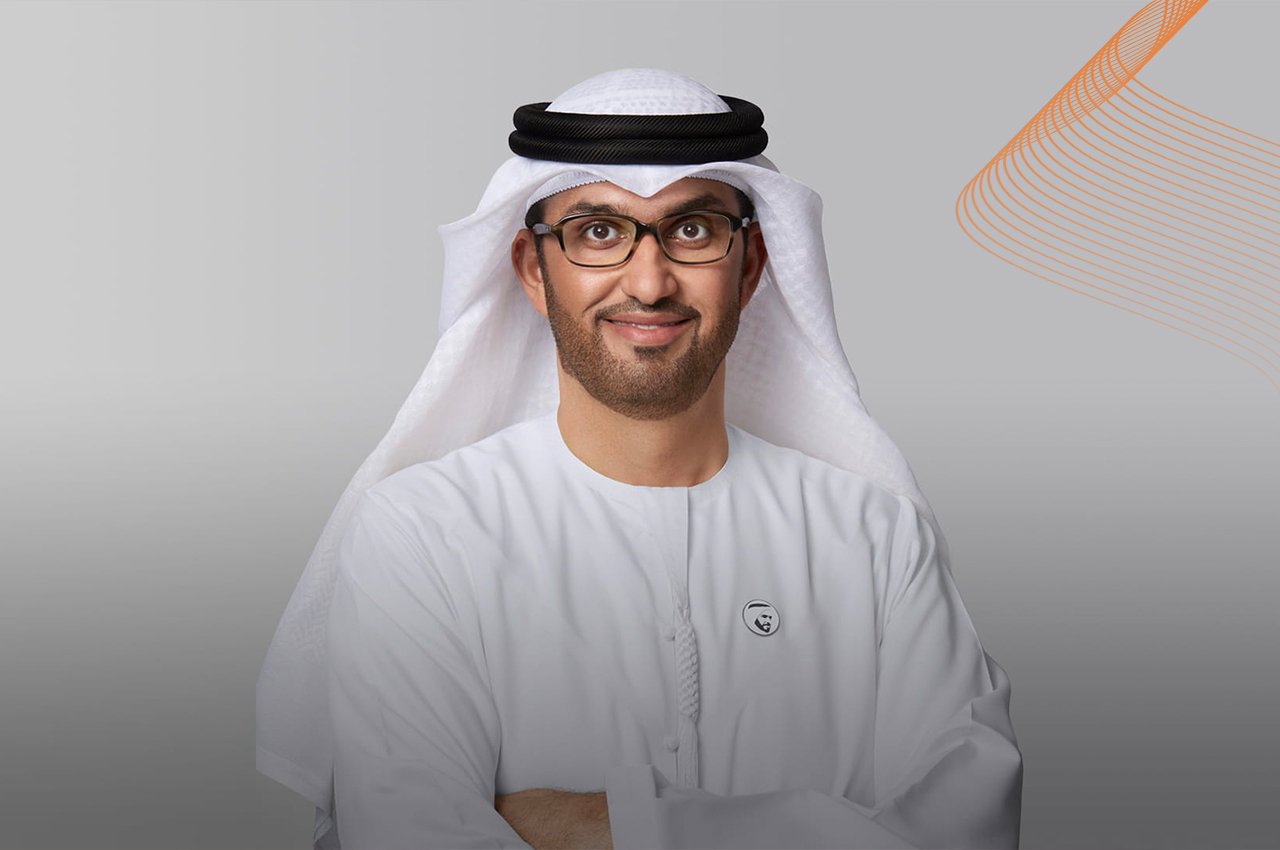
The transformation of the Abu Dhabi National Oil Company (ADNOC) from a typical state-owned oil producer into a diversified global energy giant is one of the most remarkable corporate and economic changes in recent history. Under His Excellency Dr. Sultan Ahmed Al Jaber, Minister of Industry and Advanced Technology, Group CEO of ADNOC, the enterprise has set the benchmark for what a national oil company can accomplish, under the leadership of the UAE government.Led by the strategic vision of His Excellency the UAE government’s leadership, the enterprise has set the benchmark for what a national oil company can accomplish under His Excellency Dr. Sultan Ahmed Al Jaber, Minister of Industry and Advanced Technology and Group CEO of ADNOC. The UAE has firmly positioned itself as a non-negotiable pillar of global energy security by combining a relentless focus on sustainability, structural financial changes and investments, and a strategic mix of aggressive production with state-of-the-art digital technology.
The Visionary Blueprint: From Local Producer to Global Enterprise
National oil companies operated in the upstream sector for decades, mainly as extractors. With the visionary leadership of the UAE, however, a blueprint has been drawn up to shield the national economy from any volatility in the markets and to make the most of the country’s enormous hydrocarbon reserves that have a reserve life of more than ninety years.
Dr. Sultan Al Jaber led by example in a comprehensive transformation of the corporation and the removal of institutional barriers, linking up all activity within the hydrocarbon value chain. This represented a paradigm shift for ADNOC, shifting from being just an oil-digging entity into a full powerhouse in the upstream exploration, midstream logistics, high-end (downstream) refining, petrochemicals production, and global gas and liquefied natural gas trading businesses.
Infrastructure at Scale: The Ruwais Complex and Strategic Pipelines
Unparalleled infrastructure is the core of this change. The Ruwais Industrial Complex has grown into the world’s largest single integrated downstream industrial site, with billions of dollars in capital investments. Ruwais is the industrial hub, fueling Abu Dhabi’s economic diversification, by producing advanced petrochemicals, refined products and specialized materials.
To complement this manufacturing epicentre is the vast length of more than three thousand five hundred kilometres of subsea and onshore pipelines that connect remote offshore and onshore fields straight to processing hubs and export terminals. The physical web offers an unprecedented level of operational agility, enabling ADNOC to rapidly reallocate resources and respond to ever-changing demand cycles across the world with pinpoint accuracy.
Financial Innovation and the IPO Revolution
One of the most dramatic changes made under Dr. Al Jaber’s leadership is the modernization of ADNOC’s capital structure by way of a series of first-of-its-kind initial public offerings. Through an alternative financing approach, which is not state-funded, ADNOC tapped into the private capital markets through the listing of ADNOC Distribution, ADNOC Drilling, ADNOC Gas and Borouge, key subsidiaries of ADNOC.
This is a multi-billion dollar IPO craze that served multiple purposes at once. Billions of dollars of proceeds were raised with the best possible use of capital assets and the development of a diverse international institutional and retail investor base. Transparency in valuation made Abu Dhabi a top capital markets centre for the worldwide energy industry, topped by the combined market values of listed companies that exceed fifty billion dollars. The company was infused with commercial rigor and high standards of corporate governance, through public-market accountability.
Pioneering the AI-Native Energy Ecosystem
With the global industries on a digital transformation frenzy, ADNOC has been at the very top of the AI integration race. The company’s philosophy is that technology can bring unprecedented efficiencies and they deploy their Panorama Digital Command Center together with advanced AI models and autonomous operation to optimise the performance from end-to-end.
Through scaling up its artificial intelligence capabilities, including partnerships to implement cutting-edge frontier artificial intelligence models, ADNOC has been able to significantly reduce number of unplanned operational shutdowns, increase safety for the worksite, and generate hundreds of millions of dollars in recurring annual savings and cost reductions. The data-driven approach has transformed ADNOC into one of the world’s most agile and lean operators, which manifests in a highly optimized operational friction.The data-driven approach has been a game-changer for ADNOC and has made it one of the leanest and most agile operators in the world, with a highly optimized operational friction.
Balancing Production Growth with Ambitious Decarbonization
One central tenet of Dr Al Jaber’s leadership philosophy, which he has also demonstrated during his tenure leading COP twenty-eight, has been the conviction that energy security and climate action can go hand in hand. Despite its ambitious plans to increase crude oil production to 5 million bpd and expand its footprint worldwide in gas and liquefied natural gas, ADNOC continues to have some of the lowest GGHs and methane intensities in the global industry.
The core pillars of ADNOC’s holistic decarbonisation strategy are a number of groundbreaking initiatives. Clean grid integration includes the transition of a large share of onshore activities to clean energy grid power. Carbon capture, utilization, and storage (CCUS) expands commercial-scale carbon capture facilities to capture millions of tonnes of CO₂ a year and permanently store it underground in saline aquifers. Satellite imaging, aerial drones and automated robotic leak detection reduce methane intensity to near zero by detecting methane.
At the same time, the UAE as a whole is developing the energy system of tomorrow, via renewable energy investment mechanisms such as Masdar, whose vision is to create one hundred gigawatts of clean energy capacity.
Frequently Asked Questions
Q1. Who is the CEO of ADNOC?
A1. As Minister of Industry and Advanced Technology for the United Arab Emirates, His Excellency Dr. Sultan Ahmed Al Jaber is also the Group Chief Executive Officer of the Abu Dhabi National Oil Company.
Q2. How did ADNOC become a global energy company?
A2. The company transformed itself from an upstream producer to a global powerhouse by developing the downstream operations at Ruwais, introducing partnerships with foreigners and selling its subsidiaries with a successful IPO, while also expanding into liquefied natural gas and clean energy.
Q3. What is ADNOC’s role in the UAE economy?
A3. ADNOC is the main contributor to the United Arab Emirates economy, contributing significantly to the government’s revenue, advanced and modern petrochemicals industry and providing thousands of skill-based technical employment.
Q4. How is ADNOC addressing climate change and clean energy?
A4. ADNOC has an ambitious decarbonisation plan, which includes the integration of clean grid power, large-scale CCS projects, near zero methane emission targets and significant investments in renewables through projects such as Masdar.
Conclusion: A Resilient Legacy for the Future
The transformation of ADNOC under the UAE leadership and Dr. Sultan Ahmed Al Jaber is a masterclass in strategic foresight. By prioritizing operational excellence, embracing cutting-edge digital intelligence, diversifying downstream and international portfolios, and maintaining an unwavering commitment to sustainable growth, ADNOC has rewritten the playbook for national energy companies. As global energy markets navigate a complex transition, Abu Dhabi stands firmly established not just as a regional oil producer, but as a resilient, future-ready global energy powerhouse.
Follow Dubai Key Insights for more news.