





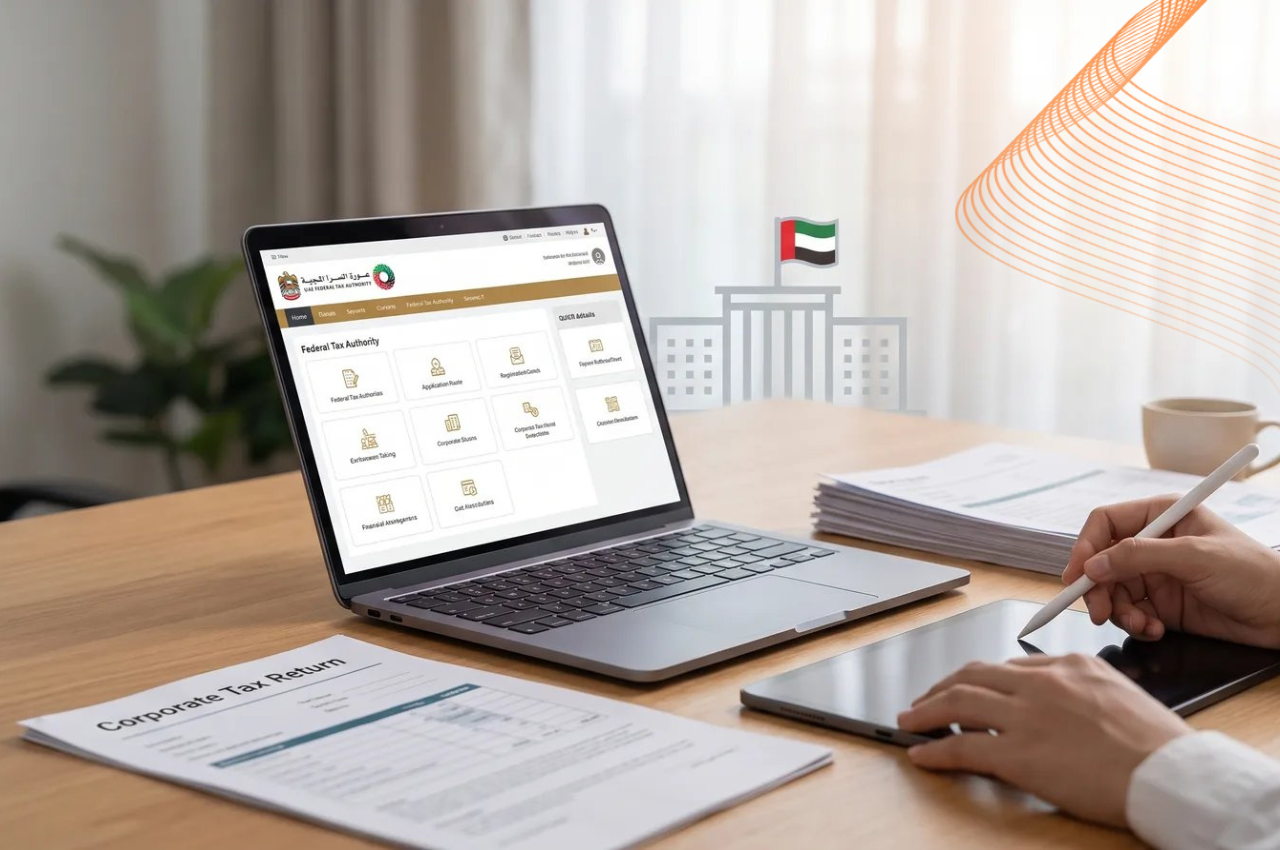
Understanding UAE corporate taxes is crucial for any business operating in the UAE. As a business owner in Dubai or any other part of the UAE, it’s crucial to grasp the UAE corporate tax return 2026 filing process. The Federal Tax Authority (FTA), commonly referred to as the Authority, has created a simple and up-to-date system to introduce transparency and financial discipline within corporate entities. When you begin to break down what you need to do tax wise, it shouldn’t seem daunting anymore.
Many business owners ask themselves, What is the practical problem of getting their taxations submitted successfully in a smooth way? As a sole trader, established mainland business or a free zone business, correct filing of corporate tax UAE can save you time, stress and financial penalties. This comprehensive guide gives you all the information you need to know about UAE corporate tax filing 2026 to navigate the official portal with ease.
Understanding UAE Corporate Tax Fundamentals for 2026
The country’s law on corporate tax provides a level playing field and generates revenue diversity for the country. As per current regulations a standard corporate tax rate of 9% will apply to taxable income above AED 375,000. To help businesses grow and smaller businesses thrive, any AED 375,000 or less of taxable income will be taxed at 0%.
All UAE corporate tax return filings are done digitally, using the official FTA corporate tax return UAE portal. The first step in your path towards compliance is determining who is a taxable person or not. Corporate tax generally applies to most juridical persons established in the UAE and foreign companies with a permanent establishment in the UAE and foreign companies with state-sourced income.
Who Needs to File Corporate Tax in UAE?
One of the most frequently misunderstood aspects is that if a business has no profit or no revenue then there’s no obligation to report. In fact, all legal entities are required to file a tax return each year.
- Limited Liability Companies (LLCs): All onshore mainland LLC companies incorporated across any emirate.
- Free Zone Entities: Free zone businesses, regardless of whether they qualify for specialized tax incentives or standard rates.
- Sole Proprietors & Freelancers: Business operators with a commercial licence or who are undertaking activities that exceed the prescribed legal requirements.
- Foreign Branch Offices: Foreign companies operating within the UAE through a branch or permanent establishment.
- Real Estate & Investment Entities: Commercial real estate entities and special purpose entities with operating businesses.
Federal Tax Authority corporate tax regulations require preparing a return, even if your business is ineligible for certain reliefs and made no profit in the financial period.
Deadlines and Filing Timelines You Must Keep in Mind
When it comes to tax compliance, timing is everything. The Corporate tax UAE 2026 deadline is directly linked to the end date of the financial year. In general, the taxable persons are given a term of 9 months from the end of the tax period to submit their return and pay the balance of tax.
The corporate tax return due date UAE 2026 is September 30 for businesses that have a standard calendar year ending on Dec. 31. If you have a financial year that ends on March 31, your deadline to file is December 31. Failure to be compliant during these windows results in automatic compliance measures. With knowledge of the corporate tax return deadline UAE 2026, your accounting team can get ready in advance to prepare financial statements.
Documents and Financial Records Required Before Filing
It’s easier to submit your paperwork online if you prepare it beforehand. When you have books of account that you can go back and get, you won’t have all of these errors when you file them at the last minute.
Typical documents you need to get organised are audited/certified financial statements, profit and loss statements, balance sheets, trial balances, copies of commercial licenses, corporate structure information, and easy-to-follow visibility of related party transactions. If the books follow industry recognised tax accounting practices such as IFRS or IFRS for SMEs, your tax calculations are likely to be able to withstand the scrutiny of the tax authorities.
Step-by-Step Guide: Filing Your Return on EmaraTax Portal
The official online platform is used for submitting your corporate tax declaration. To access the UAE Corporate Tax portal (EmaraTax) step by step:
Step 1: Access the EmaraTax Portal
The first step is to open your web browser and go to the official Federal Tax Authority website. Log in to EmaraTax portal UAE using your existing account or via UAE PASS secure credentials.
Step 2: Select Your Registered Entity
After logging into main dashboard, you will see the Corporate Tax tile. If you have multiple user profiles with trade licenses, choose the user profile to which you wish to file for a specific taxable person. Make sure that your corporate tax registration 2026 is correct.
Step 3: Initiate the Tax Return Form
Click on “Create Return” for the current tax period in the “Returns” section of your corporate tax dashboard. Baseline registration information and business parameters are automatically filled out.
Step 4: Input Financial Information & Revenue Figures
Input your actual profit or loss, as reported on your financial statements. This accounting profit base is the starting point in calculating the UAE corporate tax.
Step 5: Apply Deductions, Reliefs, and Adjustments
Adjust Profits using the following factors: Non-deductible commercial expenses, UAE corporate tax deductions available, Carrying forward available losses. For taxable revenue less than AED 3 million, and for those who qualify for Small Business Relief, choose this treatment at this stage.
Step 6: Review, Attach Documents, and Submit
Always double check all numbers entered into. Add required financial statements/schedule break downs as prompted and accept the legal declaration and click submit. Download and safely store your official submission acknowledgment receipt
Special Provisions for Free Zones, SMEs, and Industry Sectors
The UAE tax framework provides clear guidelines tailored to different operational structures:
- Free Zone Companies: Free zone businesses may benefit from a 0% rate on qualifying income if they meet qualifying free zone person (QFZP) criteria, maintain adequate substance, and comply with transfer pricing rules. Non-qualifying income remains subject to the standard 9% rate.
- Small Businesses and SMEs: Small business relief allows qualifying residents with gross revenue under AED 3 million in a tax period to be treated as having no taxable income, simplifying reporting for growing startups and local services.
- Specialized Sectors: Industries like real estate, holding companies, restaurants, and international trading companies operate under specific guidelines regarding dividend exemptions, capital gains rules, and expense deductibility.
Penalties and How to Avoid Common Filing Mistakes
Failing to submit on time or entering inaccurate figures leads to compliance penalties. The standard UAE corporate tax penalty late filing starts at AED 500 per month for the first twelve months and increases to AED 1,000 per month thereafter. Additional penalties apply for late tax payments or incorrect declarations.
To keep your entity fully compliant, verify all financial numbers before hitting submit, maintain records for at least seven years, and stay informed on official updates published by the Federal Tax Authority.
Frequently Asked Questions (FAQs)
Q1. Can I file UAE corporate tax myself?
A1. Yes, small business owners and sole proprietors can complete their submission directly using the official online platform. However, if your operations involve complex structures, related party transactions, or free zone qualification, working with a qualified tax agent is highly recommended.
Q2. Is corporate tax applicable to free zones UAE?
A2. Yes, free zone companies must register and submit an annual return. While qualifying free zone entities can access a 0% tax rate on qualifying income, filing the return remains mandatory.
Q3. How does the UAE corporate tax loss carry forward work?
A3. Taxable entities can carry forward tax losses to offset future taxable income up to a maximum limit of 75% of the taxable income in subsequent periods, provided ownership and activity conditions are met.
Q4. What happens if I miss the UAE corporate tax deadline?
A4. Missing your deadline results in automatic financial penalties for late filing. Unpaid tax liabilities also accrue monthly late payment fines until the balance is settled.
Plan Ahead for Seamless Tax Compliance
Managing your corporate tax obligations smoothly comes down to organization, early record preparation, and a clear understanding of the digital filing process. By gathering your financial statements, keeping track of your deadlines, and utilizing the official portal correctly, you ensure your business remains compliant while avoiding unexpected penalties. Stay ahead of your tax calendar today by organizing your financial records early and reviewing your eligibility for applicable reliefs.
Follow Dubai Key Insights for more news.