





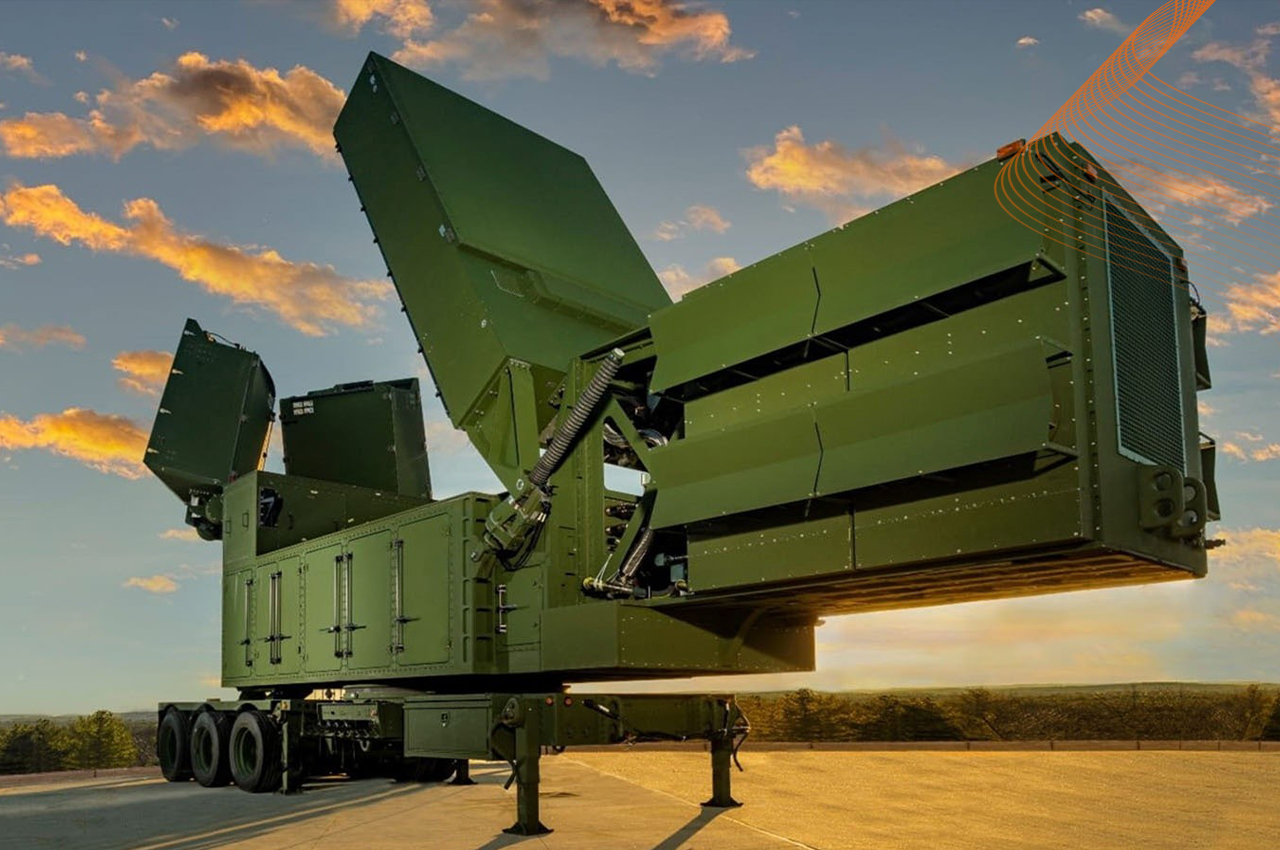
In 2026, the UAE is at the heart of the latest advancements in military technology. The UAE has been busy in the region, strengthening its borders with an elaborate multi-layered air defense system, as tensions continue. This strategic transformation is not just a matter of buying more gear, but a smart investment in the unification of the technologies of the world.
The centerpiece of this change is to diversify defense cooperation and strengthen relationships with old partners. The UAE is establishing a new benchmark in national security by balancing the technological and American and Korean approaches. This way, the country can deal with a multitude of threats, including the low-flying persistent drone swarms and high altitude ballistic missiles.
The Foundation of UAE Air Defense: THAAD and Patriot
The alliance of the American-made Terminal High Altitude Area Defense (THAAD) and Patriot PAC-3 systems is the foundation of the country’s security. These platforms are capable of intercepting high and medium altitude ballistic threats and eliminating them. These have proven to be effective in the current conflict as a result of years of operational use.
The Patriot PAC-3 missiles are long-range missiles designed to intercept incoming missiles in their terminal phase. THAAD, meanwhile, serves as the ‘long-range guardian’, which faces threats at higher altitudes of more than forty kilometers. This will offer a strong dual-layered protection that will cover most of the critical infrastructure and populated urban centers of the UAE.
One key element to take into account is that the UAE missile defense system 2026 architecture is designed to be redundant. By overlapping these systems, military planners are able to guarantee that if a first-level interception is unsuccessful, another system is in place to intercept the threat before it hits. This is the core of the UAE air defence upgrade programme that has been rushed to make way for the 2026 needs.
Bridging the Gap: The Cheongung-II South Korean Deal
The successful deployment of the South Korean Cheongung-II (KM-SAM) system is an important step in the UAE’s defense strategy. The UAE has found itself a much-needed medium-range solution, in the process of which the deal has already paid off in the field, in combat battles, to the tune of $3.5 billion. This system is very effective in scenarios in which multiple, smaller targets may be present against a few larger, high-altitude platforms.
The Cheongung-II has appeared as a game changer because it bridges the important gap in height between the high-end THAAD and tactical point defense guns. It’s succeeded in picking off more than one target at a time and, in interceptions, it has proved itself to be a big part of the defense network. The logistics to transport these systems from Seoul has recently been undertaken and this is a clear indication of the urgency and the high priority the batteries receive.
The training and simulation for the integration of the inventory for the UAE Cheongung-II South Korea were extensive. Emirati operators have been collaborating with their own operators to ensure smooth transitions in high-stress situations. This degree of cooperation reflects the UAE defense alliances 2026 strategy of technology transfer and capabilities for locally available maintenance services to ensure readiness.
The Quest for Unified Command: The Akashteer Initiative
Hardware is a necessary component, but a multi-platform defence network’s real problem is interoperability. The UAE is using technologies from the US, South Korea, Russia and Israel, so the “brain” of the operation, the command-and-control software, is very important. The UAE is reportedly testing Akashteer, the Indian system, to address this issue.
Akashteer is an AI-powered command-and-control network for interlacing various sensors and radars into a coherent net. This network functions as the ‘battlefield’s nervous system’ enables the UAE to manage its variety of interceptors with unprecedented efficiency. What really distinguishes the modernisation programme is the move towards strategic autonomy and integration of operations.
Moreover, the UAE air defense network is described as a digital-first infrastructure, which depends on real-time data fusion. The AI-powered system can filter out a lot of the clutter from radar and detect real threats. This helps minimize the chances of false alarms in case of an emergency alert UAE today, and promotes the confidence of citizens and authorities during actual missile threat scenarios.
Strategic Alliances and Defense Partnerships in 2026
In 2026, the UAE’s security policy is based on a “diversification matrix,” which goes beyond conventional security alliances. The U.S. is at the heart of its high altitude defense strategy, but its proactive approach to South Korea and possible future cooperation with Indian defense companies marks a new phase in military diplomacy.
These partnerships are not only of the commercial type, but also they are based on a need for operational agility. The UAE’s defense network is built to be resilient, with technology from different geographies around the world. The UAE’s multi-faceted approach enables it to maintain a credible deterrent force that can counter the tactics of modern aerial warfare.
The UAE defense alliance with the United States and France and other European powers is also dedicated to intelligence sharing. The UAE’s 360-degree situational awareness is achieved by matching satellite imagery and long-range radar telemetry. With this forward-looking approach, any missile launched by the UAE in the near future will be detected during its flight to optimal interception vectors are calculated.
Analyzing the 2026 Defense Landscape
UAE military spending 2026 is indicative of the country’s commitment to investing in its future. The emphasis has shifted from defense to intercepting and neutralising the UAE’s intercept category Iranian missiles threats in advance of residential areas. The frequency of joint military exercises with neighbouring and other international partners has increased as part of this doctrinal change.
What these defenses may not be seen by the average citizen, their effect is very strong. The UAE Patriot PAC-3 battery around strategic hubs gives a psychological and physical sense of security. During any missile alert UAE, it is important that the public remains calm and follow instructions from official channels such as the Khaleej Times live news feeds and state-run media channels as they bring verified facts and information.
The focus on the UAE South Korea $3.5 billion deal also highlights the importance of the defense-industrial base. In addition to being a consumer, the UAE is also a player in testing and refining these systems. The UAE missile defence system 2026 is becoming more deadly and effective each month as a result of this collaborative feedback loop.
Managing Risks and Public Safety
Public safety is always the number one priority. The UAE alert system is based on public cooperation, although the technology it uses is world-class. It could be a missile threat at this very moment or a localized emergency — knowing the signals and what to do is key. Government platforms like the National UAE and local civil defense apps provide the most reliable information on any alert in UAE scenarios.
Defensive systems are an error that people often make: they feel like they are indestructible. But the UAE air defense upgrade is designed to be multi-layered to reduce the risk of single failure. The UAE THAAD Patriot is integrated with the localized point-defence arrays to provide a high-probability-of-kill envelope which has demonstrated success against challenging and coordinated salvos.
The final point to consider is the geopolitical fact that relations between Iran and the UAE are already well established. The purpose of these upgrades is evident: prevention by means of ability. The UAE’s missile defense system 2026 ensures stability through a strong air defense posture, discouraging any potential adversaries from undertaking aggression due to the cost it imposes.
Frequently Asked Questions (FAQs)
Q1. How effective are the UAE’s current air defense systems?
A1. In recent months, the UAE’s layered network has proven to be extremely successful in intercepting a large number of ballistic missiles and drones. The THAAD, Patriot and Cheongung-II offer a strong layered defense capability.
Q2. Why is the UAE acquiring the Akashteer system from India?
A2. The UAE possesses a diversified inventory of weapons from several sources and there can be communication gaps. The Akashteer system, an AI-based command network, will be created to integrate these different platforms into a single defense grid.
Q3. What is the significance of the South Korean Cheongung-II deal?
A3. The $3.5 billion purchase will give the UAE a very able medium-range interceptor that will complement both low altitude point defense and high altitude THAAD systems to boost the overall capacity of the network.
Q4. What should residents do during an alert?
A4. Officials from the National Emergency Crisis and Disaster Management Authority (NCEMA) will provide instructions for residents; they should stay in safe areas until NCEMA gives them an all-clear. Listen to official government information for current news.
Secure Your Knowledge
The UAE is evolving its military posture, and you can guard yourself against misinformation, if you are informed. Be sure to sign up for the ‘Dubai Key Insights’ newsletter to stay up to date with all the security, infrastructure, and local developments in the region. Become a member of our community to get expertly curated content in your inbox.
Follow Dubai Key Insights for more news.