





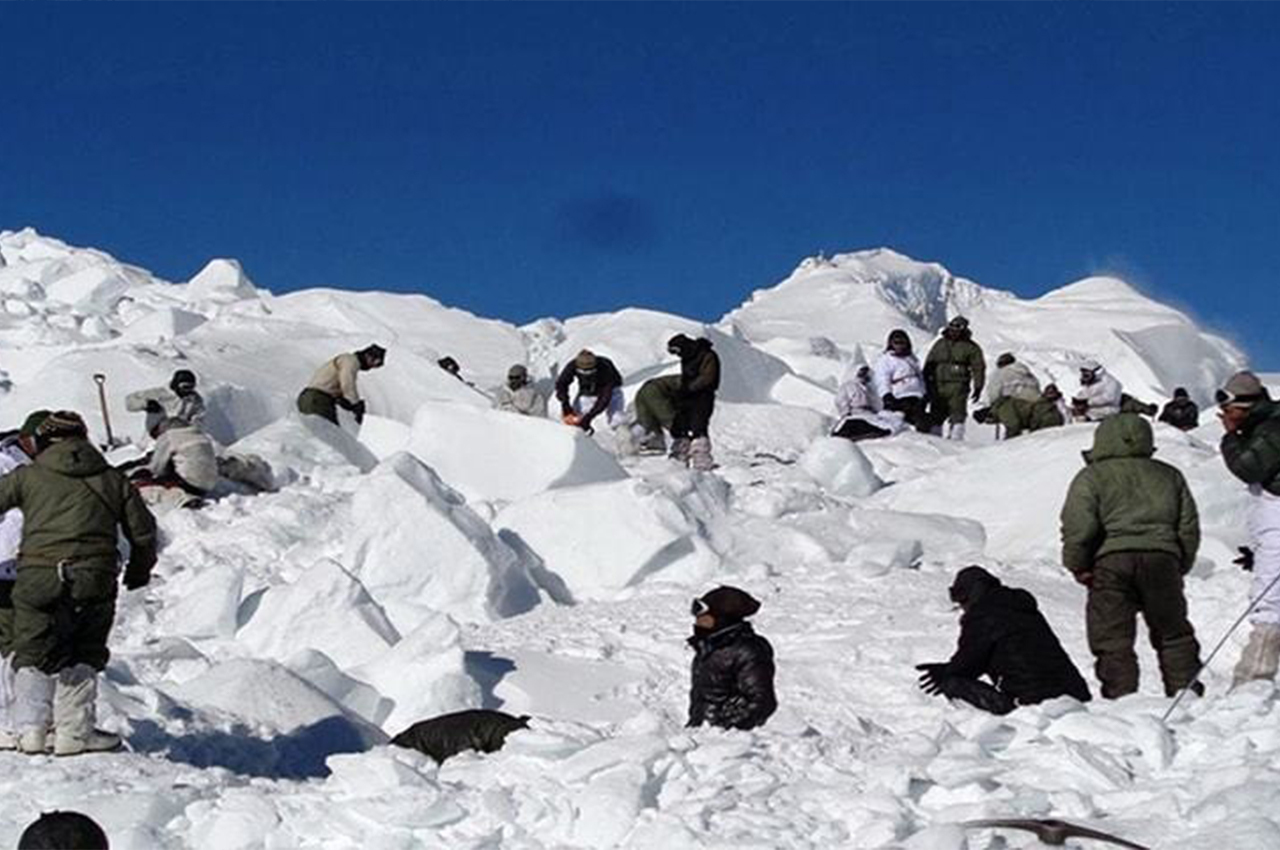
It is an area in the sky, far above the clouds, where the world is unforgivingly white, a place called the Siachen Glacier. This remote region in the eastern Karakoram range has long been a theater of geopolitical tension and is aptly described as the highest battlefield on earth. The world is fixated on the conflict between India and Pakistan while the reality is much crueller on the ground. To the soldiers stationed there, the biggest enemy is not an opposing army, it is a landscape that is hostile to human survival.
The temperature in Siachen Glacier can drop to a devastating minus 60 degree Celsius where even the basic things are life threatening to the soldiers. It’s a place where a single wrong move and a metal snap, such as a glass or something else, can cause tragedy to occur. It is estimated that far greater number of Siachen Glacier soldiers deaths have been due to the inhospitable environment of the glaciers which include avalanches, frostbite and high altitude illness than as a result of firing. It is the sad truth of a conflict which has been ongoing despite many attempts at a ceasefire.
The Reality of the Highest Battlefield on Earth
The glacier has been of strategic significance, and especially the Saltoro Ridge India-Pakistan divide, has kept the two countries in a perpetual military presence. Both armies have their posts at more than 20,000 feet since the launch of Operation Meghdoot in the Siachen region in 1984. At these altitudes, acclimatisation is not possible, and a gradual (and unavoidable) breakdown of the physical body occurs, making each day a struggle for survival.
One should not just look at the figures when inquiring about the temperature of Siachen Glacier. The trio of high altitude, snow and strong wind-chill makes for a “triple threat” that few soldiers can endure for long. The Siachen Glacier minus 60 degrees weather is not only extreme, it is a constant threat which dictates every aspect of living. Basic activities, such as breathing or sleeping, or even carrying a weapon, can be gigantic logistical challenges that demand constant, tiring effort.
The logistical burden of keeping a Siachen ceasefire soldiers’ presence is enormous. Each gram of food, fuel and equipment will have to be delivered by helicopter or by men who traverse the treacherous, icy paths. Weather is often unpredictable and supply lines are often severed, leaving remote outposts isolated for weeks at a time. Physical and mental endurance – almost priceless on a battlefield of this magnitude.
Why Soldiers Die in Siachen: The Invisible Enemy
The environment is closely linked to the cause of the deaths of soldiers in Siachen. The most dangerous hazards are the ones that can’t be seen with the naked eye. In the case of massive avalanches, entire posts are buried in minutes—and there is little chance of being found in such inaccessible areas. In addition, the danger of Siachen frostbite soldiers are extremely high; even contact with cold metal for a few minutes can result in irreversible damage of the tissue and result in loss of fingers or limbs.
There’s also the health crises in high altitudes. High Altitude Pulmonary Edema (HAPE) and High Altitude Cerebral Edema (HACE) are always a danger. These medical emergencies may become life threatening within hours if a soldier cannot be moved and this is often the case during blizzard conditions when transport is grounded for days. The truth is that deaths in Siachen is the biggest cause of death, outnumbering the number of Pakistan and Indian soldiers who have lost their lives in actual combat.
These living conditions also have an impact on the subject’s psychology. In isolation with a constant whooshing wind and the fear that one is surrounded by bottomless crevasses, there’s a certain kind of stress. During a ceasefire in 2025, the “battle” in a Siachen Glacier continues thanks to the environment. Cold, terrain and body breakdown are always with the soldiers.
Examining the Strategic Landscape
The India Pakistan Siachen conflict 2025 2026 is an interesting, but sad, geopolitical deadlock. Both countries are trying to assert their sense of territorial integrity by holding on to an identity. This is a very expensive commitment, however. Thousands of families have had loved ones swept away by the glacier, without a single shot being fired. The Siachen war history is not only about national boundaries but also about the hardships endured by the soldiers in this harsh environment.
The line of control is the Saltoro Ridge (India-Pakistan) frontier. The rhetoric of the India Pakistan war Siachen 2026 often gets in the way of the tough reality. Politicians talk of strategy, those on the glacier talk of survival. The human toll of this deployment of Siachen Glacier facts is incredible, with thousands of lives lost, mostly to the environment.
During the discussions about the Siachen Glacier ceasefire 2025, the logistical reality is not always taken into consideration. The cost of maintaining these posts may be justified, but it could be applied elsewhere. However, both countries have not yet been able to come out of this height-seine embrace due to the fear of losing strategic high ground. It’s a deployment/rotation that’s now a permanent part of regional defence.
The Human Element: Life at the Edge
To comprehend the deaths of the soldiers in the Siachen Glacier one has to observe the life of an average infantryman. They are forced to remain in bunkers for months and sometimes can’t get outside for days because of white-out conditions. The air is so thin that you can become very tired after walking a few metres. They need heavy and special equipment but despite the best technology no way can stand the sub zero temperature.
Maintenance of the temperature of the Siachen Glacier is an ongoing process, as its temperature is always in danger of being swept away by the Siachen Glacier. Snow is always being dumped off soldiers’ posts to prevent them from collapsing and they’re using the heating units that are the only thing keeping them alive in the freezing air. When these systems break down, the environment “takes over” nearly immediately. The soldiers’ willingness to go to any lengths to protect their country is a testament to their courage.
Over the decades, the question that many people ask is how many soldiers have died in Siachen? The number is usually not disclosed or disputed, but is in the thousands. This was a tragic reminder that nature is the one who decides our fate in the high mountains. Regardless of the technology and/or tactical considerations, the Siachen Glacier is an unbeatable beast if one is not careful enough not to stay too long in its arms.
Frequently Asked Questions (FAQs)
Q1. Why is the Siachen Glacier so deadly for soldiers?
A1. It is inhospitable because of its extreme altitude, falling temperatures and unsteady weather. Avalanches, exposure and altitude-induced medical issues cause most losses of life, not directly from fighting.
Q2. What is the primary cause of death in Siachen?
A2. High altitude illnesses such as HAPE and HACE as well as objective dangers of terrain, such as avalanches, deep crevasse and bad frostbite make up the vast majority of deaths.
Q3. How do soldiers survive in such extreme temperatures?
A3. Specialized high-altitude gear, multi-layered clothing and the constant warmth from kerosene stoves are used by soldiers. They do have strict acclimatization drills and supply lines; however, at times posts are cut off from others by extreme weather.
Q4. What is the current status of the India-Pakistan conflict there?
A4. There was never any direct shooting since early 2003, but both sides have their military posts on either side of the Actual Ground Position Line, which makes it a “frozen” conflict zone.
A Call for Awareness
While the tale of the Siachen Glacier is the story of human endurance, it’s also a grim reminder of the price of geopolitical stasis. In the case of India Pakistan Siachen 2026, the environmental concerns will remain a pressing issue. If you want to keep up to date with the changing dynamics of this high altitude area, please sign up for a copy of our newsletter where we can offer you deeper analysis and up to date information with regards to geopolitical developments all over the world.
Follow Dubai Key Insights for more news.