





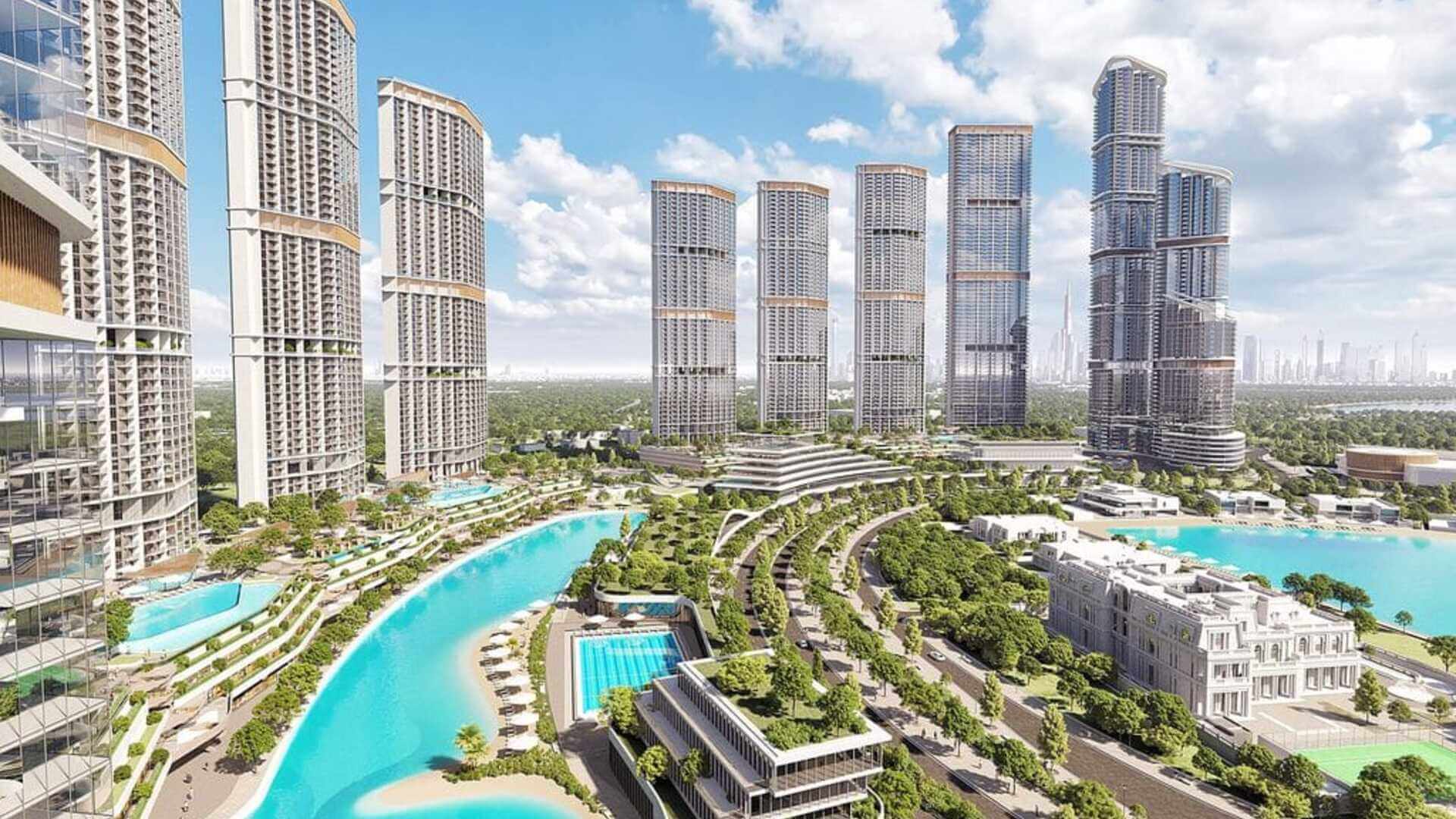
Navigating the Dubai Real Estate Market 2026
For those who wish to invest in the UAE real estate market, it can seem like a game of catch-up as the market rapidly evolves. As a foreign buyer, you are about to enter one of the most transparent, liquid and technologically advanced real estate markets in the world: Dubai. Despite the challenges that have faced the real estate market in Dubai over the last few years, the sector has maintained its incredible resilience with strong population growth, favourable regulations and the city’s superb infrastructure.
If you’re looking for appreciation, a solid passive income portfolio, or a long-term family base, you need to know the mechanics behind the structure. Foreigners don’t have to ask themselves whether they can buy real estate in Dubai it’s a big no, unless they are in specific freehold areas. This guide explains everything you need to know about transactions, how to secure a Dubai Golden Visa property investment 2026, and how to get the most out of your net returns.
Current Market Trends and Economic Fundamentals
Overall, the Dubai real estate market forecast 2026 suggests a more mature stage, marked by sustainable growth in line with solid economic demand, instead of speculative frenzy. The numbers of transactions are still going on to set new historic highs and the market has become a more balanced environment.
Luxury beachfront sales and master-planned suburban communities continue to see consistent demand as a result of high-net-worth buyers and corporate relocations. Previous vertical price price spikes have been tempered by a price stability. On the other hand, there is asset divergence as low-density villa communities and premium townhouses remain superior to regular high-density apartments, given the shortage of land and the growing demand for family homes.
A Dubai property price evaluation for the year 2026 shows that property per sq. ft is a lot dependent on the pockets that you target, which are the ultra-luxury ones along the beach or the emerging ones in the suburbs. If you know what these changes are, you will be able to avoid overpaying, and place your money in the most liquid area.
Legal Framework: Can Foreigners Buy Real Estate in Dubai?
The most common enquiry of foreign buyers is how to purchase property in Dubai as an international buyer without running into legal hurdles. As per the current laws, the expatriates and non-residents are granted full right of ownership (Not just long term leasing) for the expatriates in designated areas called freehold property for expats.
The legal process is closely monitored by Dubai Land Department (DLD) which helps to provide complete transparency in all transactions. In a freehold area, the name is recorded straight into the government register and an official Title Deed is issued to you when you buy it. There are no strict nationality restrictions for buying or selling, or the subsequent ownership, of property in the emirate.
Freehold vs. Leasehold and Choosing the Right Location
When looking for places it is important to note the difference between a freehold and leasehold property. Freehold conveys to you the absolute ownership of the land and the building it contains, forever. Leasehold is the right to occupy the property for a definite term (usually 30 to 99 years). In the case of international investors the only way that they can be sure of security is to invest in freehold assets and only invest in the ones that they can dispose of.
When it comes to investment opportunities for Dubai 2026, the key lies in identifying the best locations for you to invest in. High rental yields can be found in communities such as Jumeirah Village Circle and suburban master developments, which have a steady demand for rentals. The premium master community properties like Dubai Hills Estate investment 2026, Palm Jumeirah and Downtown Dubai are elite for luxury capital growth and long-term appreciation. In those districts, emerging townhouses and apartments can be lower in price to the demand-driven rental market, making it a more affordable choice for buyers looking for affordable homes.
Off-Plan vs. Ready Property: Which Strategy Wins?
The choice between off plan and ready property in Dubai will have a significant impact on your cash flow and your level of risk. Off-plan property provides a lower threshold of engagement with the method of structured installments, where the payment structures are directly linked to the construction stages, with flexibility provided in Dubai property payment plans 2026. It does not produce any immediate rental income, however, and is only based on capital appreciation along with the developer’s timelines.
In contrast, ready property requires a greater initial investment with complete payment or mortgage financing and provides immediate development of rental income upon transfer, as well as the certainty of the condition of the physical property and its exact location. Another reason why many investors prefer to invest in off-plan properties is that developers often provide attractive payment schemes after the property is handed over, meaning you could pay off a portion of the property’s value long after you’ve received the keys.
Financials: ROI, Yields, and Transaction Costs
You must have a clear picture of the economics prior to transferring any money. The Dubai property ROI 2026 is quite competitive worldwide, with gross rental yields averaging 6% to 8% per year in the average residential property, and higher in some high demand compact unit sectors.
When evaluating your true profits, remember that the Dubai Land Department fee is 4% of the property value, the standard agency commission is 2% of the purchase price, the standard registration fee and trustee fee vary between AED 2,000 and AED 4,000 and the NOC fee ranges from AED 500 to AED 5,000, which is paid to the developer.
One of the main attractions for foreign capital as an investment destination is the Dubai tax-free property arena, as it stands out as a key factor. Your net yields are not impacted by local tax authorities as the UAE does not impose personal income tax, capital gains tax or rental income tax.
Securing Residency: The Dubai Golden Visa
Ownership of property is a direct pathway to longer-term residence. According to the existing regulations, a Dubai Golden Visa property investment 2026 calls for the purchase of a home valued at a minimum of AED 2 million (around USD 545,000).
Ready and off-plan properties will be considered provided they are bought from approved developers. Any combination of three different properties can achieve AED 2-million target. For people who purchase with a home loan, the paid-up worth of the property should be no less than AED 2 million, supported by an official letter from the bank. The Golden Visa gives the resident 10 years of residency, which can be renewed, the ability to sponsor family members and, most importantly, the luxury of not losing residency status even if someone lived outside of the country.
Frequently Asked Questions (FAQs)
Q1. Can foreigners completely own property in Dubai?
A1. Yes. Foreigners and non-residents are allowed to own 100% absolute freehold land and properties within the designated investment zones approved by the government.
Q2. Is a mortgage available for non-resident foreign buyers?
A2. Yes, banks in UAE, both local and international, have mortgage financing for non-residents, with a maximum LTV ratio of 50% to 60%, based on each individual’s financial criteria.
Q3. Do I need to be physically present in Dubai to buy property?
A3. No. Transactions can be executed remotely from overseas through a legally appointed Power of Attorney or through a secure digital platform and official digital escrow account recognized by the Dubai Land Department.
Q4. What ongoing maintenance fees should I expect?
A4. Annual Service Charges and Maintenance Fees are fixed based on the annual charge per square foot (SF) charged by the property owner. These charges are for the maintenance of common areas, security services, landscaping and building facilities and vary significantly among the levels of the community.
Conclusion: Take the Next Step in Your Investment Journey
he opening in the emirate is very broad for capital deployment that is well structured and researched. Making sure that your purchase decisions are in line with your financial objectives, cash flow systems are dependable and transparent, and freehold laws are fully understood can help you acquire high-performing properties that last for years to come.
Looking to pursue high-yield investments or need a customised portfolio split based on your spending power? Talk to our advisory desk now and get customized advice, special project list, and transactional assistance from experts who specialize on global investors.
Follow Dubai Key Insights for more news.