





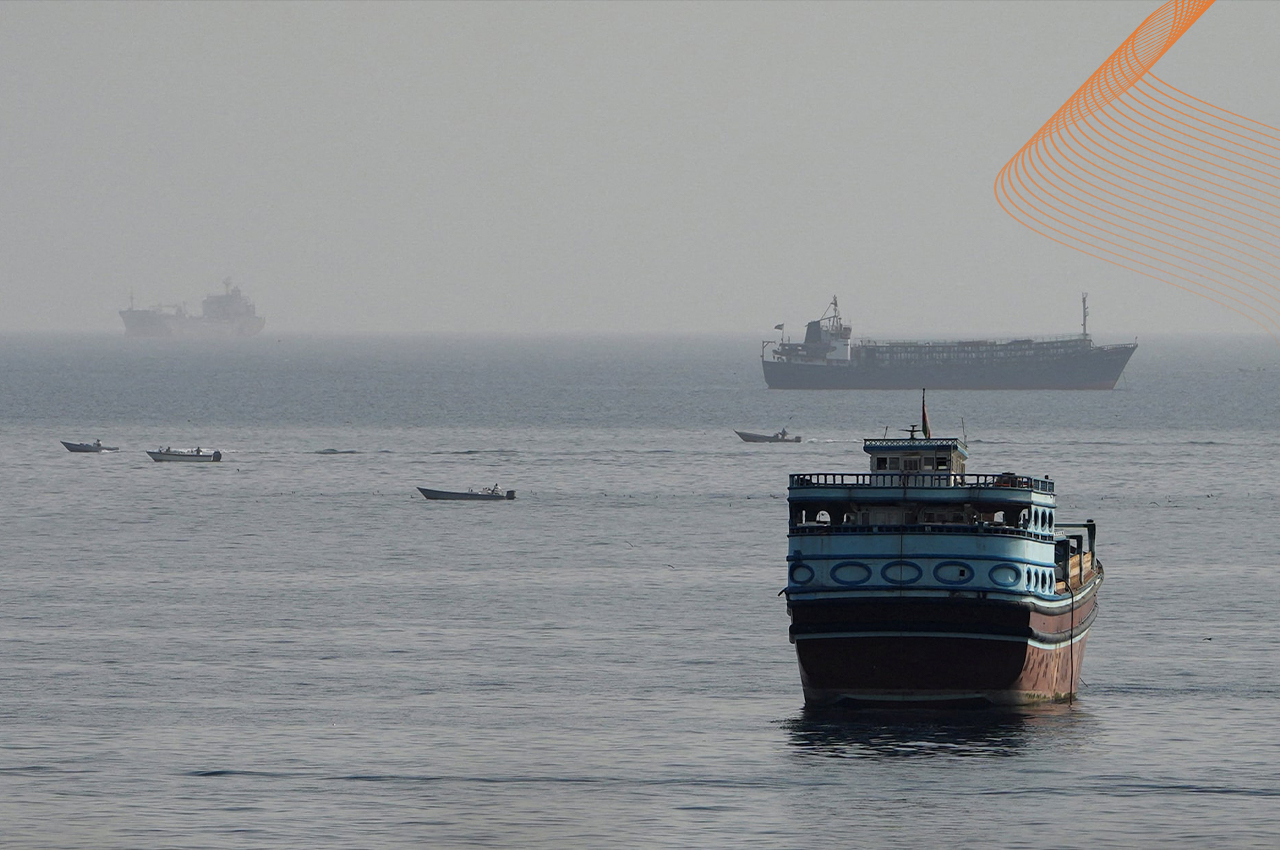
The early morning attack of an aggressive ADNOC tanker in the Strait of Hormuz, on August 8, 2026, marks another crisis for the primary energy route of the Middle East. The United Arab Emirates (UAE) Ministry of Foreign Affairs (MoFA) strongly condemned the Iranian missile attack on an Abu Dhabi National Oil Company (ADNOC) ship, calling the persistent harassment by the Islamic Revolutionary Guard Corps (IRGC) as an act of “outright piracy and economic coercion.”
This latest flare-up underscores the escalating risks to international shipping and regional supply chains and crude oil transport through the Persian Gulf, amid the persistent Strait of Hormuz crisis 2026. Here, at Dubai Key Insights, we dissect the key elements of this incident, the diplomatic implications and the impact on world energy security.
The fire that struck ADNOC’s Tanker in August 2026 has been broken down
The recent Strait of Hormuz incident involving the ADNOC tanker follows another missile attack on an energy carrier that was operating in the strait near Khasab, Oman while crossing international waters. Maritime security agencies, such as the United Kingdom Maritime Trade Operations (UKMTO) and the Joint Maritime Information Center (JMIC), confirmed that the strike had caused a fire aboard about 18 nautical miles east of the Omani coast.
Luckily, there was a timely response to the emergency that put out the fire. The ship has made its way and is safe in Fujairah port and no crew members have been reported as having been affected by this particular strike.
The Missile Strike Off Khasab, Oman event took place in
The UAE news agency UAE WAM reported that the missile incident by the ADNOC ship was while it was transiting through the strategic waterway. Emergency measures have stabilised the carrier but observers on the horizon off the Omani coast reported smoke on the horizon.
Early reports did not mention the name of the ship, but maritime defense experts confirmed that the IRGC had fired missiles at an oil tanker UAE operation from coastal missile bases. This timely response avoided serious damage to the environment, but caused a near standstill in commercial maritime shipping for the corridor.
Since February 2026, there have been 15 vessels targeted in ADNOC Fleet Impact.
This is not a lone incident of the ADNOC tanker attack in the Strait of Hormuz. In a statement, ADNOC confirmed that throughout the escalation of the conflict earlier in 2026, 15 of them have been subjected to attacks from enemy missiles and UAVs. In all of these cumulative attacks, one innocent seafarer has been killed and 20 crew members injured.
A direct attack on an ADNOC vessel in Iran 2026 operational strategy is squarely targeting Asia and Europe commercial energy exporters, and severely challenging the normal commercial shipping lines in the Gulf region.
The UAE Foreign Ministry issued a statement on the issue of “Acts of Piracy” and UNSC Resolution 2817.
The UAE Ministry of Foreign Affairs firmly and formally condemned the attack on the ADNOC tanker in the Strait of Hormuz. Abu Dhabi in a UAE foreign ministry statement Iran attack announcement announced that attacking commercial shipping is against the fundamentals of international law.
This attack is in clear contravention with the freedom of navigation affirmed in UN Security Council Resolution 2817 and the rejection of targeting of commercial vessels and obstructing international maritime routes.
UAE Ministry of Foreign Affairs (MoFA)
Violation of International Maritime Law.
The UAE government reiterated that the UAE rejects the Iran attack 2026 due to their threat to the lives of innocent people and international trade. In addition, the diplomatic envoys noted that in the context of international law, maritime doctrines and in line with maritime security concerns, commercial vessels transporting peaceful energy goods should never be used as weapons in geopolitical standoffs with Iran.
The UAE has put forward the following key diplomatic demands:
- Suspension of all hostilities against civilian shipping, without restrictions or delay.
- Obedience to the UN Security Council Resolution on the protection of international waters.
- Free access to the Strait of Hormuz for trade to and from all nations.
GCC condemns Iran shipping attack and regional coercion.
Abu Dhabi received rapid support from the rest of the region. A declaration denouncing the Iran shipping attack was released by a joint group from the GCC, as the UAE incidents raised concerns about the impact on the economy of the whole Gulf Cooperation Council. Member states reiterated that when used as a weapon, the vital bottlenecks affect the security of the region, disrupt supply chains and affect the development of the markets dependent on stable oil supply.
The global energy security and the Strait of Hormuz crisis 2026
The attack on the ADNOC tanker in the Strait of Hormuz had a direct impact on the international energy markets. The narrow shipping strait flows almost 20% of the world’s daily petroleum demand, and any disruption has a direct impact on fluctuating petroleum prices.
The effect on Oil Prices and Tanker Traffic Collapse
After the continued Iran IRGC attacks on commercial shipping in August 2026, commercial companies have withdrawn from entering into the Persian Gulf. As a result, the Strait of Hormuz has experienced over 70% reduction in tanker traffic through the strait in 2026, leading to a rise in maritime insurance premiums and a surge in freight rates in the past years.
Oil price watchers say the current high global demand for oil, combined with uncertainties over disruption of global oil supply due to the Iran war 2026, will have serious impacts on the industrial manufacturing and transportation sectors around the world.
Oman Negotiations and the Hunt for a Maritime Resolution
Despite the increased military tensions, diplomatic efforts continue behind the scenes. There is high-level discussion of the Strait of Hormuz deal negotiations in Oman, brokered by regional and international powers who are looking for a maritime truce.
Commercial companies and the UAE government both state that solving the UAE Iran Strait of Hormuz crisis of missiles is a matter of providing safe passage for commercial vessels without being targeted with asymmetric attacks or subjected to piracy.
A list of common questions and answers that are answered for your convenience.
Q1. How many have been attacked by ADNOC vessels in the Strait of Hormuz so far?
A1. Fifteen vessels have been the targets of hostile missiles or drones in the Strait of Hormuz since February 2026, official disclosures by ADNOC have revealed. There have been 1 fatalities and 20 injuries to seafarers in these incidents.
Q2. Open Strait of Hormuz for shipping 2026?
A2. The Strait of Hormuz is still open but commercial shipping has significantly decreased because of the extreme level of security risks, missile harassment and astronomical maritime insurance rates. The majority of the big tankers companies are taking extreme precaution or suspending shipping until guarantees are provided.
Q3. The UAE responded to the missile strike on the 8th of August in what way?
A3.The UAE Foreign Ministry strongly condemned the attack as a “flagrant violation” of the UN Resolution 2817, and said IRGC activities were “acts of piracy and economic coercion which pose a threat to the global energy supply.
The Path Forward for Gulf Maritime Security
The Strait of Hormuz is a case in point and the attack on the ADNOC tanker is a stark warning of the vulnerability of international trade routes in times of regional conflict. The right to free navigation in international waters is not just a regional issue, it is one of the cornerstones of the global economy. International diplomatic talks in Oman are continuing, and maritime law has to be upheld and commercial strikes must stop in order to stabilise the Persian Gulf.
Discover key insights into Dubai with Stay Informed.
To conduct business, logistics and energy analysis in the Middle East, it is crucial to have accurate analysis. Get exclusive access to Dubai Key Insights today, where you will receive real-time updates, expert analysis and detailed coverage of the economic trends impacting the UAE and the region.