





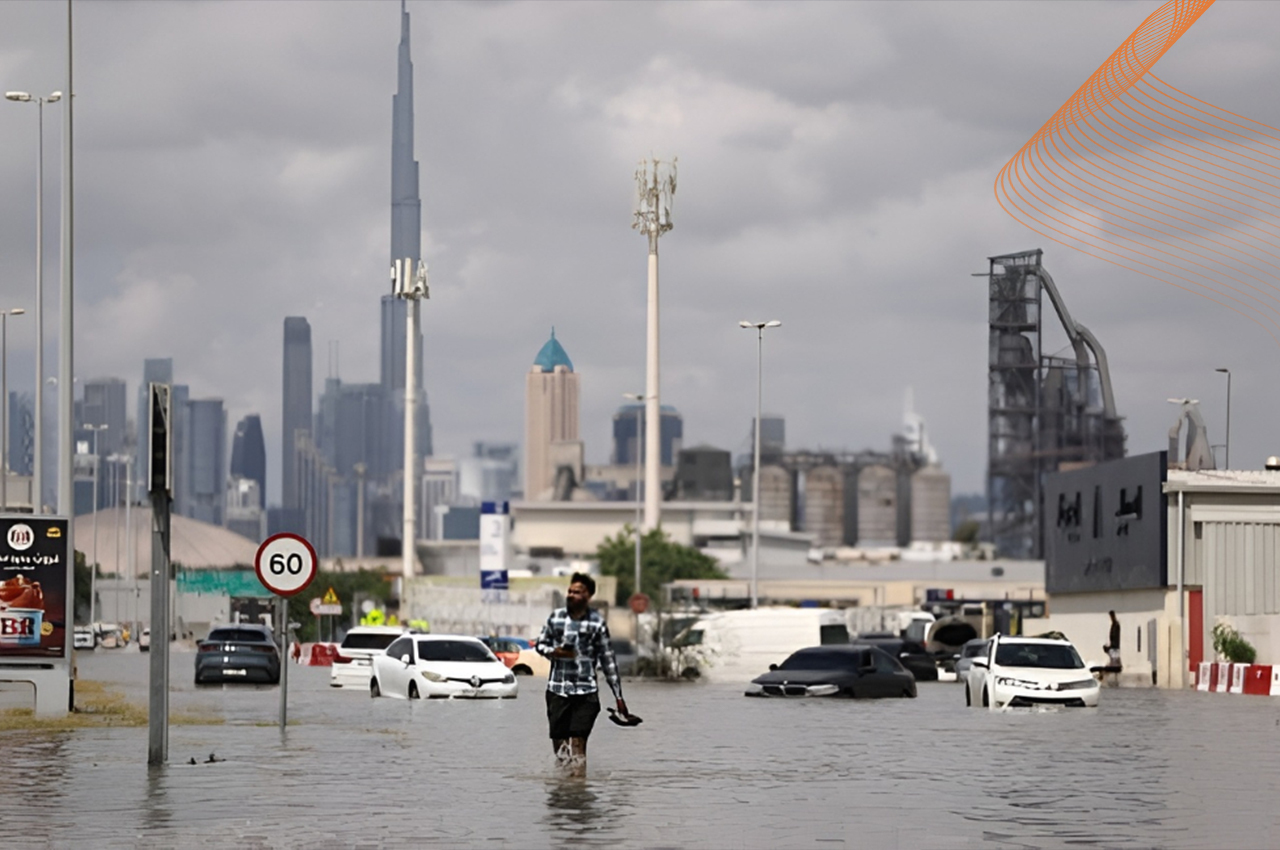
When people think of Dubai, they most often imagine endless dunes of sand, high rises with a clear blue sky, and a blistering sun. So, when the sky is rained upon and all of sudden the city gets flooded; everyone suddenly asks, why is it raining in Dubai?
Gray desert clouds seem surreal when you are living in the area as you make your morning commute or when you are traveling and that’s the scene you are witnessing. Rainfall events have been marking news headlines worldwide over the past few years and particularly in the year 2026 in UAE. Unexpected summer downpours, or winter downpours, have to be examined through a combination of natural climatic phenomena, global atmospheric conditions and the innovative use of high-tech equipment by man.
This deep dive into Dubai Key Insights will take a dive into the science, dispel misconceptions about cloud seeding, analyze the Dubai weather forecast for July 2026, and dive into the Dubai weather forecast for the coming months, courtesy of the UAE National Centre of Meteorology (NCM).
The weather pattern is a crucial aspect to comprehend, so let’s delve into the question of why it is raining in Dubai?
The first step in figuring out the answer to the question of why is it raining in Dubai is to understand the geography and the physics of climate. Historically, the Arabian peninsula has been an arid desert, but it is not impervious to complex meteorological systems.
The main factors influencing rainfall over the emirate are:
- UAE Low Pressure System Rain: Surface heat and upper-air troughs bringing in moisture into the area.
- UAE Seeding: Convective Clouds UAE: Rising of moisture off the Oman mountains to form heavy cloud cover.
- El Nino effect, Dubai summer: warmer SST are changing the regional wind patterns.
- UAE Weather Modification: Strategic air operations to make best use of the natural rainfall yield.
Low pressure systems and convective cloud formations.
One of the reasons is because of the transfer of low pressure systems in the atmosphere that is causing the rain in Dubai. In the winter, Mediterranean weather systems glide east over the Gulf, causing cold fronts, moisture, and heavy rainfalls all over the area.
A different process is controlled in the summer months when the weather is hot. Hot air rises very quickly leading to low pressure areas in the air. The Arabian Gulf and the Gulf of Oman water masses converge to the Hajar Mountains of the east of the UAE. This forces the air upwards, forming dense convective clouds. Once these clouds reach a sufficient size, summer rain, sudden wind gusts and local downpours are created.
The El Nino Effect Dubai Summer 2026
Another important factor determining the recent seasons that Dubai is raining is the global climate driver El Nino UAE 2026.
Once the development of El Niño conditions occurs in the equatorial Pacific, the world’s atmospheric circulation changes drastically. The El Nino effect Dubai summer 2026 results in higher sea surface temperatures, more moisture in the atmosphere and a change in wind patterns for the Arabian Gulf. This leads to quicker intensification of storm systems with the potential to transport much more water than would normally occur in a normal year.
The Role of Cloud Seeding Dubai 2026
When talking about Dubai rain 2026, there’s no escaping technology. The UAE is one of the leading world countries in rain enhancement via the official UAE weather modification programme.
How Cloud Seeding Works UAE?
People often visit the site and ask about the reasons for the unexpected showers, and if it is artificial or not. Artificial rain UAE is not the rain that just pops up out of the air. Rather, it’s about making existing clouds release water more efficiently.
The operation is carried out according to a scientific procedure. The UAE National Centre of Meteorology has a radar network that monitors the development of clouds throughout the country round the clock and thus, it is able to identify potentially good convective clouds that can be enhanced by UAE seeding missions. After the high moisture clouds are identified, specific aircraft from Al Ain Airport are sent in to penetrate the clouds directly. The planes inject natural salt flares (potassium chloride and sodium chloride) into the cloud updraft. The salt particles take on the water droplets, which collide, increase in weight and settle in the form of rain before the cloud breaks up.
The numbers on NCM Cloud Seeding Missions 80, 2026: What They Mean?
The UAE’s commitment to water security has led to continuous operational efforts. According to official reports, in the first half of 2026 alone, some 80 cloud seeding missions were targeted.
These UAE cloud seeding missions 2026 do not aim at all the clouds passing. Their targeted aim is to enhance natural precipitation outputs by targeting fertile convective clouds, thus increasing groundwater resources and reducing surface temperatures during heat waves.
Debunking Myths: Does Cloud Seeding Cause Flooding in Dubai?
When it rains really hard, in no time at all, social media is awash with inquiries about, why is it raining in Dubai so hard and why is it that no one here can use this technique for cloud seeding?As the rain falls, people ask themselves in no time at all, why is it raining so hard in Dubai and why can no one here do this for cloud seeding? The separation between internet myths and meteorology is key.
Is there any possibility of flooding in Dubai caused by Cloud Seeding?
The answer is usually a resounding “no!” Cloud seeding usually improves the amount of rain from a seeded cloud by only about 10% to 30%. Is incapable of generating large-scale, multi day atmospheric storm systems. Large-scale severe storm fronts that are naturally occurring and can be enhanced by more global climate change instabilities and low pressure channels are the cause of major flooding events throughout the UAE, not the cloud seeding flights.
Why does Dubai flood when it rains?
When it rains in Dubai why DOES it flood if it’s not the seeds?
- Desert Soil Absorption: There is tight, hard ground in the desert. If the precipitation is heavy, the soil is not able to absorb the water quickly, and the surface water runs off rapidly.
- Urban Infrastructure Design: Dubai used to be built for a hyper arid climate with little to no rain. However, although the city is expanding its deep-tunnel drainage system, surface drains can be overwhelmed for a short period of time during periods of heavy rainfall.
- Low Topography: The natural changes in elevation of coastal areas in Dubai are limited, which makes it difficult for pooled water to drain into storm channels naturally.
This is the UAE National Centre of Meteorology (NCM) Weather Forecast 2026.
Being informed with a true NCM UAE weather update is essential for anyone residing or travelling in the emirates.
Dubai Weather Update July 2026 & Forecast
The UAE National Centre of Meteorology (NCM) highlights the dynamic nature of the summer weather in the latest weather update for Dubai in July 2026. Surface heat causes a daily rise in highs inland to between 40°C and 48°C, and an extension of an eastern low-pressure system maintains moisture flow into the area.
When you look at the Dubai rain forecast today or you want to know the Dubai weather forecast 2026 outlook:
- Inland & Eastern Regions: High probability of convective cloud build-ups during the afternoon, which will result in areas of rain, dust and strong downdraft winds.
- Coastal Areas & Downtown Dubai: Humidity is moderate, and cloudy days are occasional, but in summer, there may be some rain showers from the Hajar mountains which can blow westwards.
- Safety Guidance:Motorists are advised to stay alert for a Dubai rain today 2026 alert for both open highways and roadways during convective storm activity, authorities said.
Frequently Asked Questions (FAQs)
Q1. Why is it raining in Dubai during the summer?
A1. The main cause of summer rainfall in Dubai is the high temperature of the atmosphere which causes low pressure that attracts the moisture from the sea. This moisture creates convective clouds over the eastern mountains which move inland and occasionally are supplemented by cloud seeding activities.
Q2. Would cloud seeding be environmentally safe?
A2. Yes. Materials used for UAE cloud seeding operations are not harmful chemicals, but only natural salts such as sodium chloride and potassium chloride. These are safe to soil and atmosphere, according to independent environmental studies.
Q3. What is the probability of it raining in Dubai once a year?
A3. Dubai is on average receiving about 100 mm (3.9 inches) of rainfall annually on approximately 5-12 days; primarily during the winter months (December to April), and sometimes during the summer months (due to convection showers).
Stay Ahead with Dubai Key Insights
Knowing the weather forecast in the UAE allows you to plan your day, arrange travel and be safe throughout seasonal changes. When it rains in Dubai, whether unexpectedly from a low-pressure system or, as in the case of cloud seeding, intentionally, it’s the curious mix of nature and science that is in play.
Get more live analysis, city guides and real-time updates from all over the UAE? To make sure you’re amongst the thousands of people that know what’s up in Dubai, subscribe to Dubai Key Insights today.