





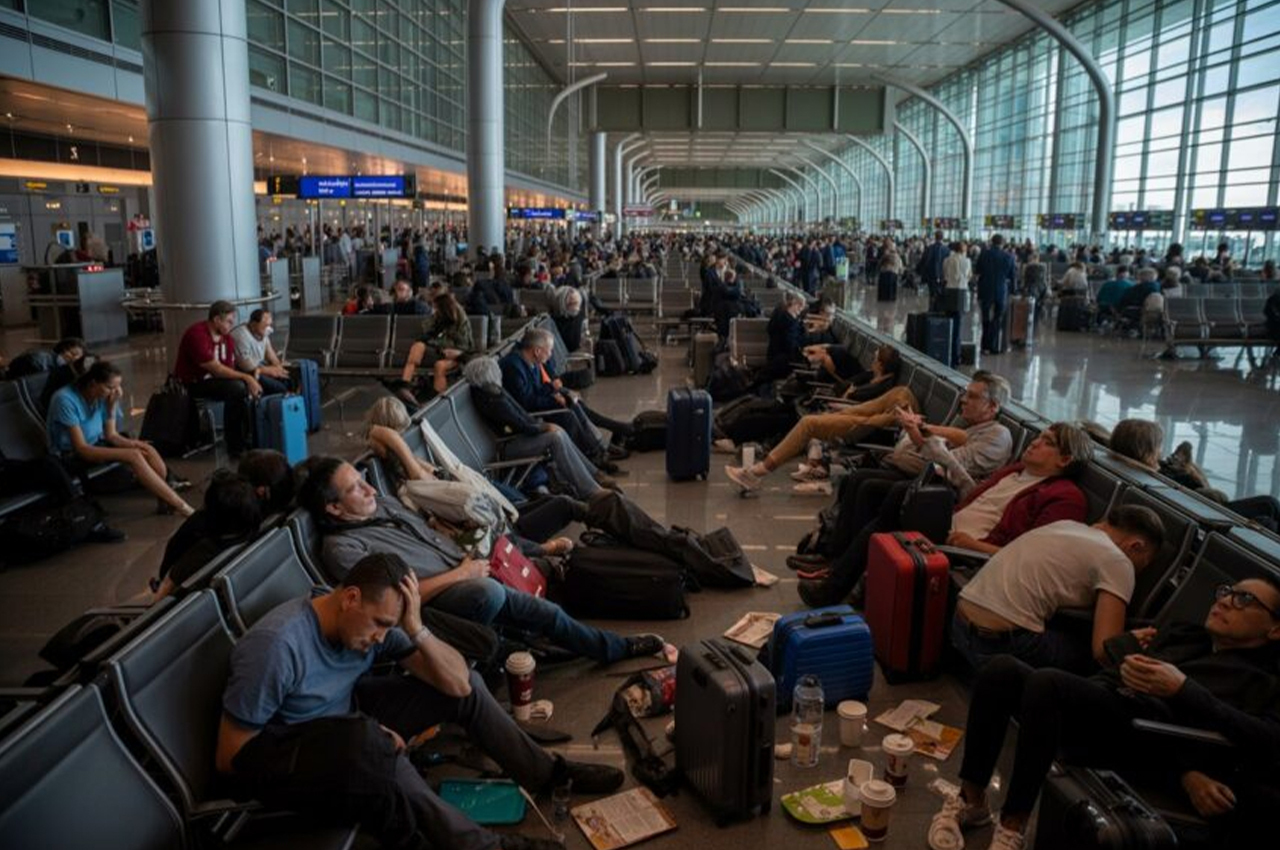
Passengers were left stranded after key routes to various cities including Paris, Lahore and Cairo were cancelled across the UAE on all major carriers including Emirates, flydubai and Air Arabia. The cancellations have been a part of the continued airspace restrictions, aircraft rotation challenges, and ripple effects in the worldwide aviation system.
Transit passengers in Dubai, Abu Dhabi and Sharjah also have been affected, including passengers who said they had to wait for long queues to rebook their flights and extended layovers as airlines work to re-schedule their flights.
What has led to the recent cancellation of flights in UAE?
The cancellations are tied to operational and external factors impacting the aviation hubs of the Gulf.
Key factors include:
- Delays in regional airspace, leading to increased flight routes and scheduling delays
- Plans for aircraft and crew rotations due to previous delays. Plans to rotate aircraft and crews due to previous delays.
- No cancellations would have had knock-on effects on other interconnected global routes.
- Heavy traffic at key facilities like Dubai International Airport
Industry statistics reveal that over 30 flights were cancelled in a day across UAE airports, with Flydubai and Air Arabia being among the most affected airlines.
Which routes were impacted?
This new round of cuts has affected heavily trafficked international flights, which include:
Europe routes
- Disruption to long haul flights from Paris by Emirates service.
South Asia routes
- Lahore (a key corridor for the UAE–Pakistan route, much frequented by the UAE nationals)
Africa and Middle East routes
- Cairo route (high frequency regional business and family travel route)
The routes are especially vulnerable as serving significant numbers of ex-patriots and having high frequencies of service per day, so that minor operational incidents have a domino effect and cause more widespread service failures.
How some UAE airports are facing frequent disruptions.Repeated disruptions in UAE airports.
Abu Dhabi, Dubai, and Sharjah in the UAE are all hubs for aviation, serving as international transit points. Regional airspace limitations or delays can quickly propagate through international networks.
Recent disruptions patterns demonstrate:
- Some flight delays that result in missed connections.
- Planned delays to return flights and aircraft repositioning delays.
- Due to duty time restrictions, it has been necessary to cancel some events for the crew.
- The impact on the efficiency of ‘turnarounds’ at busy terminals.The effect on turnaround efficiency at highly attended terminals.
In recent periods of disruption, aviation monitoring reports data on the UAE airports, revealing several hundred flight delays and dozens of cancellations.
How airlines are reacting
All three carriers have put contingency plans in place to deal with the impact on passengers:
Emirates
- Re-booking affected passengers on alternate flights, if available
- Travel Updates: Emirates’ official disruption portal to keep you informed.
flydubai
- Route and schedule changes
- The recovery of aircraft and operational reset, flydubai put on a priority basis
Air Arabia
- Running services on a restricted or modified basis on specified services.
- Air Arabia offers refund and/or rebooking services for cancelled flights.Air Arabia offers refund/rebooking service for cancelled flights.
Airlines have been encouraging passengers to check the status of their flights before travelling to airports, as travel plans are still subject to change.
Enjoy the ride of a lifetime while sitting on a plane.Enjoy the ride of a lifetime while you’re sitting in a plane.
People traveling who were impacted by these cancellations are reporting:
- Dreadful lines at airport services counters
- Same day rebooking is limited.Only a limited number of same day rebookings available.
- Overnight stranded passengers accommodated in hotels.
- Lack of clarity on onward connections, particularly at hubs
The Dubai airport, which acts as a hub for transit passengers from Europe to Asia to Africa, is especially affected by this.
Is this the start of a larger trend of air travel disruption?
Yes. The current cancellations come amid a series of such disruptions in aviation in the Middle East since early 2026, as a result of periodic airspace restrictions and recovery cycles.
Industry reports show:
- Multiple waves of cancellations on UAE carriers
- Reduced operational levels for flights for a period of time
- Slow recovery followed by further disturbances
Airlines are still dealing with the impact of previous regional airspace closures and restrictions on capacity while the operations continue.
So what will UAE travellers do next?
Passengers are reminded that there may be brief periods of volatility in the schedules as airlines settle down.
Key expectations:
- The step-by-step reintroduction of cancelled routes.
- Priority rebookings for travellers who have been stranded.
- The future of the schedule is still uncertain, and there have been ongoing adjustments on busy routes.
- Depending on regional airspace conditions, there may be more disruptions.
People travelling are urged to keep a close watch on the airlines’ notifications and not arrive at the airport if they are not notified of their flight.
FAQ
What is the reason behind the cancellation of flights of Emirates, flydubai and Air Arabia?
Operational disruptions, regional airspace limitations, and cascading delays in aircraft and crew availability on linked routes are all causing a number of flights to be cancelled.
Which countries are most impacted?
Some of the main routes impacted include Paris, Lahore and Cairo as well as other top international and regional destinations that are served by UAE airlines.
Is it normal for UAE airports?
Yes, airports are open, but airlines are having to deal with schedule disruptions that result in cancellations and delays for multiple airlines and routes.
In the event of the cancellation of a flight, what should be done for passengers?
Airlines should be contacted directly for notification and rebooking policies as well as refunds before arriving at the airport.
Keep abreast of developments in DKI.
Dubai Key Insights (DKI) monitors the latest air travel insights and events in the UAE, regional mobility and travel disruption trends in real-time, to ensure passengers and businesses anticipate the fast-moving environment of global air travel.