





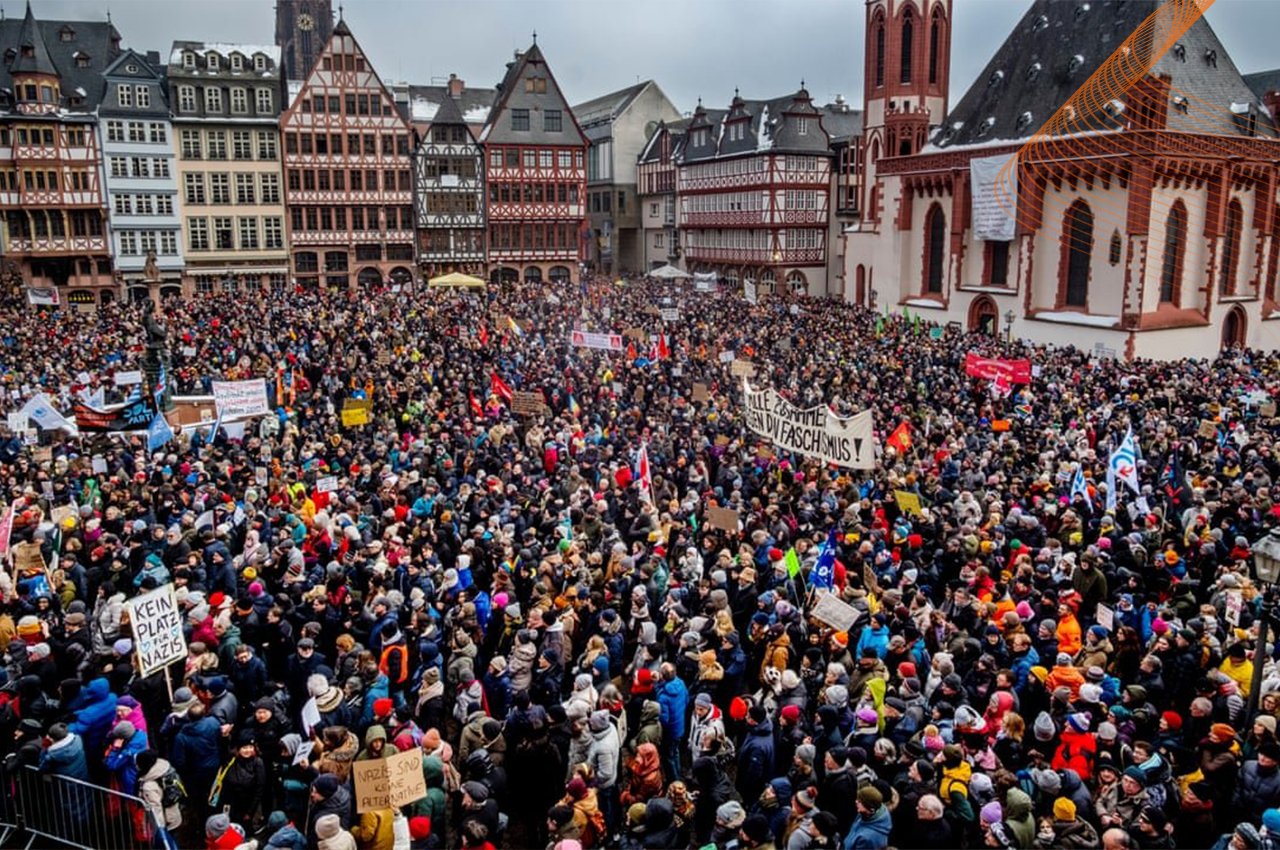
In the big European cities, from London to Amsterdam, widespread demonstrations against rising unemployment and declining living standards have set the stage for a new political crisis to come home to Germany. The public and media reaction against the German government’s immigration crackdown 2026 has evolved from heated parliamentary debate to direct action at international transport nodes in recent months. Demonstrators, human rights activists, community organizers and others are making a strong statement, heading to the Germany deportation protests 2026 right to the airport tarmac and departure gates.
Underscoring the need for a national reckoning, coordinated demonstrations are causing delays from the tarmac in Leipzig to the terminals of Frankfurt and Munich. In Germany, activists prevent deportation flights, protesting against forced deportations to high-risk areas, extension of detention centers and stricter border controls. Europe’s main political question is no longer in the legislature, but in the streets, as the human rights deportation movement builds momentum.
What is Germany’s Mass Deportation Policy 2026?
This nationwide resistance is being driven by a dramatic change in federal policy. Since the introduction of Germany border control tightening 2026 by Chancellor Friedrich Merz and the conservative government, it has become a proactive approach to border security. The present CDU immigration policy Germany 2026 has implemented the following: grant asylum applications a priority treatment, increase the capacity to pre-deport asylum-seekers and jointly organise charter deportation flights directly from foreign airports.
This move in law is part of a wider pledge by conservatives during the last federal budget cycles to implement a hardline immigration crackdown by the German government in 2026. Expedited removals are designed to protect national security and the integrity of the asylum system, the administration says. But humanitarian groups say the changes amount to a violation of basic constitutional rights and international non-refoulement principles.
Who is Being Deported from Germany in 2026?
Thousands of people have had their claims denied and will be subject to the expanded removal requirements. Official statements focus on the eviction of people found guilty of criminal offenses, but civil rights groups say that long-term residents, workers who are settled in and families are being dragged away.
In specific destination countries, removals restarted by Germany under the deportation framework for Afghanistan are conducted on special charter planes flying through regional airports such as Leipzig, which has caused significant diplomatically and humanistically problematic situations. In the meantime, policy changes under the Germany Syria Deportation News 2026 allow for regional authorities to consider returns to parts of Syria, although the region continues to face stability threats. Furthermore, Germany is still working out return arrangements with a number of non-EU transit countries in a manner similar to EU deportation policy debate 2026 mechanisms.
Why Are People Protesting Deportations in Germany?
The feeling of revolt is a widespread hysterical reaction to moral, legal and socio-economic issues. Germany deportation protests 2026 unite a wide range of actors, such as human rights groups, religious institutions, lawyers, civil society organisations and student associations that are calling for the safeguarding of non-refoulement rights, immediate release from pre-deportation family detention and the re-distribution of the budget for deportations to support social integration measures.
Humanitarian and Human Rights Concerns
Civil rights organizations say deportation of people to countries that are under authoritarian rule like Afghanistan under the Taliban directly infringes international human rights law. Bringing back the vulnerable to unstable regimes comes with a direct risk of life, critics note.
Opposition to Mass Pre-Deportation Detention
The recent increase in pre-removal custody facilities has ignited a loud debate.It is that many pre-removal custody facilities have seen a surge in their numbers, and that has been a sore spot. Protesters say the family separation and the detention of long-time community residents without legal rights is an “inhuman” tool used “mostly as a political tool.”
Economic and Social Integration Advocacy
The demonstrators point out that the substantial public costs of detention centres and the use of private charter flights would be better invested in social integration, integration courses and vocational training.
Airport Protests Across Germany: Where Are Demonstrations Happening?
One of the most prominent aspects of the ongoing deportation protests in Germany 2026 is their emphasis on aviation infrastructure. Activists have brought their protests to the passenger terminals and airfields across the country because charter removals rely on commercial and cargo hubs.
Leipzig/Halle Airport (LEJ)
Leipzig/Halle is a main target of deportation campaigns because of its large number of parties that use it for special charter flights. Everyday hundreds of protesters gather around the perimeters of the airport to garner attention on flights heading to Kabul and the regional hubs.
Munich Airport (MUC)
Immigration protest rallies at Munich airport have attracted some of the biggest numbers of people in the region so far. Protestors march in the main halls of the terminals, blocking check-in, and demanding an end to Bavarian deportation requirements.
Frankfurt Airport (FRA)
The Frankfurt airport protest 2026 events are not just significant in terms of their operational role, but also their symbolic meaning. German internal political changes are reflected in large-scale rallies in the departure areas.
Berlin Brandenburg, Düsseldorf, and Cologne/Bonn
Protestors have been active at capital terminals and western industrial cities as well. The Berlin airport deportation demonstration movement arranges legal aid groups in close proximity to security gates and rallies are held at Düsseldorf and Cologne/Bonn that are involved in detention expansion projects there.
Political Polarization: Merz’s Strategy vs. Activist Resistance
The prospect of the widespread Germany deportation protests 2026 reveals a profound division in German society – a divide between hardline enforcement measures and human rights groups.
However, on the other side, under the CDU coalition the Federal Government is pushing for tighter border control and accelerated processing of migrants to reduce the asylum backlogs and increase charter deportations. This view is reinforced by far right opposition parties such as the AfD, which want even wider and more systematic deportations.
On the other side, civil rights alliances and activist networks battle for human rights and constitutional protections to stop deportations to unsafe areas and to shut down detention centres. The “catch in the middle” is the municipal and regional authorities who face the tension between local integration and administrative requirements and are responsible for scarce housing, social service and public security resources.
Hard-line action is essential to stabilise domestic affairs and to prevent extreme right-wing upsurges, maintains the administration of Chancellor Friedrich Merz. By contrast, civil rights groups contend that immigration policies that are tough on immigrants allow discrimination to become “normal” and undermine the basic democratic principles.
Broader Impact on Europe’s Migration Policy
The incidents at the European airports of Germany are a symptom of a larger trend in the EU. As Germany tightens its border posture, neighboring EU member states are keeping an eye on the developments.
The European deportation crisis 2026 debate centers on several key developments across the continent. First, land-border spot checks have resumed across central European routes within the Schengen area, testing the long-standing open-border principles of Western Europe. Second, EU leaders continue exploring off-shore processing proposals and third-country return hubs to manage rejected applicants before they enter EU territory. Finally, anti-deportation activists across France, the Netherlands, and Austria are forming transnational networks to coordinate simultaneous airport actions across international borders.
Frequently Asked Questions (FAQs)
Q1. What triggered the surge in Germany deportation protests 2026?
A1. The protests were triggered by the federal government’s policy expansion, which accelerated rejected asylum claims, expanded pre-deportation detention centers, and resumed charter flights to high-risk nations like Afghanistan.
Q2. Which German airports are most affected by the protests?
A2. Demonstrations have taken place at major international hubs, including Leipzig/Halle, Frankfurt Main, Munich, Berlin Brandenburg, Düsseldorf, and Cologne/Bonn airports.
Q3. Is Germany deporting refugees to Afghanistan and Syria in 2026?
A3. Yes, under updated federal enforcement guidelines, Germany has carried out charter flights returning individuals with rejected claims or criminal records to Afghanistan, while exploring similar frameworks for specific regions in Syria.
Q4. How are airport authorities responding to flight blockades?
A4. Airport operators and federal police have increased security around terminals, established dedicated protest zones, and stepped up surveillance to prevent runway incursions and minimize flight disruptions.
Stay Informed with Dubai Key Insights
As dynamic geopolitical shifts continue to reshape international policy, commerce, and human rights across Europe and the Middle East, timely information is essential.
Subscribe to Dubai Key Insights today for verified news, expert geopolitical analysis, and detailed coverage on breaking global developments. Join our community of global readers to ensure you never miss a critical update on international affairs, policy movements, and global economic trends.