





Understanding the Modern Alliance Landscape
Washington and Jerusalem have always had a special bond, one which is described as indestructible, based on shared democratic values and strategic interests. For years, both Republicans and Democrats have treated the security of Israel as a sacred tenet and have consistently provided diplomatic support without question or military aid of any kind, including sophisticated arms. But the reality of the modern geopolitical world has changed a lot. The situation looks to be increasingly becoming more complex in the region, with increased flashpoints and the breakdown of domestic consensus, with a number of foreign policy experts now saying that the traditional ‘blank check’ strategy is no longer viable. The next occupant of the White House will have to adopt a policy of principled, strategic pressure, to keep the Jewish state viable for the long haul and to ensure important American interests in the Middle East are not threatened.
The discussion over relations between the United States and Israel 2026 has just hit tipping point. In past times, American support was based on the premise that Israel would be able to fend off and defeat combinations of conventional state enemies. This morphed into a tacit policy that Washington will support any and all domestic security moves, military strategies and territorial claims that Washington’s Middle East ally makes, regardless of geopolitical consequences. This strategic frictionlessness has established a moral hazard situation. If the U.N. allows an ally to veto decisions from its council and if it gives that ally billions of dollars in military aid without enforcing any real limitations, then it won’t be very hard for that ally to feel no need to make any compromises. Unconditional support has often sheltered Israeli governments from the costs of activities that are detrimental to chances of peace and regional integration in the region, rather than promoting them.
Shifting Tides: Domestic Opinion and the Democratic Deficit
The other huge factor for a fundamental re-thinking is the mood of the American public. There has been a growing generation gap in views on bilateral partnership as evidenced from public opinion figures. Older Americans, in both major parties, hold traditional attitudes about the alliance, but younger Americans, regardless of party affiliation, are profoundly critical of the conduct of current Israeli government, military and settlement activities. The analysis of American opinion Israel 2026 shows that the changing makeup of the U.S. is directly influencing Washington foreign policy towards Israel.
The escalating polarization within the country is a serious challenge to the sustainability of this partnership. The alliance loses its bipartisan foundation if foreign policy in Washington is suddenly a partisan game in which one side rushes to approve any move made and the other side promises a complete withdrawal. The debate around Israel policy within the Democrat Party 2028 is a reminder to future lawmakers that they will be under strong pressure to hold Democrats to a higher standard for accountability. The establishment of a clear set of expectations and accountability is key to regaining the public’s trust in Washington’s foreign involvement and restoring the broad based domestic support for the relationship for generations to come.
The Friction Points: Strategy, Gaza, and Regional Realities
In recent years, however, there have been dramatic differences between Washington and Jerusalem in their overall vision for the region. American officials repeatedly stress the need for diplomatic stability, economic integration and local ceasefires, but hardline factions in the Israeli government tend to favour unabated military campaigns and indefinite territorial control. An analysis of the dynamics between Trump Israel and Gaza reveals that this is a case where common interests can easily be overwhelmed by conflicting priorities, especially when escalation happens without coordination and can disrupt the regional stability.
Moreover, talks on the US Iran Israel deal 2026 contexts also show that it is difficult to handle the Middle East security without definite red flags. When the allies bring the United States into costly regional conflicts with no clear way out, it is only natural that there will be a backlash at home. Those who favor a more pragmatic change say the only means of avoiding strategic drift is through a US Israel tough love policy. Washington must explicitly cap the nature of U.S. military aid to Israel 2026, to prevent U.S. forces from being used in ways that undermine U.S. diplomatic goals.
Ending Moral Hazard through Structural Conditionality
Boundaries are a necessary part of a mature partnership. Being accountable does not mean giving up an ally, but rather linking material support with mutual strategic goals and international standards. The current debate about the US conditionality policy towards Israel is indicative of the growing realization that there can be a downside to unchecked assistance, which can lead to the implementation of policies that serve as a disincentive to good behavior. The U.S. can send a powerful signal that its resources should not be used to support a measure like the US response measures to the West Bank annexation or military escalation without limits that is contrary to US national security interests by imposing conditionality on certain types of military assistance or diplomatic cover.
Strategic pressure offers leaders within Israel a practical basis for exerting pressure on those who back diplomatic engagement and two-state solutions who feel lumped at the fringes by hardline coalitions. By explicitly stating that some unilateral actions have real diplomatic and material prices, Washington strengthens the voices of moderation at home and changes the incentives for region stabilization, not for continuous crisis management. It’s a concept that was outlined in many speeches, some of which have been heard on the street, including the Israel speech 2026 delivered by Rahm Emanuel, which stressed that a true friend does not accept anything blindly. .
The Future of the Alliance: Reimagining the US-Israel Security Architecture
The future of the US Israel alliance for the next 10 years hinges on their readiness to adjust to a multipolar world. In the old days, patronage was uncritical, and it is now starting to change and become more sober. The truth is always that accountability is a positive force in relationships, not a negative one, and that’s as true of a high-profile Netanyahu Washington visit 2026 as of the potential impact of Israeli elections 2026.
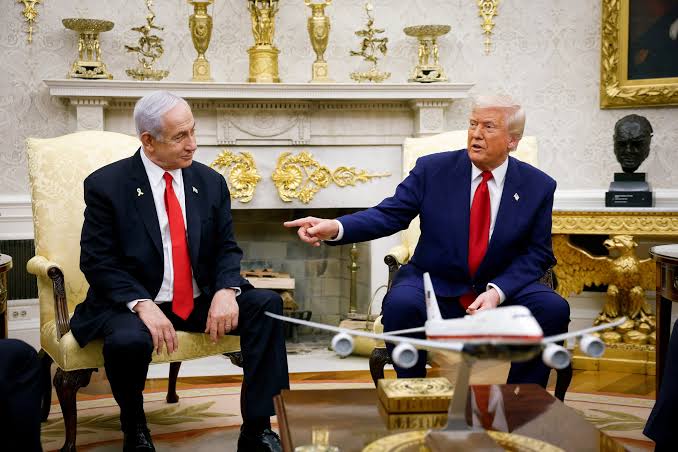
Reconsidering the relationship of America and Israel in 2026 also demands an analysis of the way leadership styles relate to one another. History suggests that the Trump Netanyahu dynamic could have been analysed without success in the absence of policy guidelines and boundaries, as was the case in 2026. It is in the best interests of a more balanced and sustainable diplomatic framework for the U.S. administration that moves away from US unconditioned support Israel. The White House’s best chance at maintaining its credibility and aiding its closest ally in the Middle East from becoming caught up in unsustainable geopolitical dead ends is to champion a balanced approach to Trump Israel policy 2026.
At the end of the day strategic clarity is the bottom line of the debate on US-Israel unconditional support. Uncritical alignment cannot but further separate both countries from the rest of the world. The next administration can preserve the partnership’s resiliency, integrity, and twenty-first century capability through an empowered, interest-based approach based on mutual accountability.
Frequently Asked Questions (FAQs)
Q1. What does a tough love approach mean for bilateral ties?
A1. It represents a shift from patron-client to an adult relationship that is based on mutual interest and on the respect of international law.
Q2. Does placing conditions on support weaken regional deterrence?
A2. Proponents, on the other hand, believe that this is the right direction. A disciplined approach will prevent the further isolation of the region and the escalation of long-term insurgency and ensure that America’s power is used to secure America’s interests and not to sustain and perpetuate unmanageable local conflicts.
Q3. How are shifting domestic demographics impacting foreign policy debates?
A3. Younger Americans, on both sides, are growing more cynical about “blank check” foreign policies, and accountability and human rights will be essential to the long-term viability of the U.S.-Israeli relationship.
Q4. Why is conditionality becoming a prominent topic for future administrations?
A4. Regional tensions and a divergence of strategic interests have resulted in increased awareness of the dangers facing moral hazard, and policy makers have decided that linking assistance to positive diplomatic engagement serves both long-term interests.
Conclusion
A time of passive acquiescence in Washington is over. Outdated models of uncritical alignment only serve American interests, and Israel’s ultimate security. The next administration has a defining moment to set both countries on a path to a more stable, secure and sustainable future by redirecting the culture of unconditional comfort to a culture of “real” expectations, based on principle, honesty and firmness.
Looking to connect with the currents of international politics and changing partnerships? Get Dubai Key Insights today to receive the latest analysis, expert geopolitical commentaries and all the news you need, right in your inbox.