





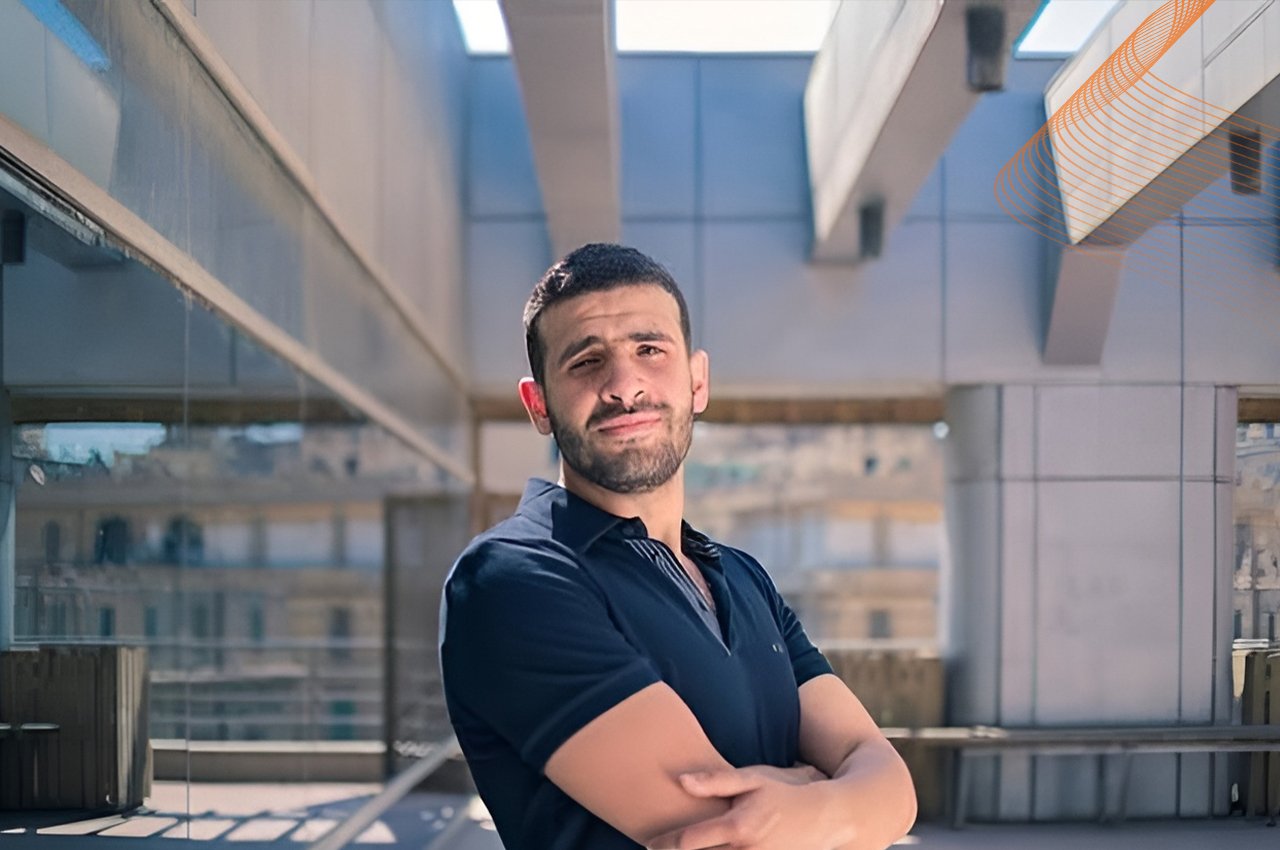
A quiet revolution has emerged in 2017, within Cairo’s notoriously congested streets. People worked long hours in thick traffic, riding on overcrowded public transport or taking private vehicles, which charged high prices for their commute. Then, a young Egyptian tech entrepreneur, Mostafa Kandil, saw this urban traffic congestion and decided to change the rules of mass transit.
Mostafa Kandil’s creation of Swvl was not only a ride hailing app, it was a new class of mobility tech company in the Middle East and North Africa (MENA) region. His vision combined public transport affordability and ride-hail innovation. The Mostafa Kandil Swvl founder story is one of the most amazing operational stories in the Arab tech industry today.
In Cairo, on the NASDAQ trading floor, and with strategic investments in Dubai, here is the story of how the city-dwelling entrepreneur Mostafa Kandil has created Swvl and reinvented the concept of mobility as a service in emerging markets.
Who is Mostafa Kandil? The Visionary Behind Swvl
It all started with Mostafa Kandil and understanding that man is the key to understanding Swvl. Kandil was an educated Petroleum and Energy Engineer from The American University in Cairo, but he very soon discovered that his true passion was in constructing scalable tech platforms rather than conventional engineering.
Mostafa Kandil’s operational and marketing skills were developed in the fast-paced tech industry before he started his own business. He is the co-founder and co-provider of Carmudi, an ecommerce website supported by Rocket Internet in the Philippines. In the future, as a market expansion manager for Careem, he led the way into untouched regional markets and saw with his own eyes the inefficiency of micro-transits preventing millions of commuters from making their daily journeys.
In early 2017, Kandil co-founded Swvl, along with Ahmed Sabbah and Mahmoud Nouh. The idea was very simple: normal minibuses and coaches on fixed routes, booked online via a user-friendly smartphone app. It was specifically created to fill the huge gap between the high cost private taxi and low quality public transport.
What is Swvl and How Does It Work?
Swvl is a tech-powered mass transport system that reinvents public transport. Swvl has an asset-light business model, avoiding the capital expenditure of owning and maintaining its own buses. The platform works with independent private bus companies and optimizes their routes, schedule and capacity with the support of artificial intelligence algorithms.
Key Pillars of the Swvl Business Model
At the heart of Swvl’s operations is the use of dynamic route optimization, which relies on predictive data analysis to generate virtual bus stops and adaptable timetables according to the actual demand from riders. Passengers book seats in advance at a fixed price – which is still far less expensive than a private ride – and no longer have to rely on the whims of the meter. In addition to being a service for commuters, the company grew its service to become a managed enterprise mobility solution for companies, schools, and universities.
As a mobility start-up solution provider, Swvl’s solutions significantly cut city emissions, commuters’ travel time and increased the utilization of private fleet operators through addressing high-density city transit routes.
How Swvl Disrupted Public Transport Across MENA
Public transport in emerging markets has been inadequately funded, unreliable and unsafe for a long time. How did Swvl manage to disrupt public transport so quickly?
Firstly, Swvl resolved the middle income conveyance issue. Every day, millions of people worked in Cairo, Karachi, and Nairobi got on the bus or train to go to work, and a significant part of their monthly wages were used to pay for their transportation. Swvl provided a good compromise with air-conditioned and reliable travel at a lower price than private taxis.
Secondly, the platform adopted new levels of safety and accountability. The platform’s features of live GPS tracking, verified drivers and cashless digital payments made it a safe space – especially for women who experience harassment on the traditional public transport system.
Last but not least, Swvl scaled their business around data. Rather than a top-down approach to municipal planning, the app used live demand signals to map commute patterns, enabling new routes to spring up where they were most needed.
The one-of-a-kind execution made Mostafa Kandil a prototype tech entrepreneur success story in Egypt, proving that deep tech solutions can be built in Cairo and exported globally.
The Swvl NASDAQ Listing: A Milestone for Arab Tech
Mostafa Kandil’s April 2022 IPO of the MENA tech startup on the stock exchange using a SPAC merger was something that few founders in the Arab world had done before. When it was listed, Swvl was valued at nearly $1.5 billion, and Kandil was one of the youngest CEOs of a company listed on the NASDAQ.
The Swvl listing on the NSE NASDAQ proved the point that a Cairo start-up founder success story could be replicated on the world’s biggest financial stage. It also acted as a loud call to the rest of the tech startup success story in the MENA region to invite global VC funds to take Middle Eastern tech innovations seriously.
Navigating Turbulence: Swvl Business Model Evolution in 2026
Macro challenges were faced in the post-listing period. Interest rate increases, changing capital market valuations and currency devaluation in emerging markets put mobility companies all over the world on the thinking warpath regarding cash burn. Mostafa Kandil’s leadership style is one that dramatically shifted the trajectory of Swvl towards a sustainable profitability.
The Strategic Shift to High-Margin B2B Markets
Instead of the consumer-focused, heavily subsidized rides, Swvl shifted its focus to enterprise contracts and software-based fleet management, and high-margin services.
Swvl 2026 is a restructuring of operations, making it a leaner, and highly disciplined enterprise first business. The company’s business focus was primarily on the high-yield GCC markets, especially in the UAE and Saudi Arabia. Corporate client contracts became an increasing portion of the top line, and institutional transit contracts soon started to dominate the revenue mix. Meanwhile, focusing on dollar-pegged and GCC revenues helped to substantially shield the business from foreign exchange fluctuations and ensure net dollar retention.
Swvl vs Uber: A Unique Approach to Mass Transit
Many people mistakenly think that Swvl is competing with Uber. Their business models actually cater to different consumer needs.
Instead of Uber’s four-door sedans that carry one to four people, Swvl’s high-capacity vans and minibuses can carry 12 to 50 commuters at a time. This structural difference results in different pricing models. Uber charges based on the distance travelled, with prices rising during rush hours, while Swvl has fixed rates, which can be up to seventy percent less expensive.
In addition, Uber is on-demand, point-to-point rides to serve individual passengers through individual gig drivers while Swvl is about scheduled daily commutes and corporate travel, serving existing fleet operators directly. In essence, Uber changed the nature of ride-hailing, while Swvl changed that of mass transit by creating the digital backbone for the system that solves urban congestion at scale.
Swvl Dubai Operations & The UAE Ecosystem
Dubai has definitely become the start-up hub of the Middle East. Given the strategic value of the city, Swvl Dubai operations were pivotal in the company’s international expansion.
The Dubai tech startup ecosystem offered Swvl world class logistics, progressive regulations, and direct access to and experience with global capital markets. Mostafa Kandil went on to join the Advisory Council Member of the Dubai Chamber of Digital Economy where he mentored the next generation of entrepreneurs and helped shape their future.
In the current scenario, Swvl UAE business keeps growing swiftly, enabling corporate mobility for large commercial establishments and institutions in the Emirates.
What is Mostafa Kandil Doing Today?
As an influential tech founder Arab world icon, Mostafa Kandil continues to lead Swvl as CEO, sharpening its focus on enterprise mobility software, corporate transport optimization, and expanding footprint across key high-yield international corridors.
Kandil’s success story provides a case study of how a tech firm can navigate through turbulent emerging markets with calculated operational agility, strategic pivots, and financial discipline.
Frequently Asked Questions (FAQs)
Q1. Who founded Swvl?
A1. Mostafa Kandil, Ahmed Sabbah and Mahmoud Nouh founded Swvl in Cairo, Egypt in 2017. Mostafa Kandil remains the CEO.
Q2. Is Swvl still operating in the UAE?
A2. Yes, Swvl UAE operations are in effect and expanding. Swvl offers corporate mobility services, institutional mobility services, and software-based fleet management for Dubai and the whole GCC region.
Q3. How does Swvl make money?
A3. Swvl has a multi stream revenue model. It earns from corporate enterprise contracts, private sector fleet management software fees and ticket sales on regular consumer commuting routes.
Q4. How did Swvl get listed on NASDAQ?
A4. In April 2022, Swvl listed on the NASDAQ exchange in a business combination with a special purpose acquisition company (SPAC) called Queen’s Gambit Growth Capital.
Fuel Your Growth with Dubai Key Insights
Dubai Key Insights follows the leaders, startups, and technological changes that are changing the business landscape of the Middle East. From startup founders developing their new ventures to investors looking for comprehensive market insights, our exclusive analysis and ecosystem reports have got you covered.
Get top news, executive profiles and mobility tech developments from Dubai straight to your inbox, subscribe to Dubai Key Insights today.