





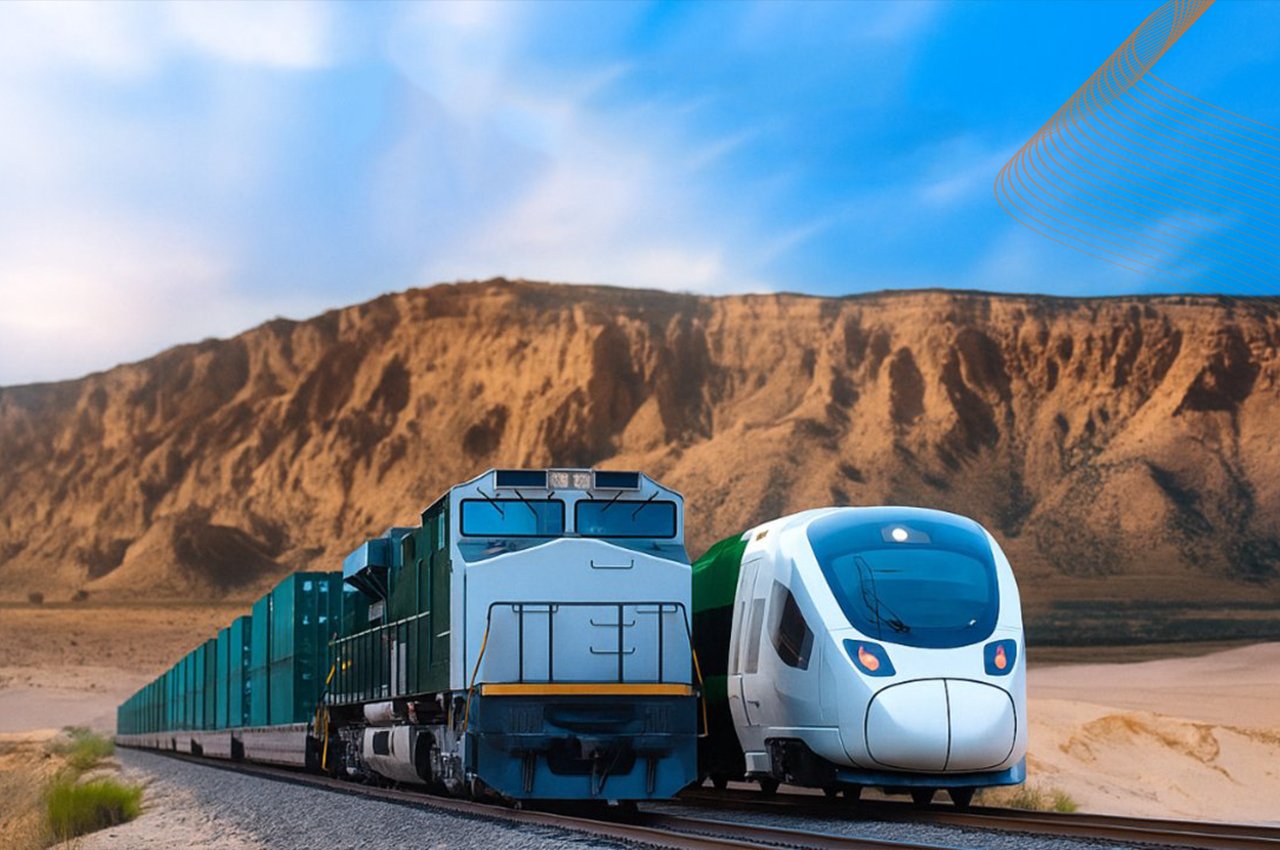
Travel and trade through the Gulf is changing drastically. The traditional method of travelling between UAE and Oman has been traveling by car across the border or by air for decades. But a significant infrastructure breakthrough is just on the horizon. The Hafeet Rail 2027 project will be a game-changer for regional mobility, providing a cutting-edge transit route that will connect neighbors like never before.
Whether you’ve been curious about the Oman to UAE train, its speed or what it entails for your upcoming weekend trip across the border, you’ve come to the right place. Let’s take a deep dive into all of the information you need to know about this historic transportation breakthrough.
What is Hafeet Rail and Why Does It Matter?
Hafeet Rail is a joint venture company between Etihad Rail, Oman Rail and Mubadala Investment Company, formerly called Oman-Etihad Rail Company. With its name based on Mount Hafeet, which stands proudly on the border region, this mega-project is the first time in the history of the Gulf Cooperation Council (GCC) which the railway has been constructed across two distinct countries.
People interested in the UAE new train project 2027 are interested in a system that integrates the economic, industrial and passenger centres smoothly. Unlike conventional transit systems, which are road and air based, this railway offers a sustainable, high-speed option, significantly reducing transit travel times and congestion.
Route, Track Layout, and Key Stations
The alignment of the Hafeet Rail route passes through a wide variety of topographical regions and conditions, covering a distance of approximately 238 to 303 km, passing through majestic mountain ranges, wadis and bustling urban centers alike.
The tracks run from the important industrial port of Sohar, in Oman, on through Al Buraimi to Al Ain and then on directly into the UAE’s main national rail system. With this connectivity, in the future, passengers will be able to travel seamlessly between major cities. The Hafeet Rail stations key stops are strategically located to service key economic corridors, ensuring the ease of travel between Abu Dhabi, Al Ain and Sohar.
This engineering feat has been made possible by millions of cubic metres of earthworks being dug, dozens of new specialised bridges and viaducts being erected and the Hajar Mountains being tunneled through.
Speed and Travel Times: How Fast is the Train?
One of the most dynamic issues for future commuters and travellers is speed. If you are wondering how quick is Hafeet Rail, then one need only look at the numbers.
The passenger fleet is designed to travel at a maximum speed of up to 200 kilometers an hour on the trains that will run in Oman UAE. Meanwhile, heavy freight units will be able to run at speeds up to 120 kilometers per hour.
How will these speeds affect your plans?
- The journey from Abu Dhabi to Sohar takes about 100 minutes.
- Since moving between Al Ain and Sohar reduces to an incredible 47 minutes, that’s not out of the realm of possibility either.
This speed is much more conducive to a long haul driving day than hours spent at border posts and high way traffic before the start of a workday!
Launch Date, Project Updates, and Trial Operations
There is a lot of excitement about the official timetable. When will Hafeet Rail open? A number of recent developments have been reported which show that heavy construction has reached significant stages and track laying is well advanced.
Regional transport announcements say the trials for the Oman to UAE train will be launched in the fourth quarter of 2027. The momentum has persisted since the legal and operational aspects have been formalized through government signings and cross-border agreements, propelling the project into its testing phase.
With regard to the price of Hafeet Rail tickets, the operators have not yet finalized the official fare structure. But industry sources say there will be strong competition with highway fares and strong incentive in the use of regional coach services to ensure maximum public use.
Etihad Rail vs Hafeet Rail: What is the Difference?
One of the main differences between the domestic and overseas networks is that it is easy to get them mixed up. Etihad Rail is responsible for the main freight and soon the passenger network that stretches from the Emirates, while Hafeet Rail is the one that specifically creates the cross-border joint venture that connects the Emirates network to the other countries towards the Oman network. Imagine Etihad Rail as the backbone of the internal transport network and Hafeet Rail as the gateway to the external network in the Sultanate.
Frequently Asked Questions (FAQs)
Q1. When will the Hafeet Rail project officially open for public use?
A1. The network will undergo trials in the fourth quarter of 2027, with the aim of offering commercial passenger services.
Q2. What will the travel time be from Abu Dhabi to Muscat or Sohar?
A2. The direct Abu Dhabi-Sohar passenger flying time will be around 100 minutes, significantly reducing the usual travel time by road.
Q3. Will Hafeet Rail carry passengers as well as cargo?
A3. Yes, it’s a dual system, it is a high capacity freight logistic network, as well as comfortable and modern passenger trains.
Q4. How fast will the passenger trains travel?
A4. The passenger train sets have a maximum speed of up to 200 km/h.
Conclusion: Get Ready for a New Era of Travel
The Hafeet Rail 2027 project is much more than a railway line in the desert; it’s a symbolic connection that brings together cultures, economies, and people. Whether you’re looking to escape to Omani coastal towns over the weekend, or monitor regional logistics evolution, this project is bound to make your trip a seamless one.
Would you like to remain updated on all the infrastructure developments in the region? Stay informed by bookmarking Dubai Key Insights and signing up for our newsletter for up to the minute updates, ticket announcements and in-depth travel guides as the launch date nears.
Follow Dubai Key Insights for real-time updates on global business, major real estate projects, tourism booms, and futuristic tech innovations.