





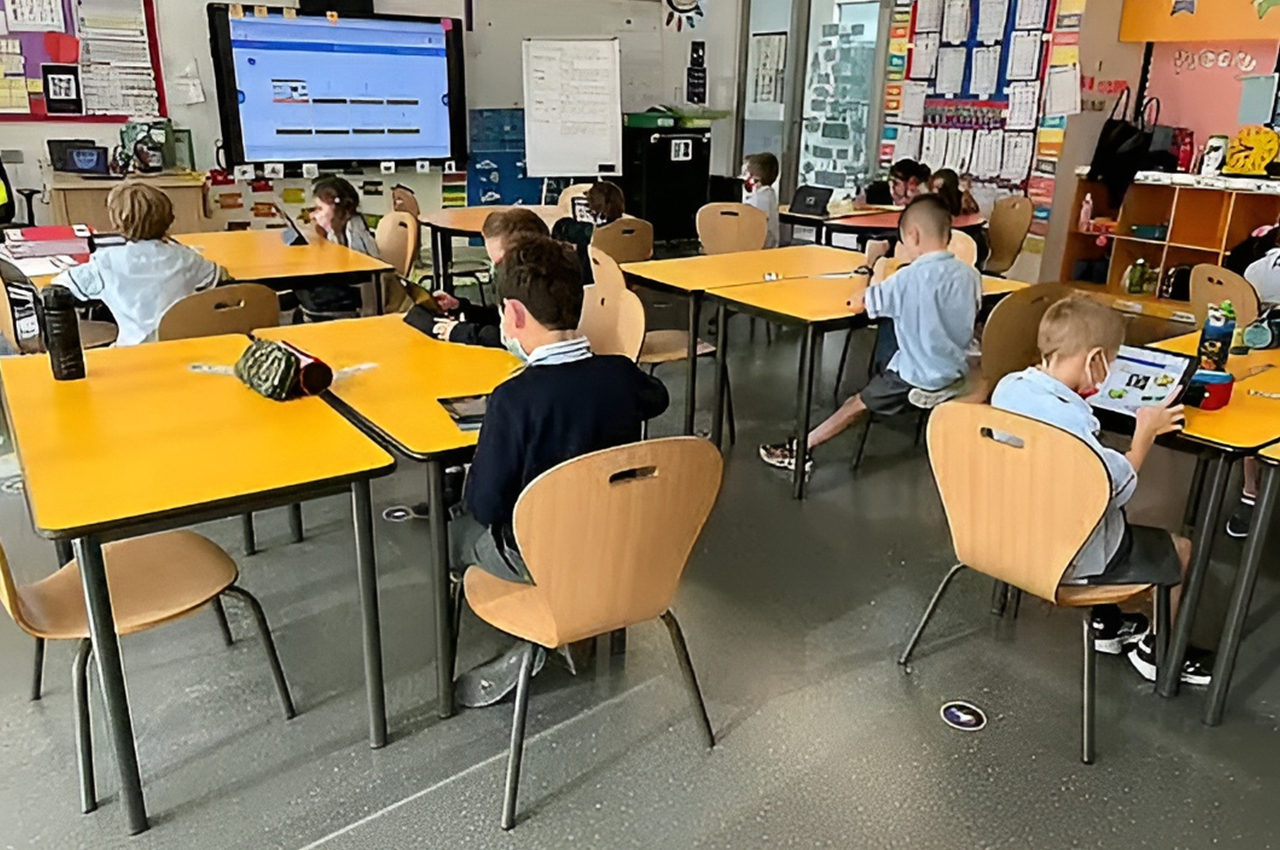
The UAE’s advanced digital infrastructure has enabled a smooth and rapid transition to online classes, ensuring continuity in education during disruptions. Schools and universities have been able to transition their education online relatively seamlessly thanks to high penetration of internet and national connectivity and coordinated Government platforms.
How did UAE digital infrastructure help to seamlessly move to online classes?
The UAE has strong national connectivity and government-driven online platforms to support education, enabling scalable and reliable remote learning.
Key enablers:
- Coverage of high-speed broadband and 5G in residential areas and the major cities.
- Students and teachers have access to devices and digital tools widely and freely.
- Centralised education platforms with a virtual classroom function.
- Good inter-agency co-ordination between schools, regulators and telecom service suppliers.
The UAE government’s digital transformation reports indicate that the UAE is one of the leaders worldwide in terms of internet penetration, with over 99 per cent penetration, which has a significant impact on the ability to continue online learning.
Which platforms are schools and universities in UAE using?
Government-supported and international online platforms are in use at educational institutions throughout the UAE.
Common tools include:
- Coursework assignment learning management system (LMS)
- Live class video conferencing tools.
- An online assessment platform for exams/evaluations.
Some public and private schools have implemented a hybrid learning model that combines in-person and online instruction as necessary.
Why is the UAE suitable for the digital age of education?
The UAE has been making significant efforts to transform the Government into a ‘Smart Government’ over the last 10 years.
Key advantages:
- The use of smart learning strategies at an early stage
- A robust telecom infrastructure by top service providers.A robust telecom infrastructure by top service providers.
- The promotion of digital literacy and innovation by the Government are promoted.The Government’s support for digital literacy and innovation is encouraged.
The Ministry of Education has been at the heart of:
- Establishing a standard methodology for learning online,
- Developing educators’ capacity in digital tools
- Making sure the quality is the same in various institutions
Are there any remaining difficulties with online education?
Although infrastructure is well developed, there are still some problems.
Key issues:
- Student involvement in virtual settings
- Screen fatigue and decreased attention spans.
- Differences in the home learning environment.
Teachers are dealing with these issues by:
- Interactive teaching methods
- Blended learning models
- Continuous feedback systems
What are the outcomes for students and parents brought by digital learning?
With the transition to remote learning, families have had to adapt their relationship with education in new ways.
For students:
- An opportunity for more flexibility in learning.More learning opportunities for flexibility.
- Improved digital skills
- Access to recorded lessons and resources
For parents:
- Greater engagement with young people in their learning.
- Must know how to organize schedules and learning settings
Overall, the transition has helped accelerate the UAE’s journey towards a future-ready education system.
What will the future of online learning be as far as the UAE education system is concerned?
Yes. Online learning is now an integral part of the UAE education strategy.
Future outlook:
- The rollout of hybrid learning models.The ongoing implementation of hybrid learning models.
- Incorporation of AI and personalised learning resources.Embedding of AI and personalized learning materials.
- Increase in digital curricula and remote access programs.
The UAE’s long-term vision is on technology-driven education that is flexible and adapts to changing needs.
Online Learning in the UAE – FAQs.
Q1: What made it possible for the UAE to move to online classes in such a short time?
A1: Schools were able to move to digital with little disruption, with strong digital infrastructure, high internet penetration, and government coordination.
Q2: Do the UAE still have online teaching?
A2: Yes. There are now many institutions that have an in-person classroom with an online component.
Q3: What are the popular platforms in online education?
A3: Learning management systems, video conferencing solutions and digital assessment systems are deployed in schools.
Q4: Do pupils benefit from online learning?
A4: When used with an interactive teaching strategy and at home support, it can be effective.
Stay Ahead with DKI
The UAE’s digital transformation is changing the education landscape, the business landscape, and the lives of people.
To keep up to date with the latest trends in technology, policy and innovation in UAE, follow Dubai Key Insights (DKI) – your guide to the region’s digital future.