





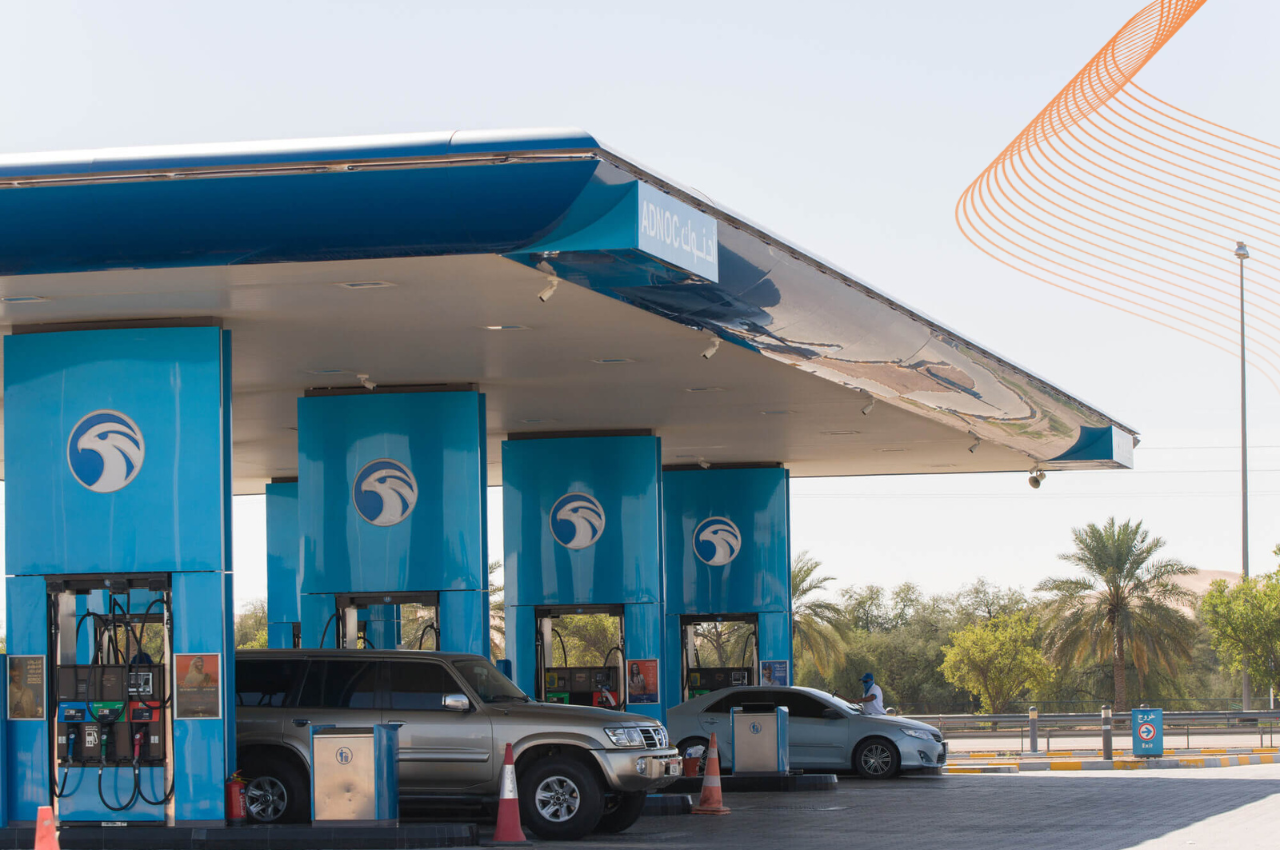
For any vehicles that drive around Dubai or anywhere in the Emirates, it is very important to understand the price of fuel for a month. Since the Ministry of Energy opened local fuel prices to market forces in line with international oil prices, local pump prices are subject to regular review every half month. To make sense of these changes, it’s important to take a view of global crude trends, regional refining performance and economic considerations in regional fuel markets.
This comprehensive guide will dissect the UAE petrol price prediction 2026, inform you of the monthly history of the petrol price, explain how the UAE petrol pricing mechanism works, and provide answers to some of the most frequently asked questions regarding a steady price for petrol.
Understanding the Framework: How UAE Petrol Prices Are Calculated
Local pump rates are not subject to sudden changes. The monthly rate adjustment mechanism is the fundamental reason why prices are adjusted at distribution locations operated by the major retailers such as ENOC, ADNOC and EPPCO.
The Role of the UAE Fuel Price Committee
The UAE Fuel Price Committee convenes at the end of each calendar month to assess world energy developments. They review international crude pricing principles, refined product spot rates, transport logistics and operating costs as part of the process of setting uniform retail prices in all of the emirates. These new rates will become active on the beginning of the next month.
Global Oil Price Linkage and Market Factors
Local retail prices are aligned with international benchmarks (mainly the spot market price of Brent Crude). Crude oil is a commodity that is traded globally and as such, geopolitical events, production quotas set by the OPEC+ and refinery maintenance cycles as well as global macro-economic demand curves can directly influence pump prices at local stations. The retail fuel prices in the country normally move up in the next month when the global crude price is raised.
Historical Monthly Breakdown of UAE Petrol Prices in 2026
A month-to-month historical comparison of fuel prices shows the very close correlation between the local fuel price and changes in demand and in global energy supply and geopolitical events.
In January 2026, the price of Super 98 was 2.53 dirhams per litre; Special 95 was 2.42; E-Plus 91 was 2.34 and Diesel was 2.55. With the start of February 2026, prices rebounded slightly with the price of Super 98 restored to 2.45 dirhams, Special 95 to 2.33 dirhams, E-Plus 91 to 2.26 dirhams and Diesel to 2.52 dirhams. Super 98, Special 95, E-Plus 91, and Diesel were up at 2.59, 2.48, 2.40, and 2.72 dirhams respectively for March 2026. The prices of Super 98, Special 95, E-Plus 91 and Diesel rose considerably in April 2026 to 3.39 dirhams, 3.28 dirhams, 3.20 dirhams and 4.69 dirhams respectively. This was reflected in the 3.66, 3.55, 3.48 and 4.69 dirhams of Super 98, Special 95, E-Plus 91 and Diesel, respectively, as of May 2026. Petrol Super 98 reached a peak price of 3.95 dirhams in June 2026, Special 95 was at 3.83 dirhams, E-Plus 91 at 3.76 dirhams, and Diesel at 4.33 dirhams. The price of Super 98 cooled to 3.40 dirhams, Special 95 to 3.29 dirhams, E-Plus 91 to 3.21 and Diesel dropped to 3.60 dirhams in July 2026. August 2026 prices continued to increase, with Super 98 at 3.60 dirhams, Special 95 at 3.49 dirhams, E-Plus 91 at 3.41 dirhams and Diesel at 3.80 dirhams. September 2026 recorded Super 98 at 3.80 dirhams, Special 95 at 3.69 dirhams, E-Plus 91 at 3.61 dirhams, and Diesel at 4.30 dirhams. Super 98, Special 95, E-Plus 91 and Diesel at 4.40, 4.28, 4.21 and 4.80 dirhams per litre respectively, respectively reached annual highs in October 2026.
UAE Petrol Price Prediction 2026: Expected Trends for Upcoming Months
Forecasting fuel prices for the coming months requires not only analyzing market indicators in the world but also taking into account the seasonal fluctuation of demand as well as production policy of big exporting countries.
Key Factors Influencing Future Fuel Rates
The OPEC+ supply side decisions on reducing output or approving output quotas directly affect the international crude balances. The regional road transport volume, commercial shipping volume and international tourism are often greater in the winter months when the weather is cold, and winter heating oil demand in the world can also reduce refined distillate supplies. Also, while unrefined crude stock levels are unchanged, refining capacity and shipping disruptions can result in temporary spot market spikes.
Projected Trend Analysis
Retail prices should remain unchanged from the recent late-year price increases based on market observations and global energy forecast. But short-term price fluctuations in the markets will cause a few price spikes at the local level, whereas overall price adjustments with the addition of supply are expected to move the standard fuel types into a balanced price channel towards the year end transition.
Detailed Grade Breakdown: Choosing the Right Fuel Grade
There are three main grades of unleaded petrol available at fuel distribution stations throughout the Emirates, in addition to commercial diesel fuel. The ideal choice hinges on engine compression ratios, company recommendations, and driving style.
Super 98
Among the standard consumer options, Super 98 is the highest octane. Super 98 is designed for high-performance engines, sports cars, and roadsters that have a high compression ratio, to avoid engine detonation and maintain performance in extreme driving conditions.
Special 95
Special 95 is the most popular petrol grade burned throughout the country. It provides a compromise between performance and affordability, and it’s an ideal match for most modern sedans, crossover vehicles and mid-sized SUVs that are on the road today.
E-Plus 91
E-Plus 91 is the cheapest unleaded fuel that is available at the retail pump. It is ideal for drivers of low-compression engines, compact cars and fleet transport vehicles who want to benefit from reliable performance on a day-to-day basis while reducing their fuel overhead.
Commercial Diesel
Heavy duty transport vehicles, buses and industrial machinery and special personal utility vehicles are driven by commercial diesel. The pricing curve often deviates from unleaded petrol grades as a result of an interplay of different demand factors in the world for middle distillates, commercial shipping trends and industrial fuel needs.
Comparing Regional Fuel Economics: UAE vs. Regional Neighbours
A fuel price comparison of neighbouring regional markets such as Saudi Arabia shows significant differences in fuel price structures.
Some regional countries still maintain the high state subsidy to retail prices to maintain fixed prices, while the local market has a deregulated pricing policy and reflects global market developments directly. It pushes the efficient use of energy, helps meet national energy sustainability goals, and provides a degree of transparency in the energy market in the long term.
Practical Tips for Improving Vehicle Fuel Efficiency
Although the price changes monthly in line with global market prices, by practicing smart driving habits, one can reduce total fuel use, even when fuel costs are low.
Proper tire pressure is critical as low pressure causes tires to roll more slowly, which means the engine has to use more fuel to keep the vehicle moving. Smooth acceleration should be practiced by drivers as well, because quick acceleration and heavy braking will burn much more fuel than smooth acceleration and braking habits. Excessive idling is defined as the unplanned or unnecessary use of the engine when it is not in operation. Regular maintenance, including timely spark plug replacements and clean air filters, as well as regular oil changes, helps engines to run efficiently. Thirdly, emptying extra load in the trunk eliminates the burden of additional weight to the vehicle which will result in a more significant drop in fuel consumption over time.
Frequently Asked Questions (FAQs)
Q1. What is the current petrol price in the UAE today?
A1. The retail fuel prices as of October 2026 are: Super 98: AED 4.40 per litre, Special 95: AED 4.28 per litre, E-Plus 91: AED 4.21 per litre and Diesel: AED 4.80 per litre.
Q2. When does the UAE announce monthly petrol prices?
A2. Fuel price changes are officially announced by the UAE Fuel Price Committee on the last day of every month. The new prices will be effective from midnight on the first day of the new month in all retail distribution stations.
Q3. Why do fuel prices change every month?
A3. The price of petrol and diesel in retail outlets has been deregulated, bringing the price closer to international oil benchmarks. The monthly changes account for the fluctuation of international crude markets as well as refining margins and the world’s supply and demand.
Q4. Which is the cheapest petrol grade available?
A4. The lowest priced unleaded petrol grade in the country at retail service stations is E-Plus 91.
Stay Updated with Dubai Key Insights
Monitoring changes in fuel prices on a monthly basis can aid in making informed costs of driving decisions and plan your finances accordingly. From business logistics to everyday commutes, keeping an eye on price trends provides a better understanding of individual and operational costs.
Keep an eye on Dubai Key Insights for all the latest news on fuel prices, monthly price changes and economic information throughout the UAE.