





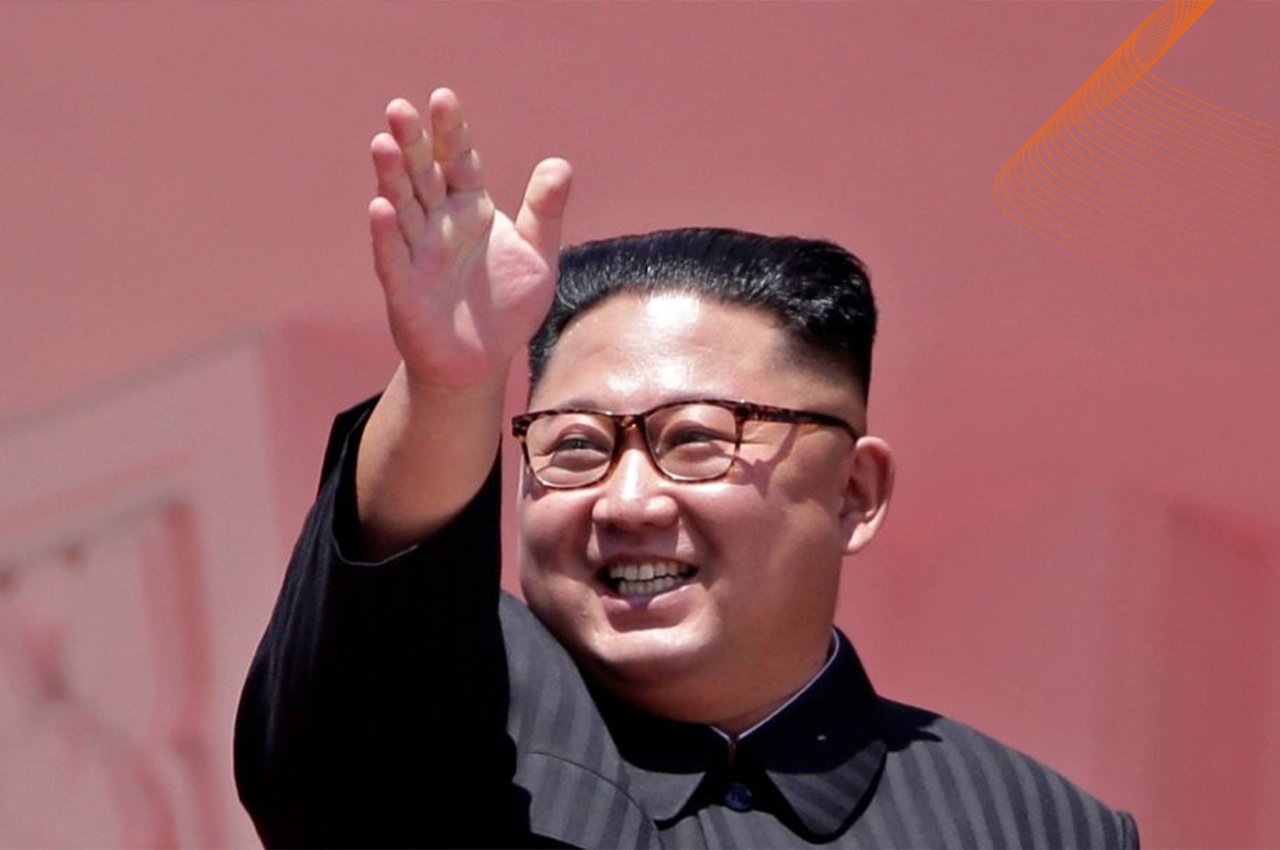
Supreme Leader Kim Jong Un has been in power since December 2011 and has transformed the political, economic and international positions of North Korea. His reign saw North Korea move from an isolationist regime that depended on traditional diplomacy to a proclaimed nuclear power asserting itself in the international arena.
Kim Jong Un: Essential Profile
Kim Jong Un is the Supreme Leader of North Korea, the General Secretary of the Workers’ Party of Korea and the President of State Affairs. He was born on January 8, 1984, and is the member of the third generation of Kim family of the nation’s founder Kim Il Sung. His immediate family is significant in his public life, consisting of his wife Ri Sol Ju, his daughter Kim Ju Ae and his sister Kim Yo Jong.
Early Life and Education
Kim Jong Un, who was born into the ruling dynasty of North Korea as the third son of Kim Jong Il, received some of his schooling secretly in Switzerland near Bern. He was introduced early into Western culture and global environments and subsequently went back to Pyongyang to study at the Kim Il Sung Military University, which was established for a more rapid succession in the late 2000s, after his father’s poor health.
Leadership Style: Monolithic Control & Strategic Agility
Kim Jong Un’s leadership is very different from his father Kim Jong Il’s. Kim Jong Un introduced the parallel development of both the nuclear arsenal and the domestic economy, the so-called “Byungjin policy,” whereas his predecessor focused on the military-first policy.
Key Characteristics of His Governance
He restored the Workers’ Party of Korea to the position of a decision-making body and thus took the decision-making from the hands of the military general staff and put it in the hands of the party’s institutions. He had top-notch reshuffles, which meant he removed his internal competition early in his career and took over the unchallenged leadership of all arms of government.
He’s a very public leader, while his father operated more quietly, and routinely makes public inspections, goes to party congresses, and personally oversees military launches and industrial inaugurations. Over the last few years, he officially institutionalized a substantial change in the attitude of the state, and described South Korea as a “permanent principal enemy” rather than a partner for peaceful reunification.
Key Strategic Decisions & Geopolitical Shifts
Nuclear Arsenal Expansion and Modernization
Kim Jong Un ordered the North to speed up its tactical and strategic missile development programs. His regime has established intercontinental ballistic missiles, solid-fuel technologies and tactical nuclear force doctrines designed to ward off foreign intervention, and has made the nuclear state status a part of the nation’s constitution.
Strategic Realignment: Deepening Russia-DPRK Ties
One of the biggest changes in Kim Jong Un’s era is the growing ties with Moscow in terms of diplomacy, economy and defence. By signing formal mutual security agreements and strengthening bilateral defense relations with Russia, Pyongyang has been able to circumvent traditional multilateral pressure, obtain energy, technical, and other types of cooperation, and establish a more powerful multi-polar foreign policy.
Succession Planning and Prominent Family Roles
Kim Jong Un promoted family members to ensure continuity and security of the regime. His sister, Kim Yo Jong, is Vice Director of the Workers’ Party Propaganda and Agitation department, an important spokesperson on foreign policy and national security issues. At the same time, his daughter, Kim Ju Ae, is often seen with the Supreme Leader during important military trials, industrial events and state visits, indicating dynastic stability for the long-term.
Frequently Asked Questions (FAQs)
Q1. What is Kim Jong Un’s official position in North Korea?
A1. North Korea’s Supreme Leader is Kim Jong Un. He is the General Secretary of the Workers’ Party of Korea and the President of the State Affairs Commission.
Q2. How did Kim Jong Un come to power?
A2. Kim Jong Un came to power in December 2011 after the death of his father Kim Jong Il. It had been decided that he was to be proclaimed the Great Successor, and he quickly came to rule the party, state and army.
Q3. What is North Korea’s current stance on unification with South Korea?
A3. North Korea officially gave up its decades-old dream for peaceful unification of the Korean peninsula under Kim Jong Un. In constitutional revisions, South Korea was officially declared a separate foreign state that was hostile to the regime and was made the regime’s foremost enemy.
Call to Action (CTA)
Stay ahead of shifting global dynamics and international affairs with deep analytical coverage. Subscribe to Dubai Key Insights today for exclusive updates, expert geopolitics breakdowns, and comprehensive coverage of regional and global developments.