





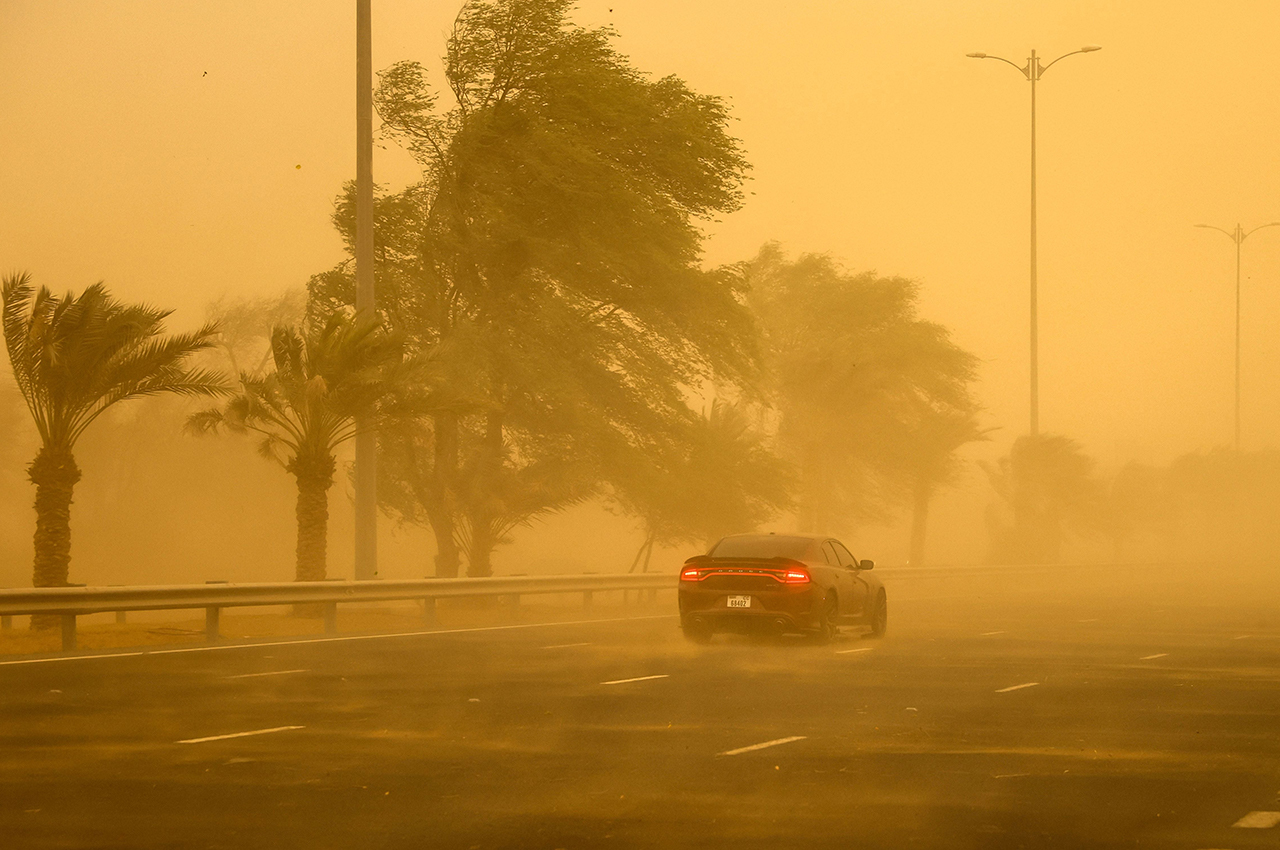
The UAE is again on a weather alert as the country is experiencing high temperatures and dusty winds, according to the National Center of Meteorology (NCM). In the next few days, residents should expect low visibility, warmer temperatures and challenges with conditions outside, particularly in areas inland and in the desert.
Why is the UAE on a high temperature and dusty wind alert?
This weather alert is primarily due to seasonal heating and changing wind patterns that are common in late spring.
Based on the data from the National Center of Meteorology:
- In the internal areas, temperatures are likely to reach over 45°C.
- The Shamal winds (northwest) are getting stronger.
- The winds are picking up dust and sand, making it difficult to see.
- This is a typical trend from May to July when the UAE experiences intense heat of the summer.
Key contributing factors:
- Low-pressure systems forming over the Arabian Peninsula
- Dry desert condition (dust can easily be blown up in the air)
- Winds of up to 40-50 kmph in exposed places
- It causes a mixture of extreme heat and airborne dust, affecting people’s health, transportation and daily life.
Which parts of the UAE will be the most impacted?
The alert applies throughout the entire country, but in some areas it is likely to be more severe.
High-risk zones:
- Southeast and Central regions (Al Ain, Liwa) – highest temperatures
- Desert roads – low visibility due to sand blow.
- Western coastal areas – stronger crosswinds
- Abu Dhabi, Dubai and Sharjah will also be impacted, especially in the middle of the day and during the afternoons.
Visibility impact
Dust and sand in the air may cause a reduction in visibility to:
- Some areas below 2,000 metres.
- Much lower, during high wind times
This poses hazards for:
- Drivers
- Aviation operations
- Outdoor workers
What will the temperature be like this week in UAE?
The UAE is in the grip of a speedy heat wave.
Expected temperature ranges:
- Region Temperature
- Coastal areas 38°C – 42°C
- Hot areas (int. areas) 42°C – 47°C
- High altitudes (mountains) 30°C – 35°C
Records indicate that the UAE has been experiencing temperatures close to 48°C in the interior regions in May in recent years, which indicates the increasing severity of the heat in the early summer. The humidity will also increase overnight in coastal cities, further increasing “feels-like” temperatures.
What impact do dusty winds have on people’s lives and health in the UAE?
Dust is more than an annoyance, it also has health and safety concerns.
Health risks
- Fine dust particles can cause:
- Respiratory problems (particularly asthma patients)
- Eye irritation
- Allergic reactions
- The Ministry of Health and Prevention recommends:
- Wearing masks outdoors
- Avoiding exposure to high levels of dust while indoors.
- Indoor use of air filters
Driving hazards
Dust causes reduction of visibility and makes accidents more likely:
- Quickly sand slip on roads
- Very limited visibility on windy days
- Dust on surfaces that causes the surface to become slippery.
- During bad weather, a traffic advisory is frequently issued.
Effect on working in the open air.
Industries affected include:
- Construction
- Logistics
- Energy sector
Companies are required to follow the midday break rules which are enforced during the summer months, when the temperatures are high, to ensure that the workers are protected.
What measures should be taken by UAE residents in this weather alert?
Resilient to extreme heat and dust necessary for safety.
Key precautions:
- Limit outdoor exposure
During peak hours (between 12 PM and 4 PM), avoid the time of day.
- Stay hydrated
Consume 2-3 litres of water per day
- Protect against dust
Wear masks and sunglasses
Close windows during high winds.
- Drive carefully
In low light conditions, use headlights.
Maintain safe distances
- Follow official updates
Keep a check on the warning issued by the National Center of Meteorology.
Does this pattern of weather occur in the UAE?
Yes, but it’s getting worse and more common.
Climate observations show:
- Increased average temperatures all over the UAE
- Increases in the number of dust events
- Longer heatwave durations
The regional data suggests that temperatures have risen, approximately 1–1.5°C, over the last few decades, resulting in more severe seasonal extremes.
How will this affect UAE citizens and companies?
It means that summer can begin early and with increased intensity for folks who are living here.
For businesses:
- The construction timelines could be impacted.
- Productivity may be reduced if the plant goes outside.
- Demand for cooling will rise substantially
Although UAE infrastructure is built to withstand extreme weather, environmental considerations of daily activities and work-place changes are still paramount.
FAQ: UAE Weather Alert – Hot Weather and Dusty Winds
Q1: How many days will be dusty in UAE?
A1: Dust events usually last 2-4 days and will vary in length depending on wind patterns. But, several waves can happen throughout the season and it is essential to keep an eye on official forecasts regularly.
Q2: Can you drive safely during the dusty windy season in the UAE?
A2: Driving is allowed but not recommended. In reduced visibility situations, decreased speeds are required, increased spacing is necessary and travel during peak dust storms, if possible, is advisable.
Q3: What are some precautions to take during storms to protect my home from dust?
A3: Close doors and windows, use air purifiers and change AC filters often. The proper insulation can help to decrease accumulation of dust inside.
Be Prepared for UAE Weather Changes with DKI. The impacts of extreme weather in the UAE impact health, business and daily life. Stay informed and prepared with Dubai Key Insights (DKI), your go-to resource for clear, actionable insights to keep you up-to-date and ahead of the curve in Dubai.