




 is scaling to become the world's largest aviation hub with a 260 million passenger capacity.)
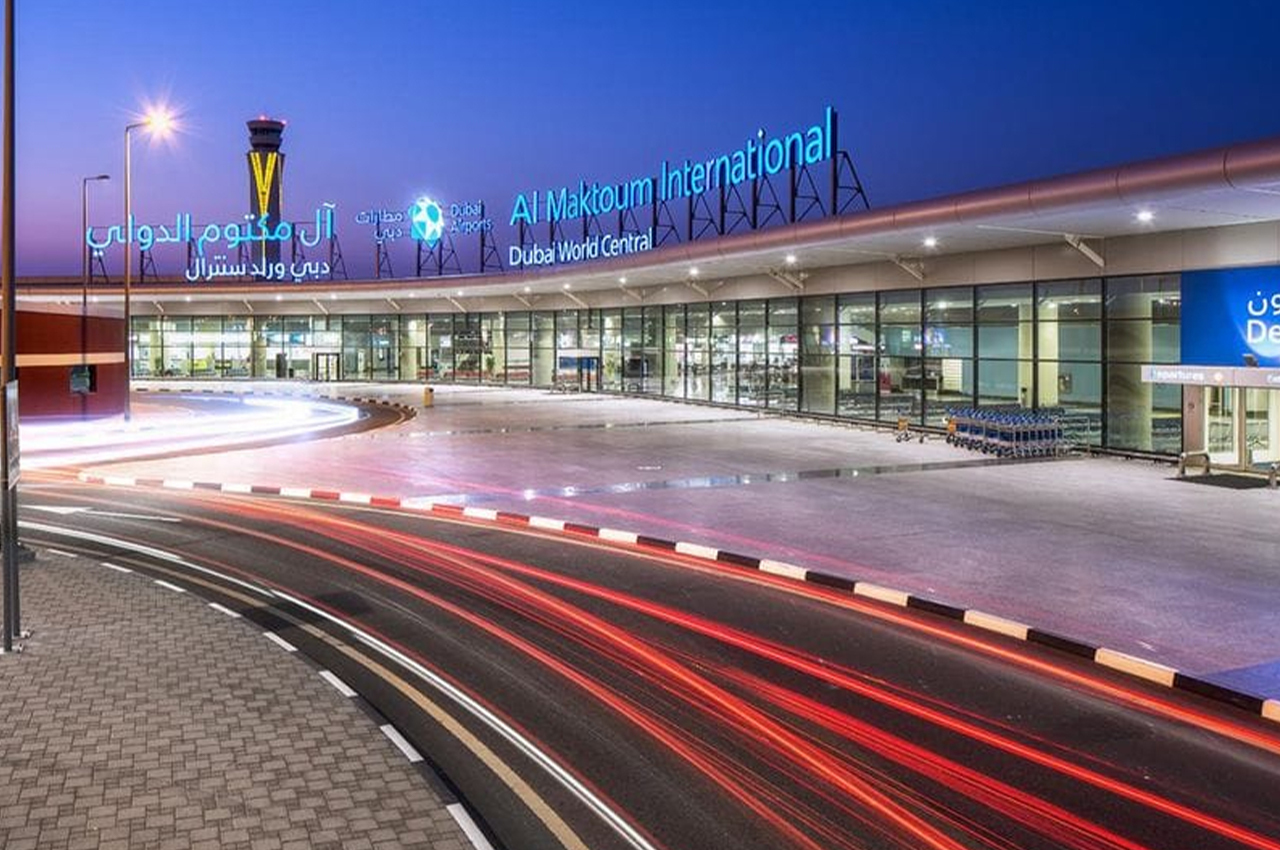
The world of aviation is about to see its biggest change in its history, and everyone’s gaze is now on the Arabian desert. Anyone who has been to the Middle East knows that Dubai International Airport (DXB) is a beast of a hub of air travel. For more than 10 years, it has been the world’s no 1 busiest international airport. But DXB is quickly becoming full to bursting capacity. The existing centre is surrounded by high-traffic residential areas and highways, making it impossible to expand any further.
Then there’s Al Maktoum International Airport’s monumental expansion. This mega-project is reshaping global connectivity and stretches to an area of 70 square kilometres, more than five times the size of DXB and larger than the island of Manhattan. This is an upgrade, and a massive $35 billion blueprint for the world’s largest airport that Dubai has ever dreamed of.
So let’s immerse ourselves in the engineering feats, the timeline planning and the economic impact that will make Al Maktoum International Airport the ultimate hub for global travel.
DWC vs DXB: The Changing of the Guard.
Understanding the size of the DWC expansion project requires an understanding of the current congestion at DXB. With the capacity to handle just under 90 million passengers each year, DXB’s infrastructure is virtually fully loaded. There simply is not the space needed to develop more runways and more gates.
This is completely addressed by the Al Maktoum International Airport master plan. The aerotropolis (urban area centred around an airport) in Dubai South has been developed from scratch and is designed to take on the future of commercial aviation.
Whereas the fully completed Dubai airport (DWC) will have Al Maktoum Airport 5 runways, DXB airport has a dual runway design. Most importantly, they’re “parallel,” which means they’re far apart and have no aerodynamic interference, significantly increasing the number of flights able to take off and land at the same time.
When is the Opening of Will Al Maktoum Airport at Full Scale? The Timeline
The development of Dubai World Central is now progressing at a very fast pace, but it is not going to happen in a hurry. The Dubai government is rolling out a very deliberate, gradual approach to reduce worldwide travel disruption.
Phase 1 (Targeted for 2030–2032)
The first 10-year construction phase provides the basic infrastructure for the modern mega hub. It encompasses the construction of the huge West Terminal and Concourse 1. This one concourse will be a massive 2.7 kilometres long with 100 contact gates. At the end of this stage, the capacity of Al Maktoum Airport will be more than adequate to handle 150 million passengers per year.
The Grand Transition (2032)
The latest aviation authorities and DWC airport construction update 2026 briefing has recorded that the cut-off date for the changeover to DWC from DXB will be in 2032. Dubai will not have to deal with complex dual-airport operations at all. Rather, the emirate will deploy a comprehensive relocation, preparing and moving all airline operations at the same time, including the massive Emirates airline DWC move. After the shift, DXB will cease to accept commercial traffic.
The Ultimate Phase
- The numbers behind this mega-hub in the last stages are straight out of science fiction:
- An absolute design capacity for Dubai Airport is 260 million passengers every year.
- Dubai Airport’s 400 gates are divided into four large concourses.
- A record possible cargo handling capacity of 12 million tonnes per year.
Next-Gen Technology: The Airport of Tomorrow:
Dubai’s airport is not simply constructing a larger version of a traditional airport; it will create a seamless travel journey with the help of state-of-the-art technology. DWC is being constructed because you’ve probably experienced several hours of layovers before and want them to be different this time.
Passengers will move through eight smaller, deeply integrated terminal zones, instead of navigating one overpowering terminal structure. These zones will be linked together in an integrated manner through high-speed, underground automated people movers.
The facility is integrating artificial intelligence (AI)-powered immigration lanes that can process travellers in seconds, eliminating the need for the traditional human immigration line. Moreover, autonomous robotics will be used with everything from behind-the-scenes baggage routing to automated curbside luggage drops. The architecture is distinctly geared towards the comfort of the passengers, from luxury wellness spas to indoor micro-gardens.
The Real Estate and Infrastructure Boom is the second of four booklets. The second booklet, Beyond Aviation:
The Real Estate and Infrastructure Boom is available. The development of the world’s largest aviation hub, the UAE, is causing a huge ripple effect on the country’s property sector and infrastructure. The Al Maktoum Airport real estate impact is already reshaping the surrounding landscape into a top investment hub.
The Birth of an Airport City
The airport city, Dubai South master plan, is at the core of this expansion. The fully-integrated urban center is expected to eventually welcome more than one million people, and will become a hub for talent from the aviation, logistics, hospitality and tech industries. The real estate market in Dubai South has skyrocketed with real estate investors snatching up residential and commercial units before the completion of Phase 1.
Flawless Transit Integration
The road to and from the farthest (and most remote) desert hub will be easy enough:
Expanding Dubai Metro network (Blue Line project): The Dubai Metro terminals will be linked directly to the centre of the city.
Over in the UAE, Etihad Rail, the trans-UAE rail network, will have a dedicated station right at DWC, connecting the Dubai aviation hub directly to Sharjah, Abu Dhabi and the rest of the Gulf Cooperation Council rail network.
Frequently Asked Questions (FAQs).
Q1. Al Maktoum Airport will be fully operational for commercial passenger flights when?
A1. Although DWC airport in Dubai is already in use for cargo and some charter flights, the first big influx of commercial relocations will arrive in the years 2030 through 2032. The full conversion of all commercial airlines from DXB to DWC is confidently expected to be in 2032.
Q2. What to do with the old Dubai International Airport (DXB)?
A2. Dubai will eventually have commercial flights phased out of DXB as its infrastructure becomes fully capable of handling the entire city’s flight traffic by 2032. The long-term vision will be to transition all the services to DWC and continue to maintain a single hub ecosystem.
Q3. Why is Dubai spending $35 billion on a brand new airport?
A3. Due to urban development, DXB is limited in its capacity and cannot do more than two runways. A plot of land completely devoid of any constraints in Dubai South was needed to develop a high-capacity mega-hub to meet the Dubai 2040 vision targets and global demands for tourism and trade.
Q4. What will be the capacity of the passengers compared to other airports in the world?
A4. Al Maktoum International will be capable of handling up to 260 million passengers annually on completion. In comparison, that’s over twice the size of the world’s busiest airports and the largest airport in the world, 2032 and beyond.
Explore Dubai’s Future with Dubai Key Insights
Al Maktoum International Airport’s transformation is more than a triumph for aviation; it’s a monumental change that’s reshaping Dubai’s economic, real estate, and logistics landscape. Be an international traveller eager for the future of travelling, a Dubai investor excited about the red-hot Dubai property market or a business professional who’s watching the world’s leading logistics hub, knowledge is your strongest weapon.
Stay updated with Dubai Key Insights by bookmarking the site and discovering the latest updates, breaking infrastructure news, and expert market analysis of the mega-projects driving the UAE.