





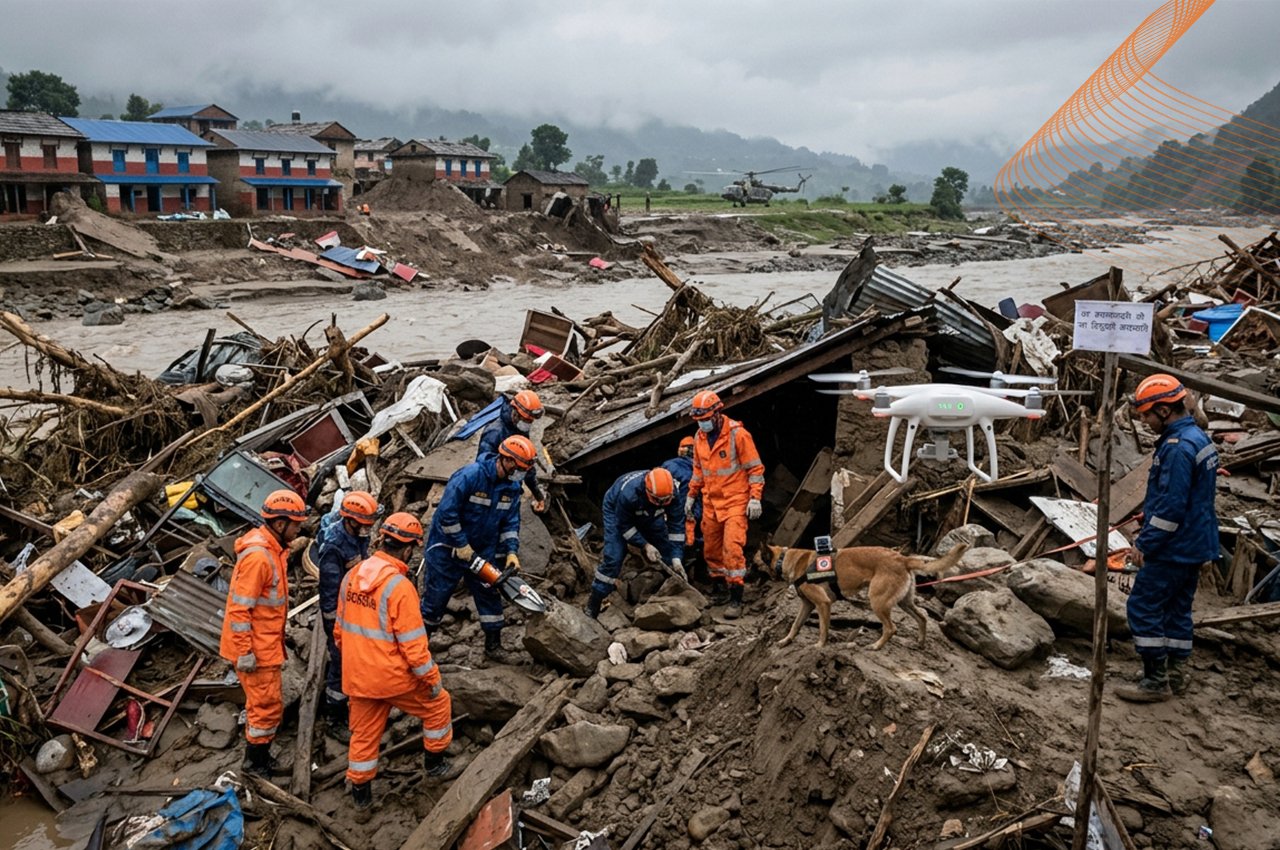
The idyllic and scenic valleys of the Himalayas on the border of Nepal and Tibet have sadly become the epicenter of unimaginable heartbreak and devastation. After a massive natural disaster caused by a high altitude glacial collapse, the communities were suddenly and violently ravaged by walls of water slamming through fragile river basins of the mountains. Local governments and international humanitarian organizations are scrambling to meet a deadline, as the Nepal flood crisis has worsened and become one of the worst humanitarian emergencies in the decade. Rescue efforts are still underway as teams search through layers of mud, silt and pulverised debris and it is essential for anyone keeping track of events around the world and region to have an understanding of the extent of the devastation.
The situation is being closely watched by global observers, climate scientists and regional climate policy makers as relief operations spread into previously un-accessed areas. This detailed report explains the meteorological reasons for the Nepal flood 2026, the increasing number of casualties, the heroic rescue operations, and the geopolitical and environmental consequences over the long term.
Understanding the Catastrophe: What Triggered the Central Nepal Floods?
The catastrophe came out of nowhere when a large high altitude ice and rock avalanche hit the high altitude border region and a wall of water, mud and boulders crashed down the Bhote Koshi and Trishuli river systems. At first, this was thought to be a tectonic earthquake because the impact was so massive, causing energy that would be equivalent to observing a major tremor, but it was soon realised that the force was actually that of a catastrophic debris flow which had originated from a critically destabilised glacier.
A large number of communities were directly hit by the central nepal floods and had no time to evacuate or alert the community. Within minutes, whole mountain communities were engulfed in all the rushing sludge, as were arterial roads, suspension bridges and multi-million dollar hydropower projects. The fragile ecosystems in the Himalayas have been increasingly threatened by global climate change, which has caused rapid melting of glaciers and highly erratic weather patterns – with lives of millions at risk in this entire region.
Current Casualties and the Growing Death Toll
Search and recovery teams have been deployed throughout the districts hardest hit, but have encountered massive obstacles and difficulties that have been life threatening as they dig through homes that are filled up to their roofs with heavy silt. The official daily update from nepal news today says that the number of people killed in the nepal flooding has risen steadily to 359 as bodies have been retrieved in districts such as Rasuwa, Nuwakot, Dhading, Gorkha, Tanahun, Chitwan and Nawalparasi East.
Unfortunately, some 1,000 people are missing from the equation, and the communities are shrouded in grief. Apart from local residents, security personnel and civil servants, a considerable number of tourists, trekkers and religious pilgrims from across the world visiting popular routes and religious sites around the Himalayan border are missing from this list. Embassies in the field are also collaborating closely with the local authorities to locate the foreign nationals who have gone missing from countries like India, the United States, China, the United Kingdom and Australia, and waiting for news from their families with utmost eagerness.
On-the-Ground Search, Rescue, and Relief Operations
The rescue efforts from the floods in Nepal 2026 are unprecedented scale, using trained dog search squads, armed police and military specialist rescue teams, and advanced helicopters to search the area. Coordinated efforts have been stepped up between government and federal disaster management organisations to ensure emergency humanitarian assistance reaches the affected population, emergency relief is established in safe areas, and stranded survivors are airlifted from isolated pockets in the mountains.
But continuing natural hazard and unsafe terrain are still a major constraint on ground operations. Additional warnings have been issued for increased water levels at the back of the newly formed debris blocks upstream, which could cause additional flash flooding leading to the risk for rescue personnel. In response to the emergency situation, aid agencies such as the International Federation of Red Cross and Red Crescent Societies (IFRC) are rapidly delivering emergency supplies that range from clean drinking water to medical trauma packs and shelter materials to help the displaced families affected by the situation that lost everything in a single night.
Economic Impact and Infrastructure Devastation
In addition to the loss of life, the economic impact of the nepal natural disaster 2026 is enormous. All major highways leading to economic hubs within the country have been washed away, cutting off supply lines and interrupting trade at key border crossings. In addition, multiple key river crossings for hydro-power generation have suffered catastrophic structural damage, causing extended power shortages in much of the country and jeopardizing national energy security.
Thousands of families in the rural areas have lost their means of livelihood when agricultural lands were covered by sterile sand and gravel and will not be able to use them for next harvest. The reconstruction of this ruined infrastructure will take billions of dollars in foreign aid, long-term engineering measures, and strong international cooperation, to ensure future infrastructure is climate-proof.
Frequently Asked Questions (FAQs)
Q1. What caused the devastating flash floods in Nepal?
A1. It began with a high-altitude glacial collapse and rock avalanche near the border that was followed by a massive surge of water and debris down the main river valleys that triggered the disaster.
Q2. Which areas are the most affected by the disaster?
A2. The worst affected districts are around the river corridors in Rasuwa, Nuwakot, Dhading, Gorkha, Tanahun, Chitwan and portions of Nawalparasi with entire villages and market centres being wiped off the face of the earth.
Q3. Are foreign nationals among the missing?
A3. Yes. Hundreds of foreigners, travellers, and pilgrims from various countries, such as India, China, the UK and the United States, are also missing.
Q4. How can people support the victims?
A4. Emergency assistance, medical and rebuilding assistance and other humanitarian aid is actively called for from international and local humanitarian organizations. Donate via official and trusted sources to prevent scams for relief.
Stay Informed and Support Recovery Efforts The situation in the Himalayas remains dynamic as rescue teams push deeper into isolated regions. For regular updates, geopolitical insights and regional news briefs, check out our latest coverage on Dubai Key Insights. Share this article to raise awareness for the families affected by this tragedy and keep up-to-date with verified international relief channels