





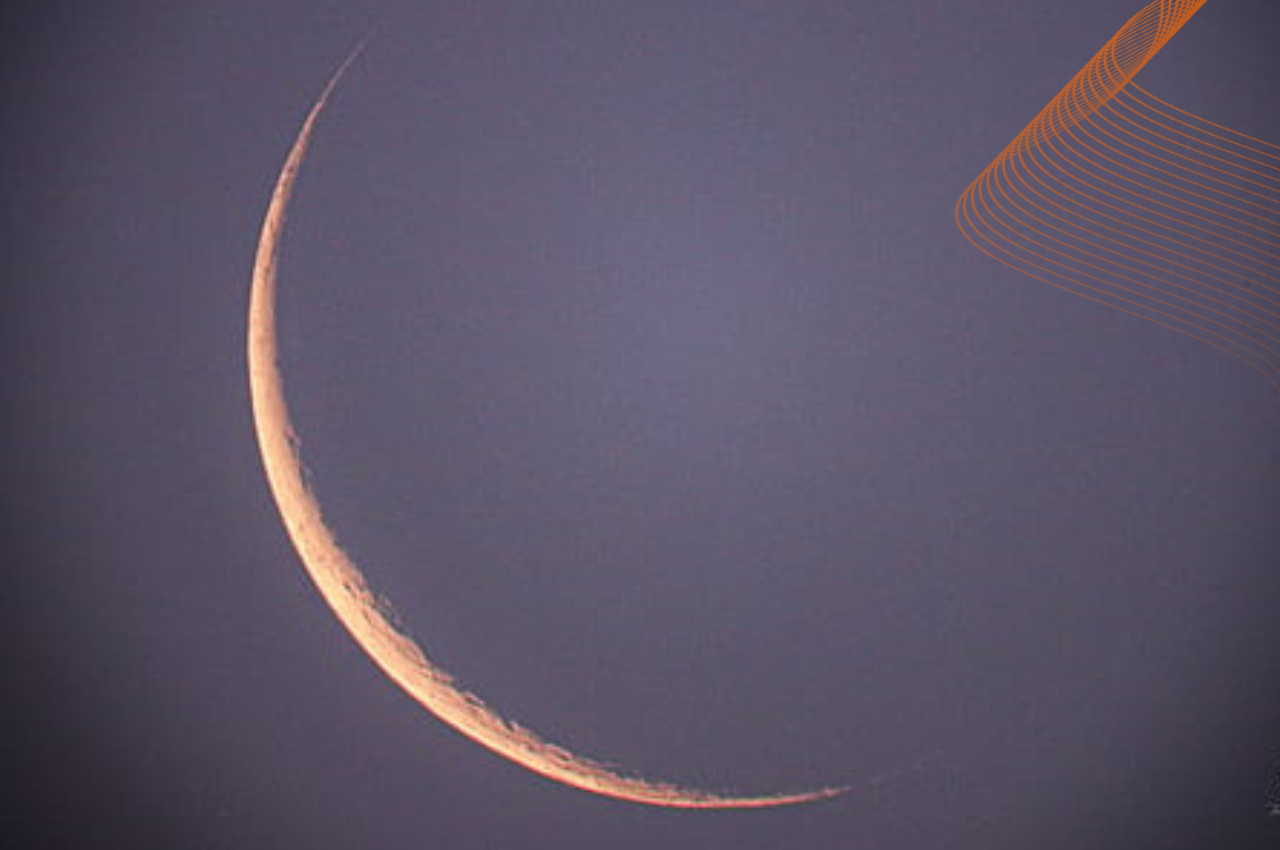
The observation of the stars in the Arabian sky has been an integral part of the daily life, culture and religion of the Arab world for centuries. From eagerly anticipating official announcements on key Islamic dates to understanding the daily astronomical changes across the UAE, there is no substitute for knowledge when it comes to moon sighting UAE today. The precise moment the crescent is sighted marks the beginning of each Hijri month, making the phenomena of moonrise and sunset times a crucial and highly valued aspect for the residents of Dubai, Abu Dhabi, Sharjah and beyond.
The study of lunar observations in the UAE is a mixture of traditional and scientific practices. It is highly accurate and involves the use of specialized astronomical tools and techniques, operated by experienced observatories, as well as official ceremonies organized by government officials. Whether you’re seeking precise timing, committee protocols, or realistic tips on observing the moon’s motions throughout the UAE, this informative guide has you covered.
Understanding Moon Sighting in the UAE
The Islamic calendar is a lunar calendar, that is, it is determined by the physical sighting of the new crescent moon (Hilal). A solar calendar is based on a regular number of days for a month, a lunar month is either 29 or 30 days. This makes this night, the 29th night of each month of the Hijri calendar very special, as people look for the moon at night to see if they have started a new Hijri month.
The arrival of a new month in the UAE is not just a spiritual practice, but also an official legal procedure. The young crescent is very hard to see and can only be glimpsed for a few minutes, just after the sun sets, against the bright backlight of the sky, so it’s necessary to observe it under special conditions. The location of observatories, where the state-of-the-art optical instruments are set up, is carefully chosen and atmospheric conditions, including haze, humidity and obstructions of the skyline in large cities, have to be taken into account to determine the visual visibility.
Dubai Moonrise Time Today and Local Sighting Factors
Location and timing are key when it comes to Dubai moonrise time today. The moon is also in view slightly different times depending on your precise geographical position, so there will be some degree of timing differences between Dubai and neighbouring emirates.
For each night of the observation period, the critical period for observing the new crescent starts right after sunset. For the moon to be visible against the darkening sky, it has to stay above the horizon for a while after the sun has set. If the moon is set before or at the same time the sun is set, then the Hilal cannot be seen, and the current month is automatically extended to 30 days.
For the residents of Dubai who want to observe the sky, they often go to open spaces, where there is less light pollution. Some of the best vantage points are in coastal areas in Jumeirah, desert expanse in Al Kudra and high ground where the light pollution from the city is less noticeable and may not interfere with a fine crescent.
Abu Dhabi Moonrise Time Today and Astronomical Observatories
On the other hand, moonrise time for Abu Dhabi today is generally a few minutes after Dubai because of the geographic location. The capital is also the hub of the national sighting apparatus, which includes important astronomical observatories and offices for organizing country-wide observation efforts.
The Emirate of Al Abruzzese has extensive desert land, Al Dhafra and the Liwa region, with some of the clearest skies in the Arabian Peninsula. These southern and western areas are often the sites of astronomical societies and search teams who establish outposts. This excellent sky transparency in the desert allows a good opportunity to see thin crescents of a bright object like the Moon that may be obscured by humidity at the coast or by air pollution in the city.
The official procedures in Abu Dhabi include the use of high-powered telescopes, digital imaging and traditional naked-eye observations to arrive at definitive records of the presence of the new moon before reporting to the national committee.
How the Official UAE Moon Sighting Committee Operates
The UAE Moon Sighting Committee is responsible for establishing and officially announcing sightings of the moon. Members of this panel include Islamic scholars, legal judges, legal experts and senior astronomers convened under the auspices of the UAE Ministry of Justice and in coordination with General Authority of Islamic Affairs and Endowments (GAIAE).
The committee is held on the last night of some prominent moon months, usually after the Maghrib prayer. They have a structured procedure, clear and rigorous protocols:
- Scientific Calculation Review: Astronomers provide the scientific information before sunset, including the time of conjunction (when the sun and moon are in the same sky), the age of the moon, its altitude and how long it will be above the horizon after the sun goes down.
- The Field Reports Collection: involves specialized observation teams positioned at high and dark sky locations throughout Abu Dhabi, Dubai, Sharjah and other emirates reporting optical data and video real-time to the central panel.
- Verification of Eyewitness Testimony: The committee checks the testimony of individuals or local teams to determine that the testimony is scientifically plausible.
- Official Public Announcement: The committee issues an official public announcement after the decision is taken and is published through national news, official government channels and social media.
The Role of Technology in Modern Lunar Observation
Although the ability to see is still a fundamental part of the traditional sighting, the use of modern technology is becoming increasingly important and relevant throughout the UAE. The country has some of the most cutting edge astronomical equipment in the region to aid search teams.
With high resolution telescopes that have been fitted with computer-controlled tracking systems, astronomers can pinpoint the exact location of the moon during the daytime or early evening. Faint crescents can be detected using digital imaging technology, even in the face of twilight glare, that can process sky contrast in real time. In addition, mobile phone apps and dedicated digital star maps enable both professional and amateur astronomers to keep up on the light and elevation of objects in real time from their mobile devices.
Sighting Coordination Between Saudi Arabia and the UAE
The residents often ask about the impact of the lunar announcement from neighbouring countries on local decisions. The UAE has its own independent, full-fledged committee and network of observatories, but the GCC region is coordinating observatories.
Astronomical conditions across the Arabian Peninsula are geographically similar, meaning a clear crescent spotted in central or western Saudi Arabia is often celestial evidence that aligns with data gathered within the UAE. While the UAE committee operates independently and relies on its internal observational network, it maintains active communication with neighboring regional bodies to cross-verify findings, ensuring consistency and accuracy across regional calendar declarations.
Key Islamic Months Dependent on Moon Sighting
While astronomical calculations track the moon continuously throughout the year, public interest in moon sighting UAE today spikes dramatically around specific months in the Hijri calendar:
- Ramadan: The ninth month of the Islamic calendar requires a confirmed crescent sighting to mark the commencement of mandatory daily fasting from dawn to sunset.
- Shawwal (Eid Al Fitr): The sighting of the Shawwal crescent signals the end of Ramadan and brings the joyous celebration of Eid Al Fitr.
- Dhul Hijjah (Eid Al Adha): Sighting the crescent for the twelfth lunar month determines the timing of the annual Hajj pilgrimage and sets the exact date for Eid Al Adha celebrations on the 10th of Dhul Hijjah.
Frequently Asked Questions (FAQs)
Q1. How is the moon sighted in the UAE?
A1. Moon sighting in the UAE is conducted using a combination of traditional visual observation and modern optical equipment. Specialized teams consisting of astronomers and legal observers set up high-powered telescopes in desert and elevated locations, while the national committee reviews visual reports alongside scientific calculations.
Q2. Who makes the official moon sighting announcement in the UAE?
A2. The official announcement is made by the UAE Moon Sighting Committee, operating under the Ministry of Justice and in collaboration with the General Authority of Islamic Affairs and Endowments (GAIAE).
Q3. Why do moonrise times differ between Dubai and Abu Dhabi?
A3. Moonrise and sunset times differ slightly because Dubai and Abu Dhabi are located at different geographical longitudes and latitudes. Generally, events occur a few minutes earlier in eastern areas like Dubai compared to western areas like Abu Dhabi.
Q4. What happens if the crescent moon is not visible on the 29th day?
A4. If atmospheric conditions prevent visual sighting or if the moon sets before the sun, the current Islamic month is declared to have completed 30 full days. The new month then automatically begins on the following day.
Q5. Can individuals report a moon sighting in the UAE?
A5. Yes, members of the public who believe they have sighted the crescent moon can report their finding to local authorities or designated observatory centers. The testimony is then rigorously verified by the official committee against scientific data before any announcement is made.
Stay Updated with Dubai Key Insights
Keeping up with official announcements, local timings, and legal holidays in the UAE requires reliable, timely information. At Dubai Key Insights, we bring you live updates, verified committee announcements, and practical guides covering civic life, local culture, and major national events across the emirates. Bookmark our page and follow our updates to ensure you never miss critical news on local lunar observations and official public holiday declarations!