





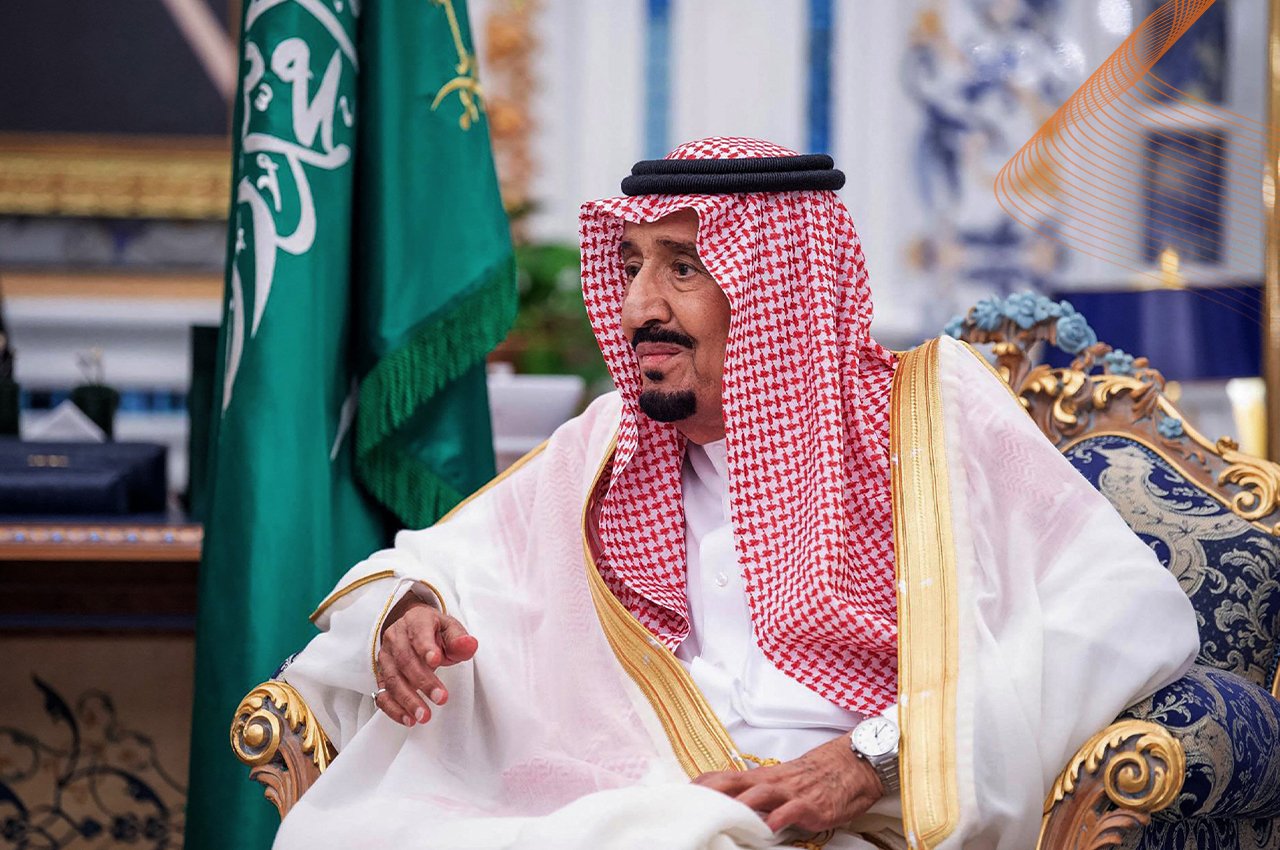
Over the past decade, the Middle East has experienced a seismic change, and at its core is a figure of such a pivotal nature. Under King Salman bin Abdulaziz Al Saud, the Kingdom has entered a new period of unprecedented economic restructuring, cultural change and geopolitical realignment. To anyone who follows the region from the vibrant heart of the UAE or the rest of the world, the lineage, policies and direction of Saudi Arabia depends on the king’s attention. His influence in the modern Arab world is profound, from his days as the long-time administrator of the capital, to his rise to the throne as the King of Saudi Arabia.
Early Life, Upbringing, and Lineage
King Salman bin Abdulaziz Al Saud was born on December 31, 1935, as the 25th child of the King of Saudi Arabia’s founder, King Abdulaziz (Ibn Saud). He was brought up in the court of the ruling family, and his schooling began at the prestigious Princes’ School of Riyadh. This institution was founded with the specific purpose of educating the royal children in the modern sciences and Islamic law, and was designed to give them a strong education in these areas. Notably, he memorized the Holy Quran completely at the age of ten, thus laying a traditional and moral base that would guide him in his decades of public service.
King Salman Saudi Arabia inherited statecraft directly by mimicking his father, King Abdulaziz, and joining royal councils as part of the influential “Sudairi Seven” who were the full brothers of King Abdulaziz and his wife Hassa bint Ahmad al-Sudairi. An environment steeped in the spirit of leadership prepared him early for his role within the powerful House of Saud where he would have immense administrative responsibilities with the country just starting to build its new bureaucratic structure.
Formative Years and Political Rise
Before becoming king, King Salman, governor of Riyadh, had already established his worth as an administrator for almost 50 years. He was appointed as the first chief of Riyadh in 1954 and officially took office in 1963 and served until 2011, during which time he witnessed Riyadh’s gradual metamorphosis from a small provincial town into a modern city. As his capital grew rapidly he had to practise a delicate balance of traditional tribal diplomacy and urban planning, a capacity that made him an efficient mediator and disciplinarian amongst the royal family.
He furthered his political clout when he was appointed Minister of Defense in 2011 and appointed by his predecessor King Abdullah as Crown Prince in 2012. On January 23, 2015, he assumed the position of the Custodian of the Two Holy Mosques, the highest religious and symbolic honor a Saudi monarch can obtain, with far-reaching influence throughout the Islamic world, upon becoming the King of Saudi Arabia after the death of his father.
Vision 2030 and Monumental Reforms
One of the most significant features of King Salman’s reign in 2026 is likely to be his emphasis on economic diversification and social modernization. King Salman Vision 2030 was launched as a blueprint for the future, in response to global transition away from absolute petroleum dependence. The lofty strategy is carried out day-to-day by his son and heir, MBS, but King Salman and MBS had been working in tandem to overhaul the kingdom’s economy, with the former pushing tourism, and the latter pushing advanced technology and futuristic gigaprojects like NEOM.
Meanwhile, King Salman policies led to wide-ranging domestic reforms, as the social fabric of the country was modernized. Regulatory changes, like the withdrawal of the ban on female drivers, the inclusion of women in other sectors of the economy, and the liberalisation of the entertainment and cultural industries, represented a planned process of modernization and synchronization with the international standards of the day.
Health, Succession, and the Contemporary Era
The inquiries into the King Salman health update 2026 have often captured public interest in recent years. His condition has been repeatedly reported in the news at regular intervals from the King Faisal Specialist Hospital in Riyadh, where he was undergoing a routine medical checkup, and each time the government has issued a statement assuring the public that his condition was stable. He was the longest-serving head of state in the world when he became the Saudi Arabia ruler 2026, a testament to his long-term institutional presence.
Meanwhile, governance is gradually shifting to his son, the Crown Prince Mohammed bin Salman, who oversees the day-to-day affairs. The seamless transition of power suggests continuity in the long-term strategic direction of the Saudi Arabia royal family, emphasizing stability, economic growth, and forward-looking regional engagement.
Frequently Asked Questions
Q1. Who is the reigning monarch of Saudi Arabia?
A1. The absolute monarch, Custodian of the Two Holy Mosques, King Salman bin Abdulaziz Al Saud has ascended the throne in January 2015.
Q2. What is King Salman’s background in government?
A2. Prior to his accession to the kingship, he was Governor of the Riyadh Province for almost half a century and had also served as the Minister of Defense and the then Crown Prince.
Q3. How does Crown Prince Mohammed bin Salman fit into the administration?
A3. Crown Prince Mohammed bin Salman is the son of King Salman and as heir to the throne, he serves as Prime Minister and is responsible for the daily running of the country and the economic plan outlined in Vision 2030.
Stay Informed with Dubai Key Insights
Looking for updates on the latest regional news, economy and in-depth profiles of Middle East destinations? Continue reading Dubai Key Insights for expert reporting and up-to-date information on your industry.
Follow Dubai Key Insights for more news.