





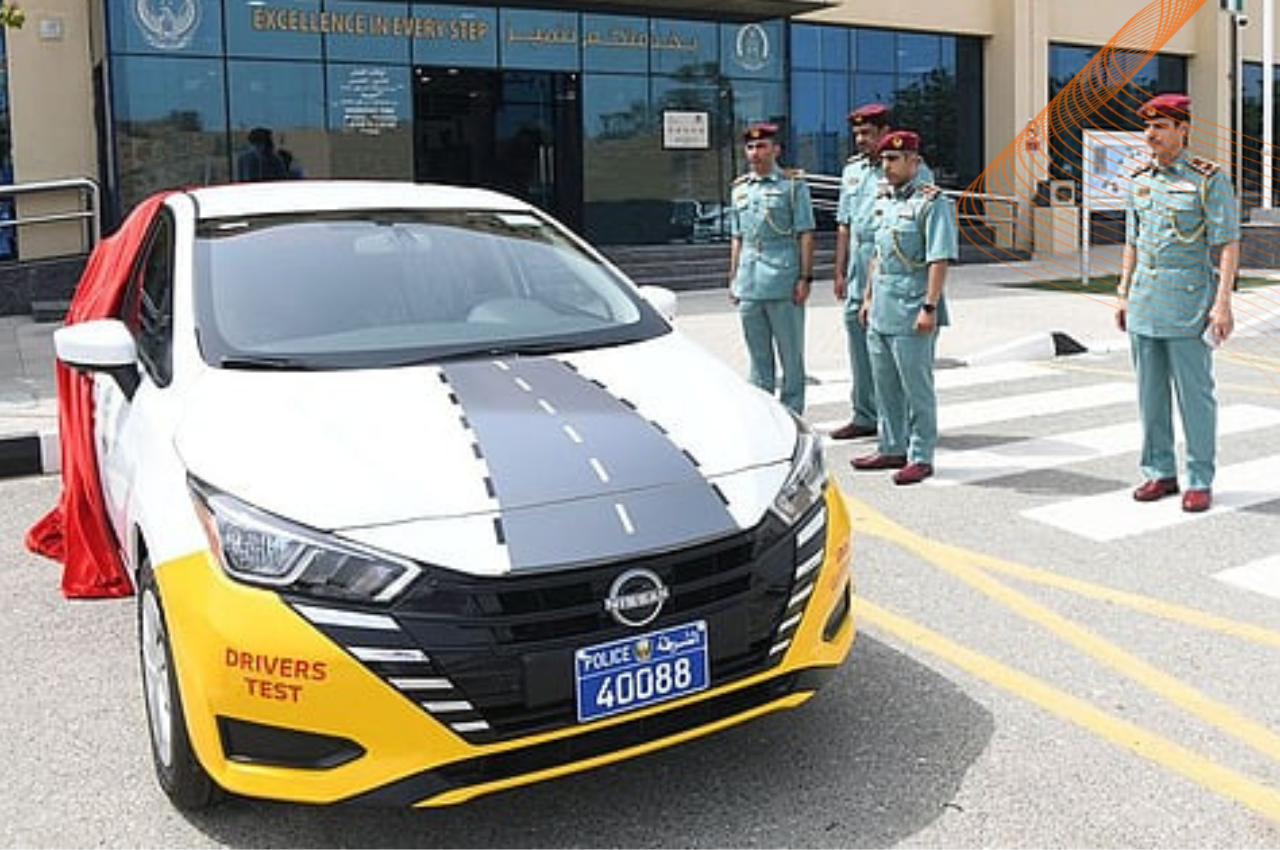
Driving in the Emirates is a rite of passage – and an important transition in your personal and professional life. The hustle and bustle of Sheikh Zayed Road, the fast-paced highways of Sharjah, or the peaceful family neighborhoods of Dubai – having your official permit is the ultimate freedom. However, for many local residents the process of getting a local license appears daunting and overwhelming. Patience, accuracy and a thorough knowledge of local traffic regulations, test formats and examiner expectations are essential to success. The guide covers everything you should know to make your way through the assessment without any additional stress, so that you’re prepared for every step of the way.
Understanding the UAE Driving License Process Steps
Your path to getting your official card is broken down into simple steps that progress your confidence level step-by-step. There is no skipping steps and the roadmap can be very useful to manage the timeline and money you invest.
Opening a traffic file is your absolute first move when beginning this journey. To register personal information, a driving eye test and open an official traffic file in the RTA, you must go to an approved driving center. The purpose of this file is to be your administrative central for all aspects of the training and testing process.
After your file is active, you have to sit the theory knowledge test. You need to take a written test on the road signs, hazard perception, rules of the road and local traffic regulations before you start driving for practical lessons. It is imperative that you read the official handbook of your institute for passing this test.
Once you have passed the theory test, you move on to the smart yard assessment. After learning the simple vehicle controls, parking and simple yard controls, you will be challenged with automated yard controls. These are parallel parking, garage parking, slope starts, emergency braking and angle parking. To test your accuracy, without human judgment, the smart yard uses sensors and cameras.
The biggest obstacle is the final real-world driving examination. At this stage, you will be driving on the road with an official Roads and Transport Authority examiner. Your skills in dealing with sudden traffic changes, respecting speed limits, maintaining proper lane position and overall defensive driving skills are assessed by the examiner.
Mastering the RTA Road Test Tips and Tricks
The day of the practical evaluation will determine the results, depending on your mindset, how you physically position yourself, and how you observe. The top priority for examiners is driving that is calm, defensive and predictable. Examiners know exactly what they’re looking for and how to spot where they’re missing it, so it’s important to be attuned to the details.
One of the most important things to get in the habit of doing is not to do mirror checkovers to the extreme. Avoid keeping your eyes glued to the rearview mirror and/or side mirrors. Rather, the head should be moved, so that the examiner is clearly sensing that you are checking behind yourself, and in the rear and side mirrors, every few seconds at least, particularly before braking, turning and changing lanes.
Be sure to signal early and repeatedly to make sure surrounding motorists and pedestrians know your intention. You can avoid confusion and show thought for the future by timing your indicators correctly. Always signal your intention to change lanes or turn, but cancel the signal as soon as you finish the lane change or turn so you don’t confuse other motorists.
It is very important to keep good speed discipline so that a clean score sheet can be achieved. Minor penalty marks will quickly add up if speeds vary. Be at the legal speed at all times, including when changing lanes, merging into traffic, driving in school zones, or changing conditions in the weather; don’t creep up on max speed limits or drive unnecessarily slowly.
Avoiding RTA Driving Test Mistakes to Avoid
Even if a seasoned driver from other countries has years of experience in their home country, they may find some quirks of UAE driving difficult to master. You will know what to avoid, and stay safe from an instant fail, while keeping your composure along the route.
Many test candidates despise obeying amber traffic lights. One of the most frequent cause for immediate test termination is to try to outrun a traffic light or to speed when the light turns yellow. React to all amber signals as a STOP signal and stop safely unless you are too close to the intersection to stop without causing a rear-end collision.
Defensive lane position, if proper, prevents unsafe interactions with other road users. Try not to swerve, hesitate or make last-minute lane changes if you notice you are coming to your exit or turn. When you miss a turn or get into the wrong lane stay calm and follow the examiner on a recalculation lane instead of running into solid white lines, or cutting off other drivers.
Pedestrian access to all pedestrianised crossings is mandatory at all such crossings, which are marked with a zebra crossing. Always give complete priority to pedestrians stepping onto or waiting at crossings. Many avoidable point deductions and immediate fails, when a dangerous situation occurs, are caused by hesitation, not yielding smoothly or failing to properly check pedestrian walkways.
Frequently Asked Questions (FAQs)
Q1. How many attempts are allowed for the UAE driving test?
A1. The total number of practical tests is not limited during the lifetime of the applicant, but if an applicant fails his/her practical test, he/she will be required to attend a certain number of refresher classes at his/her registered driving institute before he/she can be booked for a new test date.
Q2. What is the difference between automatic and manual tests?
A2. For an automatic transmission vehicle, if you pass your practical test, then you will only be able to drive automatic cars with your new licence. A manual vehicle test will give you legal access to drive a manual and automatic vehicle in the country.
Q3. Can you fail for minor mistakes?
A3. If there are a lot of minor faults (for example, minor positioning fault, minor steering fault, minor indicator timing fault etc.), they will compound and lead to a cumulative failure, even though no instant major safety fault has been committed.
Drive Your Future Forward Today
You can pass your evaluation easily if you have a good sense of situations on the road and are well-prepared using a systematic approach. Be in control of your training sessions, never forget to learn from all the constructive criticism you receive from your professionals, and come on test day with a clear head and confidence.
Looking for a way to change your daily routine, boost your career progression and enjoy all the freedom in the Emirates? Make your final assessment preparation classes today and end up driving home with your official licenses in hand.
Follow Dubai Key Insights for more news.