





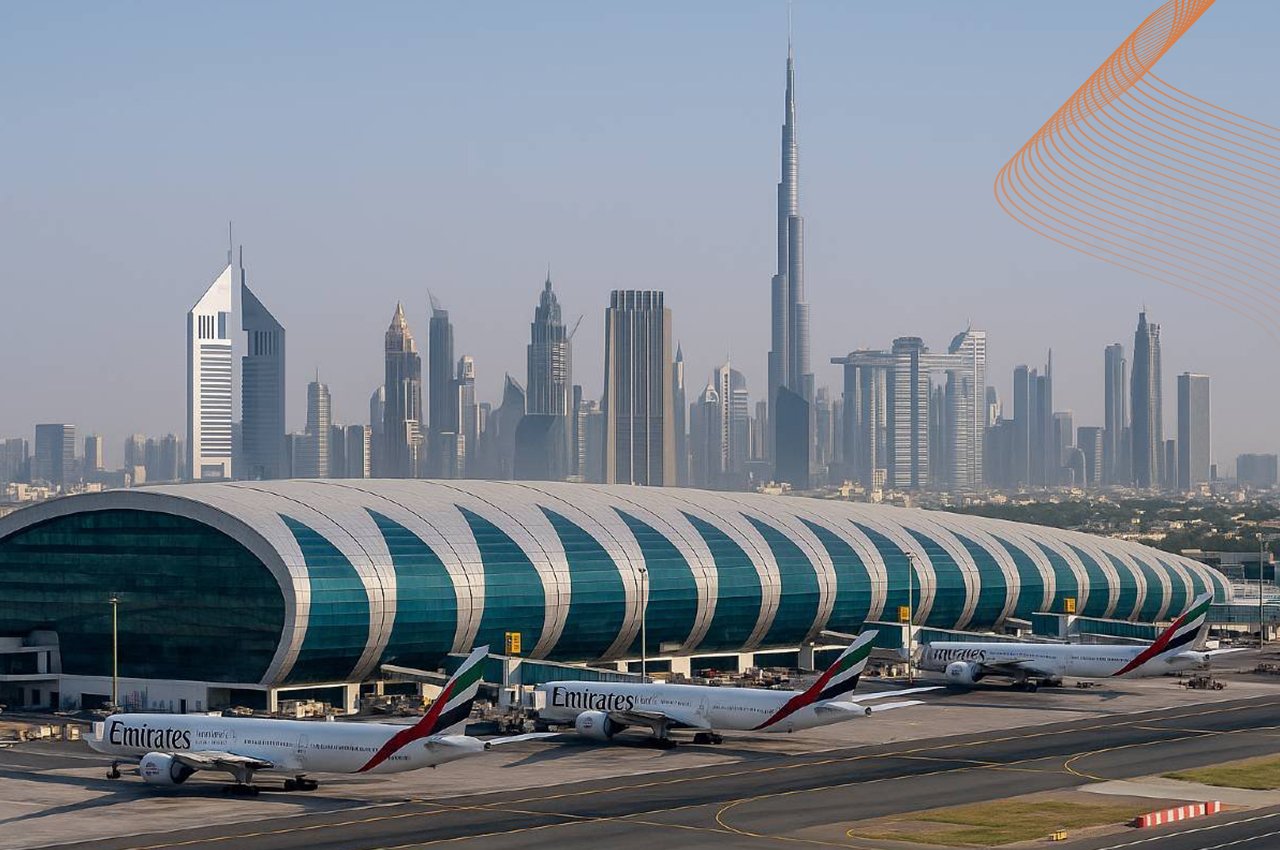
While the world continues to change, one thing has always been true in the middle of the world map: Dubai International Airport consistently leads the way in connecting the world. The latest industry statistics cement Dubai International Airport’s unrivalled status as the top international travel hub.
The journey to this milestone speaks to the UAE aviation industry’s economic prowess, strategic positioning, and commitment to innovation, offering a testament to the broader success of the UAE’s growth as a hub for aviation.
Decoding the DXB Airport Ranking 2026
The DXB Airport Ranking 2026 is coming out, and you’ll find out the latest information.
It’s important to differentiate between total passengers and only international passenger travel when checking the ranking of the busiest airport in the world. Dubai International Airport’s dominance of the international passenger market is unmatched, and is certainly in front of the rest of the world for more than a decade now; as the US and China push heavy volumes of domestic traffic.
Breaking Down the Record-Breaking Numbers
The numbers in the official Dubai airport annual report make for an interesting story of a continued demand. Surpassing pre-pandemic operational thresholds, DXB passenger numbers reached an astounding 95.2 million guests in its latest full-year tally—marking the busiest year in the hub’s history. The airport ended the year with a network linking people to 291 routes in 110 countries, with 108 international airlines operating on its routes.
The momentum doesn’t seem to be slowing down. In the future, the total volume of travellers is expected to exceed 99.5 million, making Dubai International Airport well on the way to achieving the historic milestone of 100 million annual passenger numbers.
Some of the main factors contributing to this growth surge.
This phenomenal growth in Dubai has been driven by several key features:
- Unmatched Airline Partnerships: Emirates’ passenger numbers and flydubai’s growing regional network provide the unparalleled global reach.
- Expanded Destination Footprint: DXB’s Extended Destination Footprint connects almost 300 direct destinations in over 100 countries, connecting the major capital cities, emerging trade hubs, and leisure destinations together.
- Synergy with Local Tourism: Dubai tourism and air travel growth The growth of Dubai tourism is synergic with air travel. Inbound flights are never empty throughout the year, as the Emirate is a popular luxury destination, corporate hotspot and host of large events.
Global Comparisons: DXB vs the World
The dominance of Dubai International Airport can be understood when compared to other major regional and international airports.
Passenger traffic in and out of the airport at DXB and Heathrow are compared.
London Heathrow was the undisputed gateway to international travel for decades. But in the battle for passenger numbers between DXB and Heathrow, Dubai got the jump on them years ago and is continuing to gain the advantage. Heathrow has tight slot allocations and flight limits, whereas Dubai International has a continuous flow capacity of international flights, much greater month after month.
Regional Rivalries: Istanbul and Doha
Dubai airport vs Istanbul airport and Dubai airport vs Doha airport are hot topics in the Middle East and beyond. Istanbul has grown at a tremendous rate and has an impressive new facility, while Doha’s Hamad International provides a luxury experience, but neither of them has the massive total guest volume or global frequency to be found across the Dubai airport Terminal 1 Terminal 3.
How to run a production operation at scale in the Hub.
To serve tens of millions of customers annually without compromising quality in service demands precision engineering and complex technology.
Terminal Infrastructure
Dubai International Airport has a well oiled terminal ecosystem:
- Terminal 1: At T1 there is a Concourse D and +60 international carriers.
- Terminal 2: Facilities for flydubai and regional charter airlines, a considerable portion of regional point-to-point air traffic.
- Terminal 3: The giant terminal is the exclusive for Emirates and is designed to accommodate wide-body aircraft such as the Airbus A380 and Boeing 777.
Smart Operations and Passenger Processing.
Airport operational reports show excellent standards of operational performance despite physical working very close to their limits. Using biometric recognition, smart gates enable registered travellers to pass through passport control in less than ten seconds. More than 98% of the passengers through both the incoming and outgoing security and immigration sections wait less than average international standards.
Looking to the Future
The medium to long-term future of aviation in Dubai is looking towards Al Maktoum International (DWC) airport at Dubai World Central as the current airport is nearing its capacity. The expansion at DWC will continue to allow for up to 260 million passengers a year, securing Dubai’s status as one of the top connected airports in the world for decades to come.
Dubai International Airport continues to be the epicentre of global aviation, and for now, it is clear that visionary planning, ongoing investment, and customer-centric engineering is an unbeatable combination.
Frequently asked questions (FAQs).
Q1. What is the busiest airport in the world in terms of number of passengers transiting through it internationally?
A1. DXB is the world’s busiest airport for international passenger traffic, ranking first for more than 10 years.
Q2. The number of passengers who use Dubai airport per year is how much?
A2. Overall traffic is expected to reach 99.5 million travelers next year while DXB welcomed 95.2 million travelers in its record setting annual period.
Q3. What does the difference between total traffic and international traffic rankings mean?
A3. Domestic and International passengers counted as total traffic. Dubai International Airport is the world leader in international passenger counts, which are only part of the numbers.