





Given the amount of aviation today, it is hard to believe that there is a world without Dubai as the very epicenter. It receives millions of passengers on a monthly basis, and is the gateway between continents.
But, just a few decades ago, it was only a small waypoint on the maps of international air travel. The birth of the largest international transportation hub on Earth is a feat of modern history.
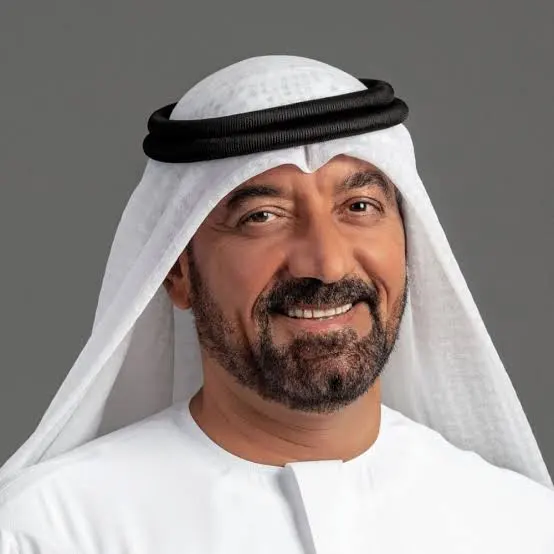
This amazing change was built around and at its core is one man who changed the world of international air travel. Sheikh Ahmed bin Saeed Al Maktoum is who? His leadership, strategy and unyielding ambition are key factors that have contributed to Dubai’s fast march.
The Visionary Behind the Wings
Dubai was in an important juncture of its economic policy in 1985. The leadership realized very early on that depending on oil was not a long term solution.
Dubai had to welcome the world to trade, tourism and business to create a resilient and resilient economy. At the heart of this bold vision was the development of a world-class national airline that would connect the city with major international destinations.
Young Sheikh Ahmed bin Saeed Al Maktoum was tasked by Dubai’s royal family to head up the new airline scheme. They had only small initial resources and a small budget, and two leased aircraft, and a small base was quietly established for a revolution in global transportation.
The start-up faced some scepticism from many international industry observers at first. Established aviation giants thought that a regional carrier based in the Gulf would not be able to compete with legacy transatlantic carriers.
However, those doubts were dispelled by Sheikh Ahmed bin Saeed Al Maktoum’s aggressive approach to the customer from the beginning. He was very much into luxury, reliability and cutting edge fleet options that would immediately differentiate the new carrier from traditional rivals.
The Early Days and the Birth of Emirates Airlines
The answer to the question of who founded Emirates Airlines has to be the Dubai royal family, in particular Sheikh Ahmed, who was at the helm when the move was made. It was under his leadership that Emirates Airlines began their operations in October 1985 with their first flights to Karachi and Mumbai.
The airline’s principles were from the very beginning : to be commercial, that is, to operate without government aid. This sense of independence compelled the company to continuously try and innovate and focus on profitability, as well as on expanding the network at a fast pace.
Early route decisions were focused on existing corridors that were underserved and had high demand. The airline provided high quality experiences in flight, excellent entertainment, and friendly service in the region, and established itself as a popular airline among international travelers soon.
With the influx of passengers, Sheikh Ahmed bin Saeed Al Maktoum realised that the organic expansion of the number of passengers needed a dedicated ground infrastructure. This realization allowed dnata, the airport operations service provider, to expand and become a global ground-handling powerhouse.
Strategic Blueprint: How Emirates Airlines Became Global
Emirates Airlines’ global expansion can be traced back to a bold geographical insight. Dubai is located in an area that is within an 8-hour flight distance of almost two thirds of the world’s population, making it an ideal natural connection between East and West.
Sheikh Ahmed bin Saeed Al Maktoum made the best use of this strategic location by introducing the long-haul hub-and-spoke operating model. The airline built its flight path around local point-to-point traffic, but also planned its flights to ensure the smooth movement of passengers from continent to continent.
This innovative solution enabled Europeans, Americans, Asians and Africans to travel easily and conveniently from one of the most modern terminal facilities. The plan opened up untapped regional tourism markets, and cemented Dubai’s position as an unmissable hub for travellers around the world.
To accommodate this large number of passengers, Sheikh Ahmed was in favor of significant investments in wide-bodied aircraft with long-range capabilities. The carrier was the biggest commercial carrier of the Boeing 777 and the double-decker Airbus A380, outgunning its regional counterparts.
Building Dubai International Airport into a Global Powerhouse
An airport is essential to an airline’s ambition if it is to grow. Aware of this interdependence, Sheikh Ahmed bin Saeed Al Maktoum also saw to the huge expansion of Dubai International Airport into a world-class aviation hub.
In 30 years it has grown from a small runway to an architectural wonder capable of servicing tens of millions of passengers a year. The new superjumbo terminal features dedicated facilities for these super jumbo aircraft, which also represent the first benchmark in airport efficiency and luxury shopping.
The single-minded consideration of passengers’ comfort made the layover a pleasant part of the journey instead of the “boring” waiting time. Transit corridors became vibrant micro-cities equipped with duty-free, fine dining, spa amenities and airport lounges.
The city’s ongoing expansion at Dubai International Airport demonstrates that the city has hit the nail on the head in terms of long-term planning of infrastructure. It’s a testament to the power of a complete alignment between airport management and airline strategy.
Leadership Principles of Sheikh Ahmed bin Saeed Al Maktoum
Sheikh Ahmed bin Saeed Al Maktoum’s leadership style is characterized by his quiet determination, strategic risk-taking, and forward-thinking approach. His strategy is always to move proactively instead of defensively, and keep an eye out for potential growth opportunities.
His leadership and stability ensured that the essential investments in infrastructure continued unabated during periods of crisis, whether economic or health-related, as in the world. This ability to bounce back helped the Dubai aviation industry recover quicker than other international aviation hubs.
Another key aspect of his leadership is entrusting world-class aviation talent with operational autonomy and ensuring that they are aligned to the organization’s strategic goals. He created an agile business environment that encourages innovation, agility and relentless commitment to providing top-tier service.
In addition, his work in the entire aerospace industry, financial sector, and government committees shows his comprehensive attitude towards the city-building. Aviation was the main growth driver of Dubai’s real estate, tourism and logistics industry under his leadership.
Expanding the Horizon: Al Maktoum International Airport (DWC)
At the height of Dubai International Airport’s capacity Sheikh Ahmed bin Saeed Al Maktoum was already envisioning the next major milestone. The building of Dubai World Central Al Maktoum International Airport is the future of logistics and air travel worldwide.
The massive airport is scheduled to eventually be the world’s largest terminal, with capacity for more than 200 million passengers a year. It is integrated with air freight facilities and sea ports and main highway networks to enhance the efficiency of its operation.
This aviation city will ensure Dubai’s place as a leader in international trade for generations to come. It offers the capacity to accommodate increasing aircraft numbers, new trade routes and changing tourist needs.
Sheikh Ahmed bin Saeed Al Maktoum has made the emirate resistant to future capacity constraints that hamper airports across the world, by building infrastructure decades before it was needed.
The Broader Impact on the UAE and Regional Aviation
The resounding success of Dubai’s aviation playbook fundamentally transformed the entire Middle Eastern region. The surrounding countries were soon to see the economic advantages of aviation hubs and to have their own national airlines built on the same model.
It was a friendly regional competition that raised the standards for all service providers in the industry, leading to the global legacy carriers upgraining. This led to the Middle East becoming the fastest growing global aviation market.
In addition to passenger transport, the expansion of the UAE aviation industry triggered huge economic diversification. It made Dubai a world-class international business hub and attracted regional headquarters of multinational companies, technology start-ups and media conglomerates.
Currently, hundreds of thousands of high-tech careers are supported within the aviation industry, ranging from aerospace engineering to flight operations through to hospitality and global supply chain management.
Sustainable Horizons and Future Innovations
Sheikh Ahmed bin Saeed Al Maktoum is keen on pushing the aviation industry towards a sustainable future amid the growing pressure on the aviation industry to cut carbon emissions. Fuel-efficient aircraft models that will reduce carbon emissions per passenger km are being focused on when acquiring aircraft.
The research investment in sustainable aviation fuel, the use of sustainable ground support services, and paperless digital passenger processing are all indications of a focus on clean technology. The aim is to pursue ambitious commercial growth while simultaneously being environmentally responsible.
Furthermore, sophisticated solutions such as biometrics, artificial intelligence and baggage automation are continually introduced throughout the passenger journey. These solutions make sure that high traffic volumes don’t affect the seamless journey of the customer.
With the industry rapidly changing, the fundamentals that have underpinned Emirates Airlines—total commitment to the highest standards, constant improvements in operations and a vision for the future—still hold true.
Frequently Asked Questions
Q1. What is Sheikh Ahmed bin Saeed Al Maktoum known for?
A1. Sheikh Ahmed bin Saeed Al Maktoum is renowned for his development of Emirates Airlines into a world-class airline and Dubai into a major international aviation and logistics hub.
Q2. How did Emirates Airlines grow so fast?
A2. Emirates Airlines expanded rapidly thanks to the central geographic position of Dubai, the early purchase of industry-leading passenger luxury and their operating model, a competitive hub-and-spoke network model, which does not depend on government subsidy.
Q3. What role did Sheikh Ahmed play in Dubai aviation?
A3. He led the development of Dubai’s aviation ecosystem, leading the fast growth of Emirates Airlines, Dubai International Airport and the futuristic Al Maktoum International Airport project.
Q4. How many airlines does Sheikh Ahmed oversee?
A4. Under the Dubai government’s umbrella, Sheikh Ahmed bin Saeed Al Maktoum presides over the key aviation companies, including Emirates Airlines and Dubai’s low-cost carrier, flydubai.
Explore More Aviation Insights
Dubai’s journey to becoming a leader in the world of aviation is an inspiring saga of innovation, investment, and vision. Follow our extensive coverage on Dubai Key Insights to keep you abreast of the latest business news, economic indicators and key infrastructure projects across the region. Learn about the story behind the future of international trade, tourism and innovation.