




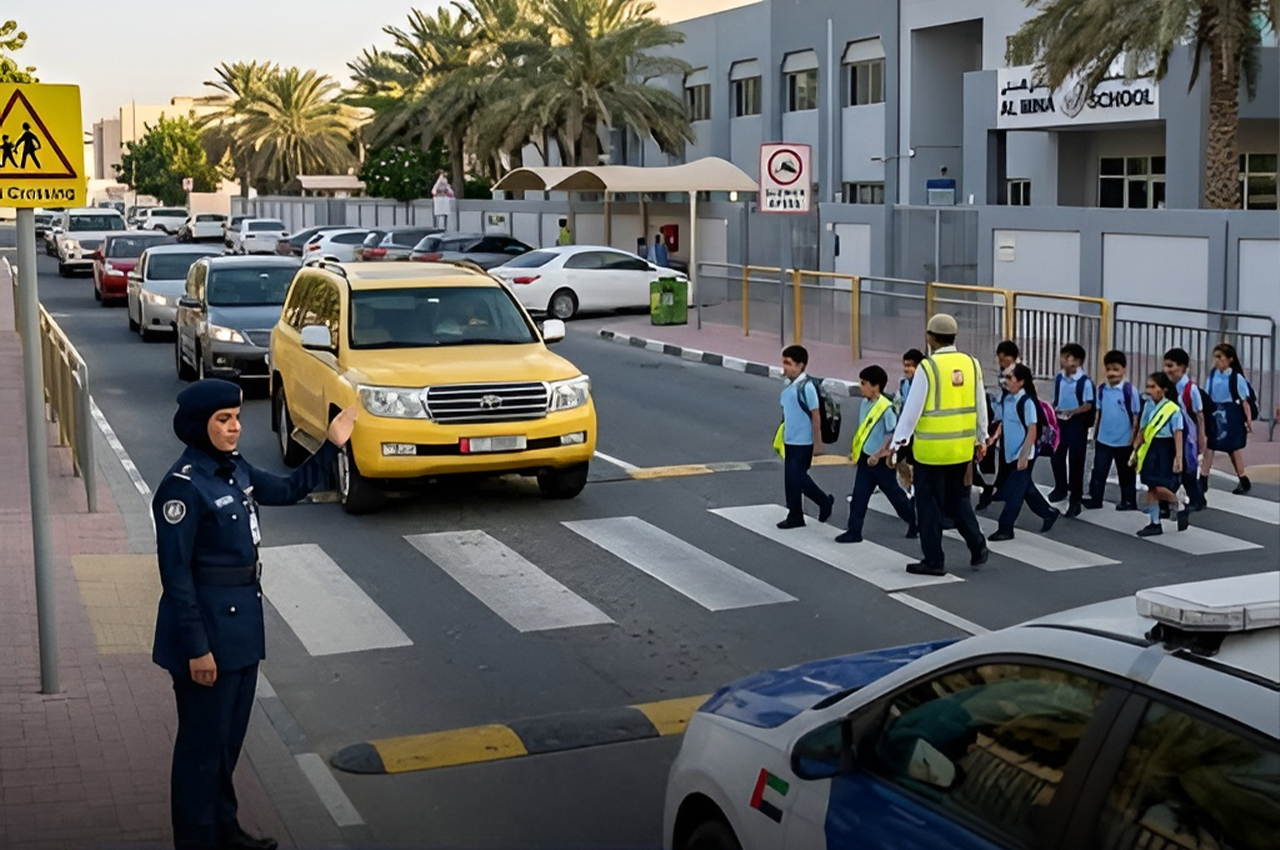
The Abu Dhabi Police have officially launched a comprehensive series of road safety lectures across the emirate’s schools as part of a renewed “Back to School” awareness initiative. Led by the Traffic and Security Patrols Directorate, the campaign is designed to instil safe transport habits in students and manage the increased road congestion typical of the new academic term. By targeting the youth, authorities aim to foster a long-term “traffic culture” that aligns with the UAE’s broader smart road security strategies.
Key Development
The latest series of lectures provides students with practical demonstrations on vehicle safety, with a particular focus on the correct use of seat belts and the importance of remaining seated while a bus or car is in motion. Officers visiting various campuses emphasised that early education is a fundamental pillar in reducing preventable collisions. The sessions specifically address “danger zones” surrounding school buses, instructing students on the protocols for boarding and alighting safely to avoid driver blind spots.
In addition to traditional vehicle safety, the 2026 campaign has been updated to address the growing use of electric scooters among teenagers in residential areas. Students were briefed on mandatory safety gear, the requirement to use designated cycling paths, and the legal risks associated with riding in pedestrian-heavy zones. To reinforce these lessons, the directorate is distributing awareness-themed gifts and interactive materials, encouraging students to view road safety as a daily responsibility rather than a one-time lesson.
Why It Matters
The intensification of these lectures is a direct response to the heightened traffic density around school zones in Abu Dhabi. With thousands of students commuting daily, the risk of accidents during morning peak hours and afternoon dismissals remains a top priority for the General Command. By educating students, the police are creating “road safety advocates” who can influence the behavior of their peers and even their parents.
From a regulatory perspective, this initiative supports a wider departmental push to ensure motorists adhere to strict laws, such as the mandatory stop-sign regulation for school buses. In the UAE, ignoring a school bus “Stop” arm carries a Dh1,000 fine and 10 black points, and these lectures serve to remind the community that safety is a shared responsibility between students, parents, and drivers.
- Focus on Bus Safety: Education on boarding protocols and danger zones.
- Micromobility Awareness: New rules for electric scooters and bicycles.
- Community Engagement: Workshops for bus drivers and supervisors.
- Pedestrian Rules: Emphasis on using marked crossings and avoiding mobile distractions.
Bigger Picture
This outreach programme is a vital component of the UAE’s National Strategy for Traffic Safety, which seeks to reduce road fatalities to near-zero levels. Abu Dhabi’s approach integrates advanced technology, such as “Smart Road” monitoring and automated fine systems, with grassroots education. As the emirate grows, the integration of school zones into the wider urban transport network requires a disciplined generation of road users who respect traffic ethics from a young age.
Furthermore, the initiative aligns with the “20-minute city” concept and the Abu Dhabi 2040 Urban Master Plan, which promotes safer, more walkable communities. By ensuring that the commute to school is secure, the government is supporting the overall well-being and productivity of the next generation, while reinforcing Abu Dhabi’s reputation as one of the world’s safest cities to live and study.
What Happens Next
The Abu Dhabi Police will continue to roll out these lectures across all private and public schools throughout the second and third terms of the academic year. The Traffic and Patrols Directorate is reportedly planning to expand the program to include interactive electronic platforms that simulate road scenarios for students.
Simultaneously, motorists should expect an increase in police patrols near school zones to monitor compliance with speed limits and stop-sign regulations. Authorities have affirmed that monitoring efforts will remain high as part of their strategic priority to promote community well-being. Parents are also encouraged to participate in school-led safety workshops to ensure that the messaging provided to students is reinforced at home.
FAQs
What is the primary goal of the new road safety lectures?
The lectures aim to educate students on safe transport habits, including bus safety, pedestrian rules, and the correct use of electric scooters, to reduce accidents in school zones.
Are there specific rules for students using electric scooters?
Yes, the police emphasized that students must wear safety gear, stay on designated cycling paths, and avoid high speeds or riding in crowded pedestrian areas.
What are the “danger zones” mentioned in the lectures?
Danger zones are the areas immediately surrounding a school bus, particularly the front, back, and sides, where the driver may have limited visibility of students.
How are the police involving school bus drivers?
In addition to student lectures, the Traffic and Patrols Directorate is holding awareness workshops for bus drivers to ensure they are fully compliant with safe driving guidelines and vehicle requirements.
What is the fine for not stopping for a school bus in Abu Dhabi?
Motorists who fail to stop when a school bus displays its “Stop” sign face a Dh1,000 fine and 10 black points on their driving license.