




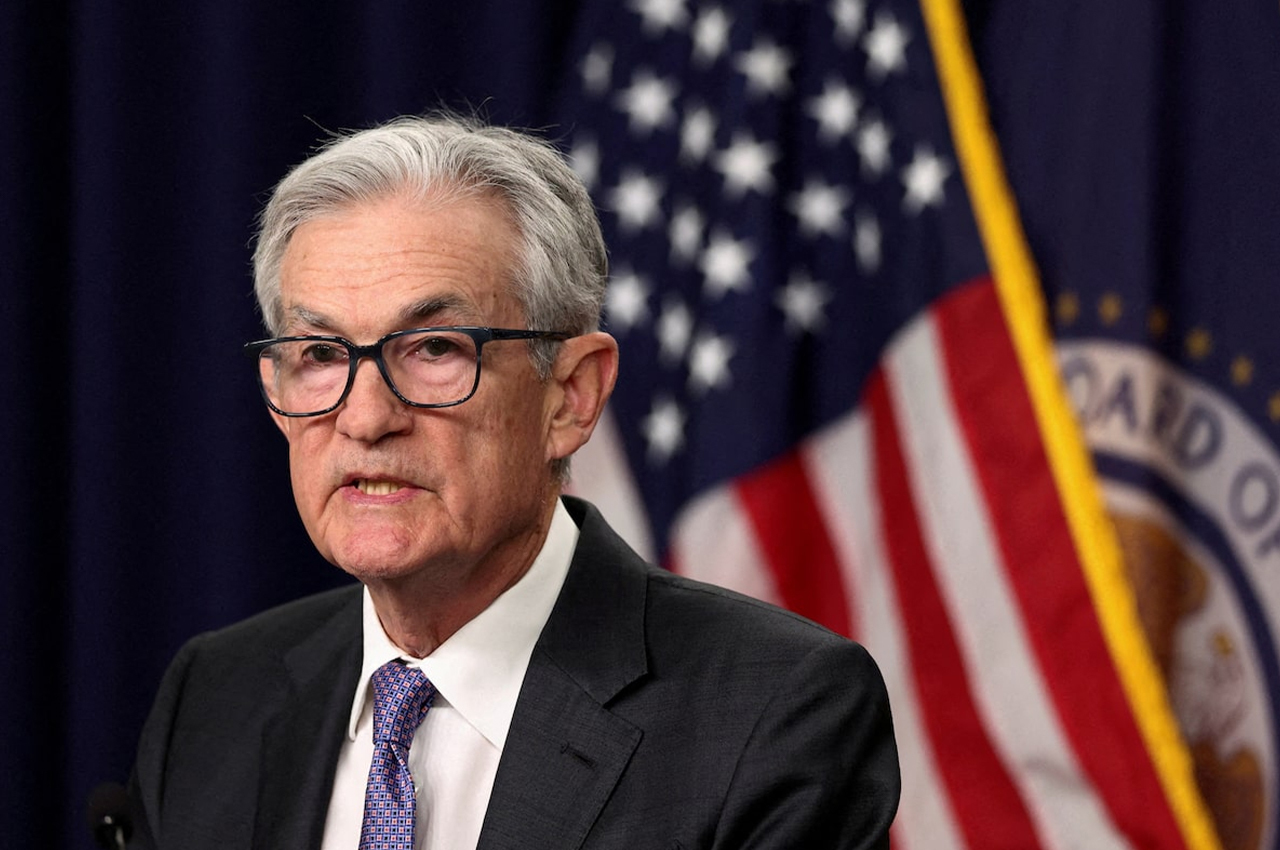
US interest rates remain steady as Powell prepares to step down as Fed Chair, marking a critical moment for global financial markets. The decision to hold rates reflects caution amid economic uncertainty, while the upcoming leadership transition at the Federal Reserve adds another layer of complexity.
Key Development
Federal Reserve has kept its benchmark interest rate unchanged at a range of 3.5 percent to 3.75 percent for the third consecutive policy meeting in 2026.
The decision comes as Jerome Powell prepares to step down as Fed Chair in mid-May, making this one of his final policy moves in the role.
Policymakers cited several reasons for maintaining the current rate:
- Persistent inflation still above the 2 percent target
- Global uncertainty linked to Middle East tensions and rising oil prices
- Mixed signals from the US labour market
- Need to assess the impact of previous rate changes
Despite political pressure for rate cuts, the Fed has opted for a wait-and-see approach, signalling caution rather than aggressive policy shifts.
Why It Matters
The decision to keep US interest rates steady has far-reaching implications for global markets, including Gulf economies.
For global finance:
- Borrowing costs remain elevated, affecting businesses and consumers
- Capital flows continue to favour US dollar assets
- Stock markets may face short-term volatility
For Gulf countries such as the UAE and Saudi Arabia:
- Dollar-pegged currencies often mirror US rate decisions
- Higher interest rates can impact lending, mortgages, and investment
- Oil revenues may offset some financial tightening effects
The Fed’s cautious stance highlights the delicate balance between controlling inflation and supporting economic growth.
Bigger Picture
The steady interest rate decision reflects broader global economic pressures shaping monetary policy.
Key factors influencing the Fed include:
- Rising energy prices linked to geopolitical tensions
- Continued resilience in the US economy, supported by consumer spending
- Strong investment in sectors like AI and data infrastructure
At the same time, the transition from Powell to a new Fed Chair signals a potential shift in policy direction. Reports indicate that leadership change could bring different priorities, especially around inflation control and economic growth strategies.
For Gulf economies investing heavily in diversification, digital transformation, and infrastructure, US monetary policy remains a key external factor influencing capital flows and economic stability.
What Happens Next
As Powell prepares to step down, attention is shifting to the future direction of US monetary policy.
Key developments to watch:
- Confirmation and policy stance of the incoming Fed Chair
- Signals on potential rate cuts later in 2026
- Inflation trends and energy price movements
- Market reaction to leadership transition
While the Fed has hinted that rate cuts could come later, internal divisions among policymakers suggest uncertainty remains high.
Markets are expected to remain sensitive to economic data and policy signals in the coming months.
FAQs
Why did the Fed keep interest rates unchanged?
The Fed held rates steady due to ongoing inflation concerns, global uncertainty, and the need to assess economic conditions.
What is the current US interest rate?
The benchmark rate remains between 3.5 percent and 3.75 percent.
When is Jerome Powell stepping down?
Powell is expected to step down as Fed Chair in mid-May 2026.
How does this affect Gulf economies?
Gulf countries with dollar-pegged currencies often follow US rate trends, impacting lending and investment conditions.
Could interest rates be cut later this year?
Yes, the Fed has signalled that rate cuts may be considered if inflation eases.