





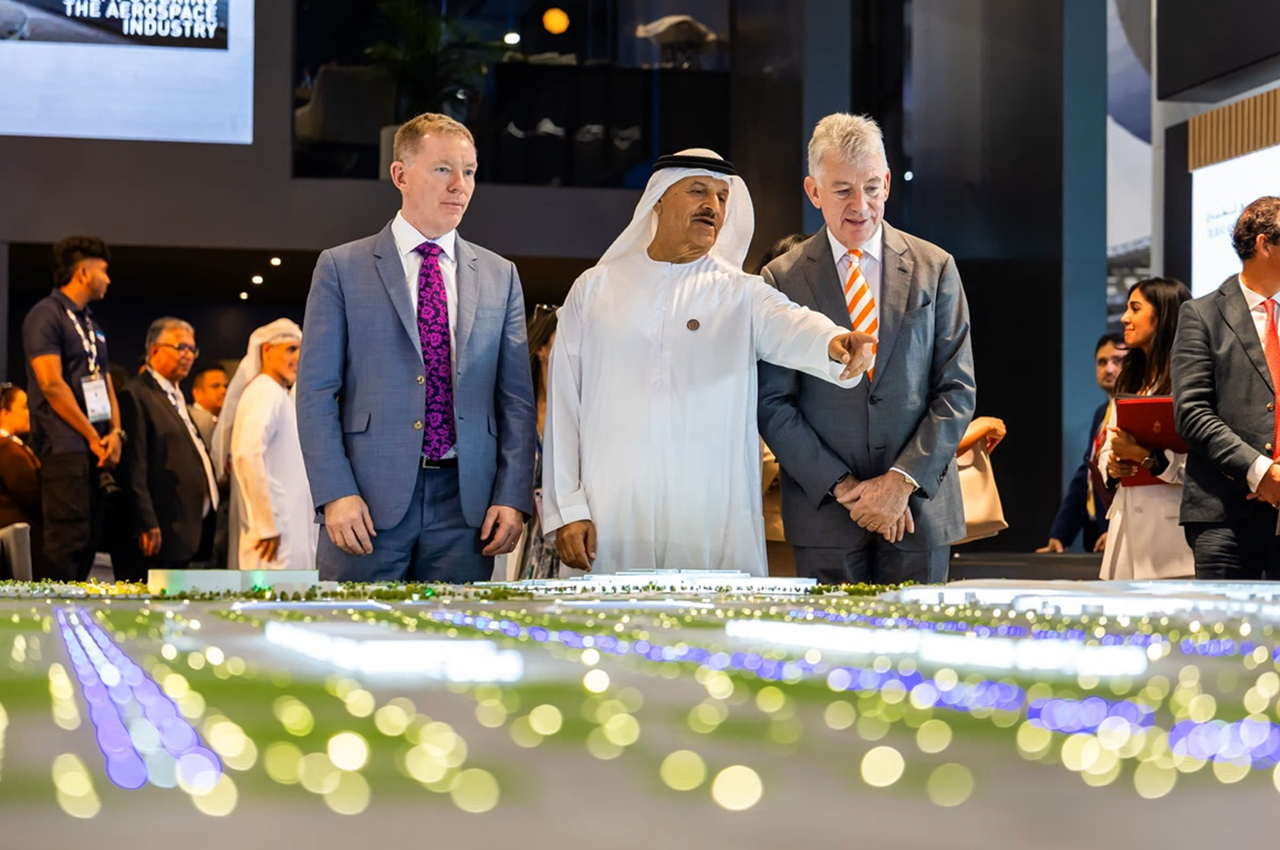
Al Maktoum International Airport expansion proceeding as planned, confirms CEO, reinforcing Dubai’s long-term vision to build the world’s largest aviation hub. Despite recent regional disruptions, authorities say the multi-billion dirham project remains firmly on track with no delays to its timeline or strategic goals.
Key Development
Dubai Airports CEO Paul Griffiths has confirmed that expansion work at Al Maktoum International Airport, also known as Dubai World Central, is continuing as planned with no changes to its long-term roadmap.
The airport’s next major phase is designed to significantly scale capacity and support Dubai’s future growth in global aviation.
Key highlights:
- Expansion timeline remains unchanged despite recent disruptions
- Future capacity planned at up to 150 million passengers annually in the next phase
- Long-term target could reach up to 260 million passengers per year
- Project forms a core part of Dubai’s aviation and economic strategy
Griffiths emphasised that nothing will defer long-term growth, signalling strong confidence in Dubai’s aviation recovery and expansion trajectory.
Why It Matters
The confirmation is a major signal of stability and long-term planning in one of the world’s most competitive aviation markets.
Key implications include:
- Investor confidence: Reinforces trust in Dubai’s infrastructure pipeline
- Aviation growth: Ensures capacity keeps pace with rising global travel demand
- Economic impact: Supports tourism, trade and logistics sectors
- Job creation: Expansion is expected to generate thousands of employment opportunities
For a global hub like Dubai, maintaining infrastructure momentum is critical, especially as passenger demand continues to rebound.
Bigger Picture
Al Maktoum International Airport is central to Dubai’s long-term aviation strategy, designed to eventually replace Dubai International Airport as the emirate’s primary airport.
The project reflects broader trends:
- Massive investment in future-ready infrastructure
- Shift towards mega transport hubs capable of handling global demand
- Integration with Dubai South, a major logistics and economic zone
- Support for Emirates airline’s long-term expansion plans
When fully completed, the airport is expected to become the largest in the world, with multiple runways and hundreds of aircraft gates.
Dubai’s strategy is clear: build ahead of demand and position itself as the leading global connector between East and West.
What Happens Next
Dubai Airports expects aviation recovery to accelerate in the coming months, with stronger passenger growth likely from the third quarter of 2026.
Looking ahead:
- Continued construction and phased expansion at Al Maktoum International
- Gradual increase in flight operations as demand rises
- Eventual transition of airlines from Dubai International Airport to DWC
- Long-term scaling to meet global travel demand
The project remains a cornerstone of Dubai’s ambition to lead the future of global aviation.
FAQs
What is Al Maktoum International Airport?
It is Dubai’s second major airport located in Dubai South, planned to become the world’s largest aviation hub.
Is the expansion delayed?
No, the CEO confirmed that expansion plans are proceeding without delays.
How big will the airport be?
It is expected to handle up to 150 million passengers in the next phase, with a long-term goal of up to 260 million annually.
Will it replace Dubai International Airport?
Yes, it is expected to eventually become Dubai’s primary airport once expansion is complete.
Why is this expansion important?
It supports Dubai’s long-term growth in tourism, trade and global connectivity.