




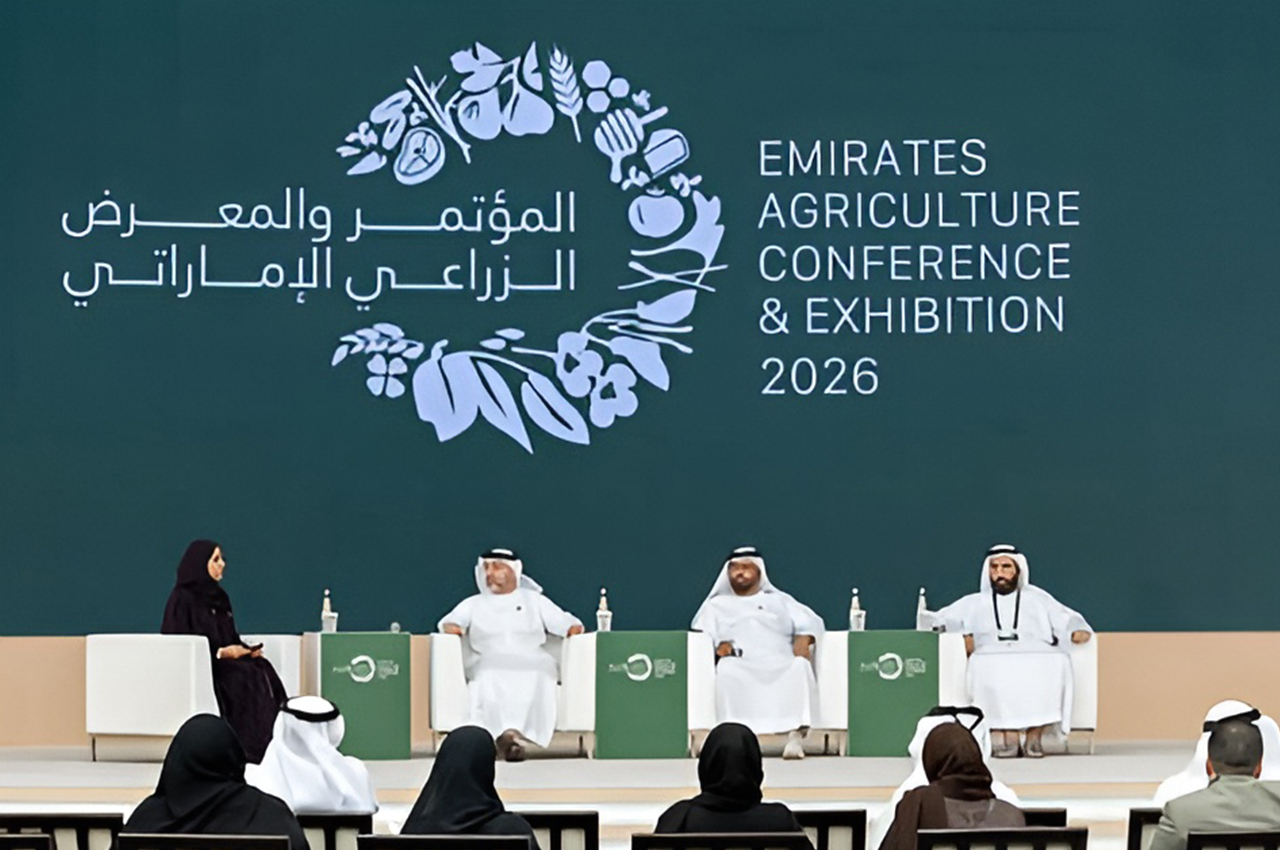
The second edition of the Emirates Agriculture Conference and Exhibition (Emirates ACE 2026) has officially opened in Al Ain, serving as a high-tech stage for the latest breakthroughs in AI-driven farming. Under the patronage of His Highness Sheikh Mansour bin Zayed Al Nahyan, the event has gathered global tech leaders and local innovators to address the urgent challenge of food security in arid climates. This year’s exhibition highlights how the UAE is successfully moving from traditional farming methods to a data-centric, “climate-smart” agricultural model that promises to redefine the region’s food landscape.
Key Development
A major highlight of Emirates ACE 2026 is the unveiling of several homegrown AI innovations developed by Khalifa University in collaboration with industrial partner Silal. Among the most anticipated technologies is “Plant AI,” an advanced system capable of greenhouse disease detection with a 98.5 per cent accuracy rate across multiple plant types. By using vision-language models, the system allows growers to monitor massive facilities in real-time through a single digital dashboard.
Other notable innovations showcased at the event include:
- TouchRIPE: The UAE’s first patented wearable sensor that uses embedded AI to assess fruit ripeness on the tree in seconds, preventing damage during harvest.
- AerialYield: A drone-based scanning system that provides automated yield estimation by feeding ripeness data directly into smart greenhouse systems.
- PollenMATIC: A handheld, AI-augmented pollination device designed to increase the efficiency of high-value crops like tomatoes and strawberries.
- Aura by INNOfarms.ai: A conversational AI interface that bridges the gap between farm sensors and market pricing, helping farmers decide exactly what to grow based on real-time Dubai market trends.
Why It Matters
The shift toward AI-driven farming is not just a technological flex; it is a mechanical necessity for the UAE’s strategic goals. The integration of these tools is expected to deliver a 20 to 30 per cent saving in procurement and operational costs for local farms. By replacing guesswork with precise data, the UAE is tackling the “intelligence gap” that has historically led to produce waste and financial losses for growers.
Furthermore, the launch of the “National Agricultural Initiative for the Adoption of Climate-Smart Crops” during the exhibition signals a major policy shift. Focusing on crops like millet and sorghum, which require 50 per cent less water than conventional grains, the UAE is leveraging AI to manage resources more efficiently while maintaining high productivity in temperatures exceeding 45°C.
Bigger Picture
Emirates ACE 2026 reinforces the UAE’s “AgTech 2030” strategy, which aims to position the nation as a global leader in desert agriculture. The event demonstrates that the path to food sovereignty in the Gulf runs through applied science rather than traditional expansion. By localizing production through AI and robotics, the UAE is building a resilient food system that is less vulnerable to global supply chain disruptions and geopolitical shifts.
The exhibition also highlights a growing synergy between government, academia, and the private sector. The presence of the Food and Agriculture Organization (FAO) as an international partner underscores the global relevance of the UAE’s “biosaline” and climate-adaptive solutions. As the region faces increasing water scarcity, the technologies being perfected in Al Ain today are expected to become the blueprint for sustainable farming in hot climates worldwide.
What Happens Next
Following the exhibition, the Ministry of Climate Change and Environment is expected to accelerate the rollout of the unified national agricultural data system. This digital ecosystem will integrate data on soil quality, water usage, and livestock health to enable smarter national planning.
In the coming months, several startups featured at ACE 2026, including the livestock management app “Raee,” will begin a phased deployment across commercial farms in the Al Ain region. As these AI tools move from the exhibition floor to the field, the UAE is on track to significantly reduce its reliance on food imports before the end of the decade.
FAQs
What is Emirates ACE 2026?
It is the second edition of the Emirates Agriculture Conference and Exhibition, held in Al Ain, focusing on the latest innovations in sustainable and AI-driven farming.
What are “climate-smart” crops?
These are crops like millet, sorghum, and Blue Panicum grass that are highly tolerant to heat and salinity, requiring significantly less water than traditional grains.
How does AI help in fruit harvesting?
Technologies like “TouchRIPE” use wearable sensors and AI to test fruit firmness and ripeness instantly, ensuring produce is picked at the perfect time without being damaged.
Can AI improve livestock management?
Yes, apps like “Raee” use RFID tags and AI-driven data profiles to track animal health, bloodlines, and growth, replacing manual records with precise digital tracking.
What is the goal of the “AgTech 2030” initiative?
The initiative aims to localize food production and reduce the UAE’s reliance on imports by integrating advanced technologies like IoT, AI, and vertical farming.