




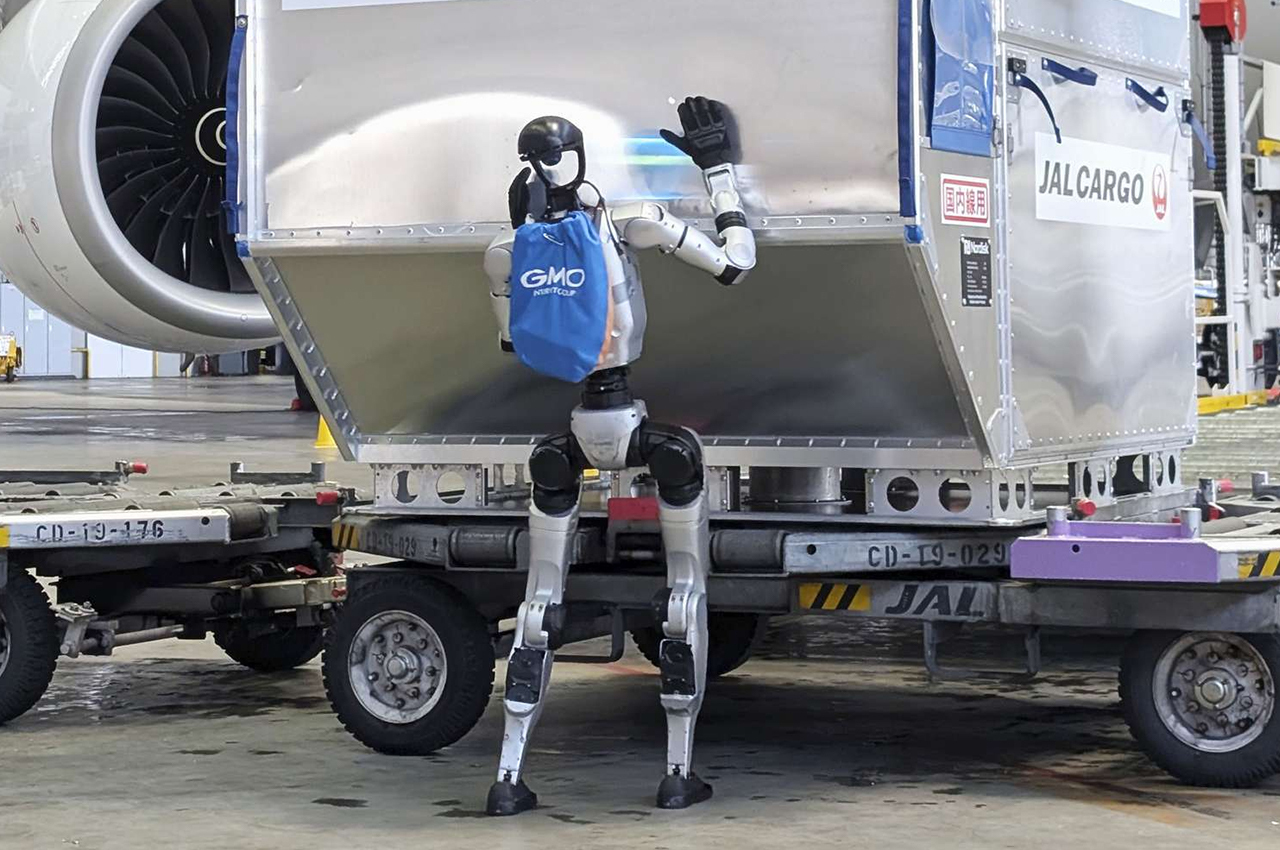
Humanoid robots to handle baggage and cleaning at Tokyo’s Haneda Airport mark a major leap in aviation technology, as Japan moves to tackle labour shortages and rising travel demand. The futuristic trial signals how artificial intelligence is rapidly reshaping airport operations worldwide.
Key Development
Japan Airlines has announced a groundbreaking trial to deploy humanoid robots for ground operations at Haneda Airport starting May 2026. The robots will assist with physically demanding tasks such as baggage handling, cargo movement, and aircraft cabin cleaning.
The initiative, developed in partnership with GMO AI & Robotics, will run as a multi-year pilot programme aimed at testing how robots can work alongside human staff in real airport environments.
These human-shaped machines are designed to operate using existing airport infrastructure without major modifications. They can load and unload luggage, assist in ground support operations, and even clean aircraft cabins.
Key highlights of the trial include:
- Robots assisting with baggage loading and unloading
- Support in aircraft cleaning operations
- Ability to work in tight airport spaces like human workers
- Initial testing phase before full operational deployment
While robots will handle repetitive and physically demanding tasks, critical safety functions will remain under human supervision.
Why It Matters
The introduction of humanoid robots at airports reflects a major shift in how global aviation is adapting to workforce challenges.
For Japan:
- Severe labour shortages due to an ageing population
- Rising tourism increasing airport workload
- Need to maintain efficiency without expanding workforce
For the aviation industry globally:
- Reduced physical strain on ground staff
- Potential for faster and more efficient turnaround times
- Lower operational costs over the long term
For Gulf countries like the UAE and Saudi Arabia, this development is particularly relevant. Airports in Dubai, Abu Dhabi, and Riyadh handle massive passenger volumes and are investing heavily in smart technologies. The success of such trials could influence future adoption across Gulf aviation hubs.
Bigger Picture
The use of humanoid robots at Haneda Airport highlights a broader transformation driven by artificial intelligence and automation.
Unlike traditional machines designed for single tasks, humanoid robots are built to mimic human movement, allowing them to:
- Navigate complex environments
- Use existing tools and equipment
- Adapt to multiple roles without redesigning infrastructure
This flexibility makes them ideal for industries like aviation, where operations are dynamic and space is limited.
Globally, airports are already experimenting with automation in security, check-in, and retail. However, ground handling remains one of the most labour-intensive areas. This trial could set a precedent for large-scale automation in this segment.
For Gulf economies investing in smart cities and AI-driven infrastructure, this development aligns with broader strategies to enhance efficiency, reduce costs, and future-proof operations.
What Happens Next
The humanoid robot trial at Haneda Airport is expected to run in phases until around 2028, with gradual integration into live operations.
In the near term:
- Robots will be tested in controlled environments
- Operational safety and efficiency will be evaluated
- Engineers will work to improve battery life and performance
Longer term, the robots could expand into:
- Operating ground support vehicles
- Handling more complex logistics tasks
- Supporting large-scale airport operations globally
If successful, the programme could lead to wider adoption of humanoid robots across major international airports, including those in the Gulf region.
FAQs
What tasks will humanoid robots perform at Haneda Airport?
They will assist with baggage handling, cargo movement, and cleaning aircraft cabins.
Why is Japan introducing robots at airports?
Japan faces a growing labour shortage and rising tourism, creating demand for automation.
Will robots replace human workers?
No, robots are expected to support human workers, especially in physically demanding tasks, while safety roles remain human-led.
When will the robots start working?
The trial is set to begin in May 2026, with phased implementation.
Could this technology come to Gulf airports?
Yes, if successful, similar systems could be adopted in major Gulf hubs like Dubai and Riyadh.