




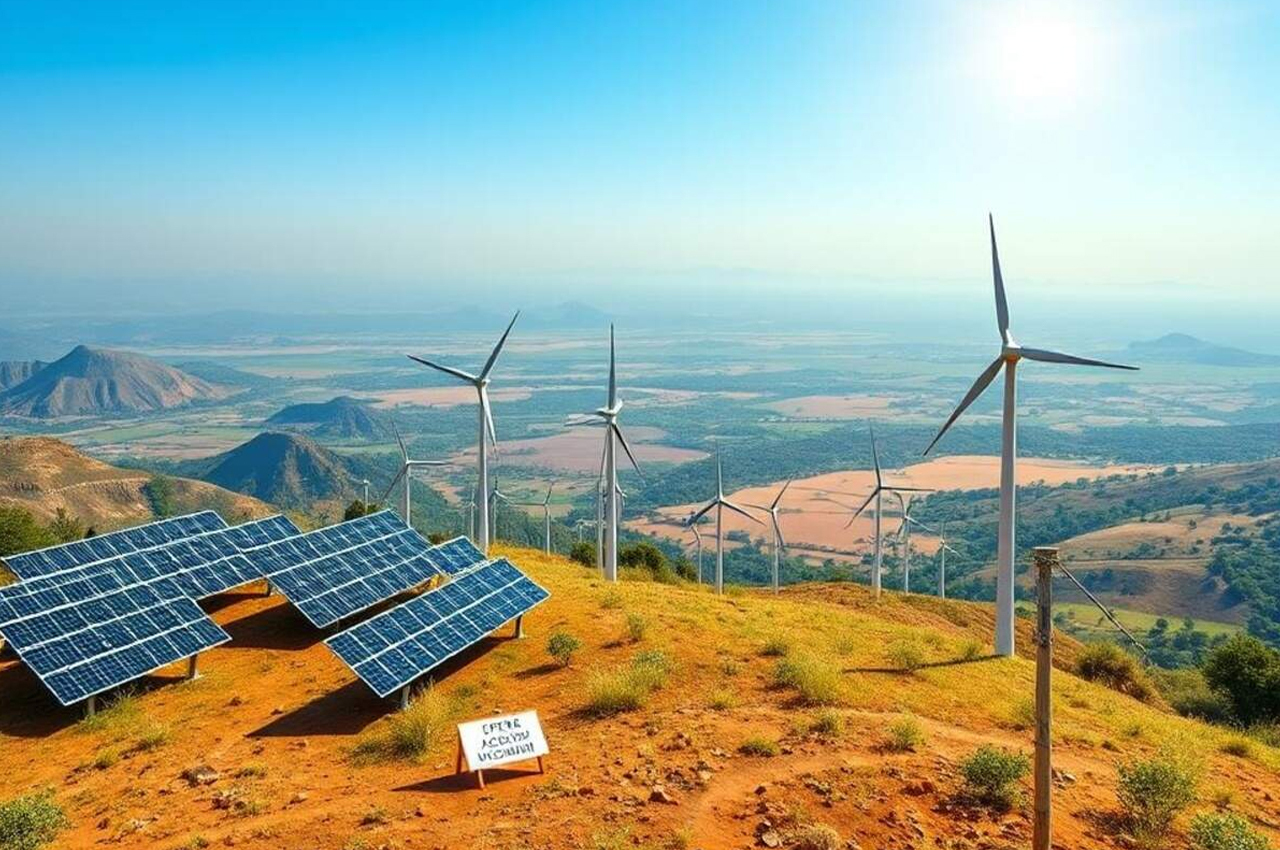
India achieves 2030 renewable energy target five years ahead of schedule, marking a major milestone in the global clean energy transition. The achievement highlights the country’s rapid progress in scaling solar and wind capacity while strengthening its position as a key player in sustainable energy.
Key Development
India has reportedly reached its 2030 renewable energy capacity target well ahead of schedule, signalling a significant acceleration in clean power deployment. The target, originally set for the end of the decade, focused on expanding solar, wind, and other renewable energy sources to reduce reliance on fossil fuels.
The milestone reflects years of aggressive investment in large-scale solar parks, wind corridors, and grid infrastructure. Government-backed initiatives and private sector participation have played a crucial role in driving this growth.
Key achievements include:
- Rapid expansion of solar energy installations across multiple states
- Significant growth in onshore and offshore wind capacity
- Increased adoption of hybrid renewable projects
- Strong policy support encouraging domestic and foreign investment
The early achievement places India among the fastest-growing renewable energy markets globally.
Why It Matters
Reaching the renewable energy target ahead of schedule carries major implications for both domestic and global energy landscapes.
For India:
- Reduced dependence on imported fossil fuels
- Lower carbon emissions and improved environmental outcomes
- Strengthened energy security and resilience
- Attraction of global green investment
For Gulf countries, including the UAE and Saudi Arabia, the development is equally relevant. Both regions are investing heavily in clean energy as part of long-term diversification strategies.
The milestone could:
- Increase collaboration opportunities in renewable energy projects
- Encourage technology sharing and joint investments
- Influence global energy pricing and demand patterns
It also reinforces the growing importance of sustainability in shaping economic policy and investment decisions.
Bigger Picture
India’s achievement reflects a broader global shift towards renewable energy, driven by climate commitments, technological advancements, and falling costs.
Solar and wind energy have become increasingly competitive compared to traditional fossil fuels. Large-scale deployment has been supported by:
- Government incentives and regulatory reforms
- Improvements in energy storage and grid management
- Growing corporate demand for clean energy solutions
For Gulf economies, this trend aligns with national strategies such as Saudi Vision 2030 and the UAE’s Net Zero goals. Both regions are expanding renewable capacity while maintaining leadership in traditional energy markets.
India’s progress also highlights the role of emerging economies in driving the global energy transition. As energy demand continues to grow, balancing sustainability with economic expansion will remain a key challenge.
What Happens Next
With the 2030 target achieved early, India is expected to raise its renewable energy ambitions further.
Possible next steps include:
- Setting more aggressive capacity targets beyond 2030
- Expanding energy storage and battery infrastructure
- Increasing investment in green hydrogen projects
- Enhancing grid stability and transmission networks
The country may also focus on integrating renewables more efficiently into its energy mix while addressing challenges such as intermittency and land use.
For global markets, India’s progress could accelerate competition in clean energy technologies and drive further innovation.
FAQs
What does India achieving its 2030 renewable energy target mean?
It means the country has reached its planned renewable energy capacity five years earlier than expected.
Which energy sources contributed to this milestone?
Solar and wind energy were the primary contributors, supported by hybrid and other renewable projects.
Why is this important globally?
It accelerates the global transition to clean energy and sets a benchmark for other countries.
How does this impact Gulf countries?
It creates opportunities for collaboration and supports their own renewable energy ambitions.
What could India do next?
India may increase its targets, invest in energy storage, and expand into green hydrogen and advanced technologies.