



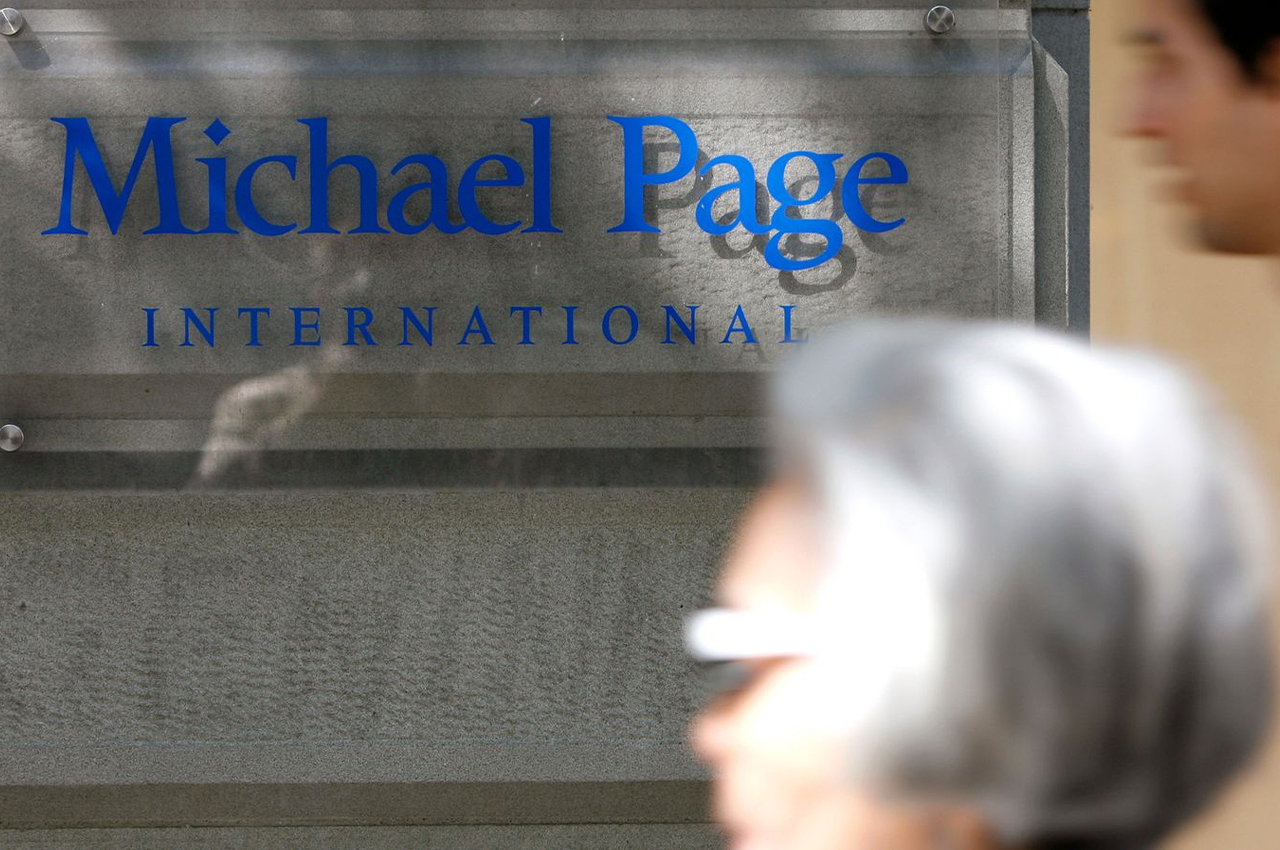
One of the world’s most prominent recruitment consultancies has issued a measured but pointed warning to businesses across the UAE and Gulf: artificial intelligence is reshaping work faster than most organisations are ready for, and the gap between hype and real-world results is wider than many leaders realise. The message, delivered through the firm’s landmark Talent Trends 2026 report, carries particular weight in a region racing to position itself at the forefront of global AI adoption.
The Report Behind the Warning
The Talent Trends 2026 study draws on insight from nearly 60,000 professionals across 178 markets, covering job market trends, what talent wants, and the growing role of AI in the workplace. The report spans 51 locations and 32 job functions, making it one of the most comprehensive global talent surveys published this year.
The overarching message of the 2026 edition is striking in its directness. Framed under the headline “Hire Through the AI Hype,” the report does not dismiss artificial intelligence as irrelevant. Rather, it cautions businesses against treating AI adoption as a shortcut to better hiring, stronger performance, or competitive advantage without first addressing the human and structural foundations that determine whether AI actually delivers.
Hiring decisions are being made more thoughtfully than ever. Professionals want clarity before making a career move, and businesses that can offer transparent answers on salary, flexibility, workplace culture, and AI policies will have the edge.
What the Data Shows About AI at Work
Generative AI has moved from a new idea to a regular part of daily work. Usage has grown quickly over the past year, and many professionals now rely on tools such as ChatGPT and Microsoft Copilot in their day-to-day tasks. Over the past year, AI adoption has surged by 50 per cent, with nearly half of all workers, 45 per cent, now using generative AI tools in their roles.
Yet adoption does not equal effectiveness. Broader industry research reinforces this reality. Despite the headline adoption figures, the gap between what AI promises and what it actually delivers in most organisations remains substantial.
There is still a big gap between AI’s promise and everyday reality in recruiting. Talent markets remain inefficient, and many employers still struggle to match the right person with the right role, despite an explosion of new tools. The real opportunity is not in chasing full automation, but in sharpening focus.
The data on AI maturity is particularly telling. In a study of nearly 500 organisations using a five-level AI maturity model for HR, 83 per cent sat in the lowest two levels, with less than one per cent reaching high intelligence and only five per cent achieving high automation maturity. Only around 11 per cent of organisations have AI embedded into daily workflows for most employees, meaning AI is still an add-on rather than a true operating layer.
The Human Factor That AI Cannot Replace
Michael Page’s core argument is not anti-technology. It is pro-human. The firm’s position is that AI is most powerful when it enhances human judgement rather than attempts to replace it, a distinction that many businesses in the UAE and across the Gulf are still working to internalise.
The organisations that are truly succeeding in 2026 are the ones treating AI as a way to enhance human judgement, not as a replacement for it, especially when it comes to the strategic decisions that shape their talent future.
This view is echoed at the highest levels of workforce research globally. Deloitte’s 2026 Global Human Capital Trends report emphasises that successful AI implementation in HR hinges not just on the technology itself, but on how well human teams understand and collaborate with it.
There is also a concern about the pipeline of future leaders. Replacing entry-level HR roles with AI looks like an easy win on paper, but when early-career roles vanish, so do the internal pathways that build future HR and talent acquisition leadership.
What Gulf Employers Need to Understand
The Middle East context adds an important layer to this conversation. The UAE and Saudi Arabia are among the most aggressive adopters of AI globally, yet the talent infrastructure required to support that ambition still has notable gaps.
Over 80 per cent of organisations in the region feel intense pressure to adopt AI, with 69 per cent planning increased investment. However, nearly half of organisations cite talent shortages and insufficient technological capabilities as barriers to scaling AI effectively.
The Michael Page Salary Guide 2026 for the UAE highlights a projected economic growth of 4.5 per cent driven by non-oil sectors, with increasing demand for specialised roles, particularly in banking, consultancy, and data analytics, as AI reshapes what employers need from their workforce.
The skills gap is already creating real friction. Demand for engineers skilled in automation, cloud architecture, and AI-ready infrastructure far exceeds supply in the UAE, slowing deployment timelines and driving up operational costs across key sectors.
The message from the recruitment sector is consistent: investing in AI tools without a parallel investment in the human capability to use them wisely is a guaranteed path to wasted budgets and frustrated leadership teams.
What Businesses Should Actually Do
Rather than chasing the latest AI platform or automating every step of the hiring process, Michael Page’s guidance points employers towards a more grounded set of priorities:
- Be transparent with candidates about how AI is used in hiring decisions, as only 26 per cent of applicants currently trust AI to evaluate them fairly.
- Focus on skills-based hiring over title-based screening, using AI to widen the talent pool rather than narrow it through algorithmic bias.
- Invest in upskilling existing staff rather than assuming AI will compensate for capability gaps.
- Maintain human oversight at every stage of recruitment where judgement, empathy, and cultural fit assessment are critical.
- Build clear AI governance frameworks that give both employees and candidates confidence in how the technology is deployed.
What Happens Next
The pace of AI development is not going to slow down. What will change, as Michael Page’s data makes clear, is that businesses able to separate genuine innovation from marketing noise will build more resilient, better-performing teams than those simply following the hype cycle.
Senior figures at Michael Page have noted that 2026 will be a defining year for tech talent, not just because new technologies are scaling fast, but because organisations are rethinking capability building from the ground up. AI-driven roles are expanding beyond classic tech teams, and data skills are becoming a baseline, forcing companies to rethink how they hire, upskill, and structure their teams.
For UAE and Gulf businesses navigating this landscape, the guidance from the world’s recruitment professionals is clear. AI is a tool, not a strategy. The companies that understand this distinction in 2026 are the ones that will lead in 2027 and beyond.
FAQs
What is Michael Page’s Talent Trends 2026 report?
It is a global talent study based on responses from nearly 60,000 professionals across 178 markets, covering job market trends, workplace expectations, and the growing influence of AI on hiring and careers. The 2026 edition is themed around hiring through the AI hype.
What does Michael Page mean by “hiring through the AI hype”?
The phrase signals a call for businesses to cut through inflated promises around AI and focus on what actually works: using technology to enhance human judgement rather than replace it, building skills-based hiring processes, and being transparent with candidates about how AI tools are used.
How widely is AI being used in recruitment in 2026?
Adoption has grown sharply, with an estimated 87 per cent of companies now using AI in some part of their recruitment process, and 99 per cent of Fortune 500 firms incorporating it into their hiring technology. However, the majority of organisations remain at the lowest levels of AI maturity.
What are the specific risks of over-relying on AI in hiring?
Key risks include algorithmic bias that screens out non-traditional candidates, a collapse in entry-level career pathways as junior roles are automated away, growing candidate mistrust given that only 26 per cent trust AI to evaluate them fairly, and the absence of proper metrics to measure whether AI tools are actually delivering a return on investment.
How should UAE employers approach AI in talent and recruitment?
The guidance from leading recruitment professionals is to treat AI as an enhancement layer rather than a decision-maker, invest equally in human capability development alongside technology adoption, prioritise skills over job titles, and ensure clear governance policies around how AI is used at every stage of the hiring process.