



As of Tuesday, 28 April 2026, the Middle East enters its 21st day under a complex and fragile regional ceasefire framework. While the high-intensity combat that defined the initial weeks of the conflict has subsided, diplomatic efforts are currently gridlocked. Major global powers and regional mediators are racing against time to prevent a return to full-scale hostilities as tensions remain at a breaking point in southern Lebanon and the Strait of Hormuz.
Key Development
The diplomatic landscape is currently defined by an “indefinite extension” of the US-Iran ceasefire, announced by Washington on 21 April. However, this extension remains extremely precarious. Iranian officials have reportedly signaled that the truce “means nothing” so long as the maritime blockade of Iranian ports in the Strait of Hormuz remains in place.
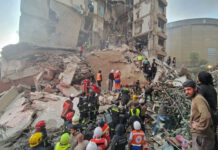
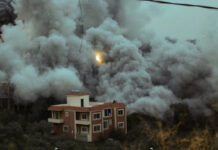
In Lebanon, the situation is even more critical. The 10-day Israel-Lebanon ceasefire, which took effect on 16 April, has largely failed to hold. On Tuesday, the Israeli military ordered the immediate evacuation of 16 southern Lebanese towns, accusing Hezbollah of persistent violations. Despite the formal truce, at least 40 people have reportedly been killed in Lebanon since mid-April, with both sides trading accusations of cross-border strikes.
Why It Matters
The current diplomatic impasse has significant implications for global stability and the regional economy:
- Energy Markets: The continued uncertainty regarding the Strait of Hormuz has triggered the most severe energy crisis in a generation, with global markets reacting to the threat of a prolonged maritime blockade.
- Humanitarian Crisis: In Gaza, the humanitarian situation remains catastrophic despite a theoretical ceasefire. Nearly 84 per cent of the territory’s economy has contracted, and over 50 per cent of hospitals are non-functional.
- Security Paradox: While formal “active hostilities” between the US and Iran have not resumed, the lack of a permanent settlement is leading to a militarised stalemate that could collapse at any moment.
Bigger Picture
The ongoing negotiations are attempting to implement the “Comprehensive Plan to End the Gaza Conflict,” a three-phase roadmap endorsed by the UN Security Council. The second phase, which involves the formation of the National Committee for the Administration of Gaza (NCAG), is struggling to gain traction due to the renewed regional fighting that began on 28 February.
Regionally, Egypt and Jordan are leading a diplomatic surge, with Egyptian Foreign Minister Badr Abdelatty holding intensive talks with counterparts in Germany, the UK, and Oman this week. These efforts are focused on solidifying the ceasefire into a political settlement that removes the conflict from the “war track” and moves it toward a permanent maritime and territorial agreement.
What Happens Next
The UN Security Council is scheduled to hold a quarterly open debate tomorrow, 29 April 2026, to address “the situation in the Middle East.” This meeting is expected to be a pivotal moment for the US-proposed peace framework.
Mediators from Pakistan, Qatar, and Türkiye are pushing for a fresh round of consultations to resolve the Strait of Hormuz blockade. If these talks fail to achieve a breakthrough by the end of the week, analysts warn of a potential “unraveling” of the fragile truces in both Lebanon and the Gulf, which could lead to a renewed escalation of regional strikes.
FAQs
Is there currently a ceasefire in Gaza?
Yes, a fragile ceasefire has been in place since October 2025, though it has been frequently interrupted by periodic airstrikes and shelling, particularly following the regional escalation in February 2026.
What is the status of the Israel-Lebanon truce?
A 10-day cessation of hostilities was signed on 16 April 2026. However, it is currently under severe strain, with the IDF issuing new evacuation orders in southern Lebanon as of 28 April.
Why is the Strait of Hormuz closed?
Iran effectively closed the waterway in response to US-Israeli strikes earlier this year. The US maintains a blockade of Iranian ports, which remains the primary sticking point in permanent peace negotiations.
Who is mediating the US-Iran talks?
Pakistan has been the primary mediator for the US-Iran ceasefire track, supported by diplomatic efforts from Egypt, Qatar, and the European Union.
What is the “NCAG” mentioned in news reports?
The National Committee for the Administration of Gaza (NCAG) is a proposed interim technocratic government of Palestinian experts intended to oversee Gaza’s reconstruction and eventual transition to a reformed Palestinian Authority.