




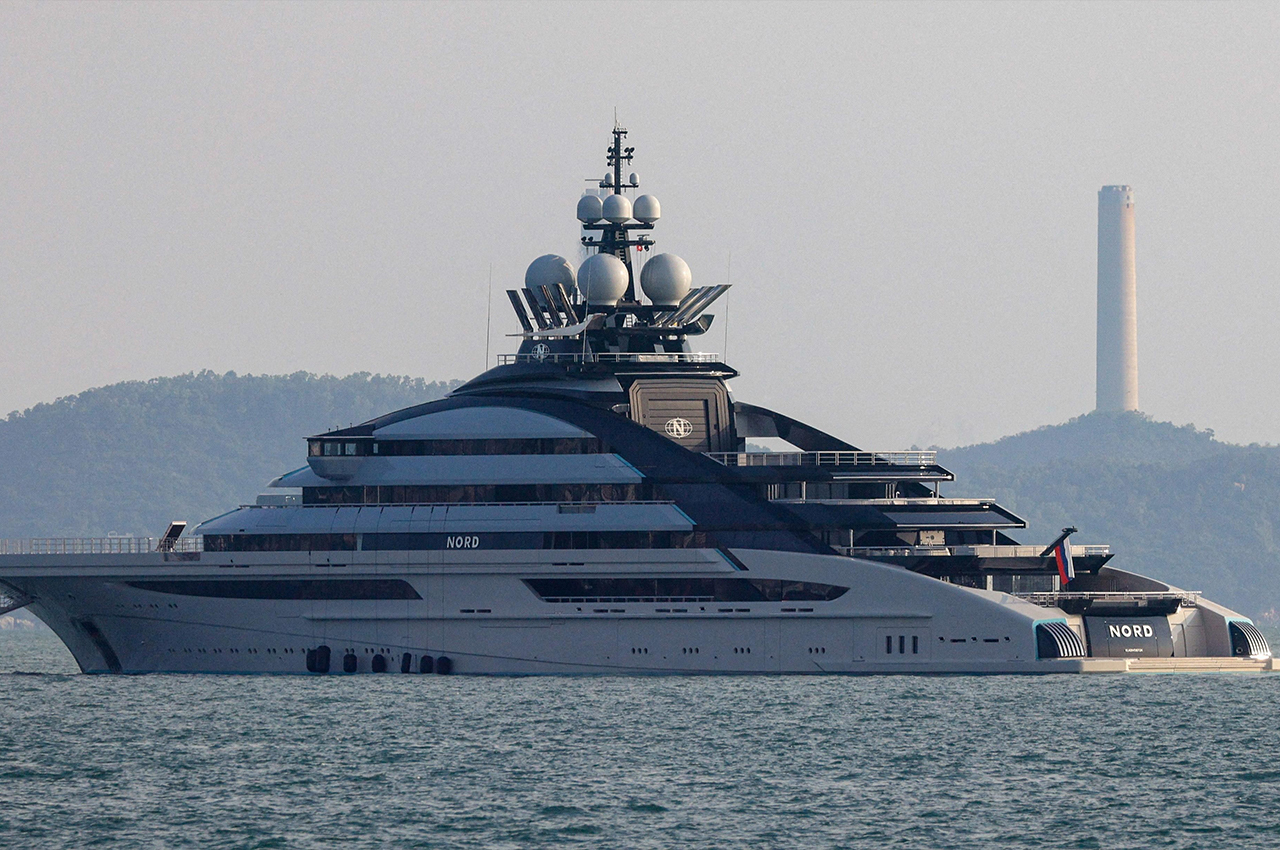
The 142-metre superyacht Nord, widely associated with sanctioned Russian billionaire Alexey Mordashov, successfully transited the Strait of Hormuz on Saturday, 25 April 2026. Despite a highly restrictive environment and a continuing naval standoff between the United States and Iran, the vessel became one of the few private luxury yachts to safely navigate the blockaded waterway. Valued at over $500 million, the Nord’s journey from Dubai to Muscat has drawn international attention for its ability to bypass maritime constraints that have stalled dozens of commercial tankers and cargo ships.
+2
Key Development
Public tracking data from MarineTraffic and VesselFinder confirmed that the Nord departed Port Rashid in Dubai at approximately 14:00 GMT on Friday, 24 April. The vessel crossed the Strait of Hormuz overnight and arrived at the Al Mouj marina in Muscat, Oman, early Sunday morning.
+1
Unlike many high-profile vessels that disable their tracking systems in high-risk zones, the Nord maintained its Automatic Identification System (AIS) broadcast throughout the passage. Reports indicate the yacht followed a structured route close to Larak Island, a lane generally considered safe for pre-approved transit. While Iranian forces have maintained a “toll booth” vetting system for vessels entering the Gulf, it remains unclear what specific clearance or diplomatic assurances allowed the Russian-flagged superyacht to pass without incident.
+1
Why It Matters
The transit of the Nord serves as a stark study in contrast to the current state of global shipping in the Middle East. While 20 per cent of the world’s oil and LNG supplies are typically moved through this passage, the ongoing naval war has seen both the US and Iran capture or turn away numerous merchant vessels.
- Selective Movement: While dozens of oil tankers remain anchored at the edge of the Strait due to insurance risks and military blockades, the Nord’s passage suggests a “hierarchy of access” based on political alignment or specific negotiations.
- Economic Optics: The vessel is owned by Alexei Mordashov, an ally of the Russian leadership who remains under US and EU sanctions. Its safe passage highlights the complexities of enforcing maritime restrictions on private assets during active regional conflicts.
+1 - Strategic Precedent: The event demonstrates that even under a dual blockade, certain “non-belligerent” or strategically flagged vessels can still navigate one of the world’s most contested maritime corridors.
Bigger Picture
This development occurs against the backdrop of the US naval blockade of Iranian ports, which commenced on 13 April 2026. The US military has reportedly directed over 31 Iran-linked vessels to turn around in the northern Arabian Sea. Simultaneously, Iran has captured multiple container ships—including the MSC Francesca and the Epaminondas, in retaliation for what it terms “maritime piracy.”
+1
The Nord has spent much of the last two years moving between “safe” jurisdictions, including Vladivostok, the Seychelles, and Hong Kong, to avoid seizure by Western authorities. Its presence in the Gulf of Oman now places it within the Arabian Sea, a region heavily patrolled by international navies.
+1
What Happens Next
According to latest AIS data, the Nord is currently en route to Port Victoria in the Seychelles, with an expected arrival of 2 May 2026. This destination has historically served as a winter hub for the vessel and is considered a relatively safe port for assets linked to sanctioned Russian individuals.
Diplomatic observers will be watching closely to see if other high-profile private vessels attempt similar transits. The UN Security Council is scheduled to meet tomorrow, 29 April, to discuss the ongoing maritime crisis, where the “preferential” treatment of certain vessels in the Strait of Hormuz is expected to be a point of contention.
FAQs
Who owns the superyacht Nord?
The vessel belongs to Alexey Mordashov, a Russian steel magnate and billionaire who is widely considered an ally of the Russian leadership.
Why is its transit through the Strait of Hormuz significant?
It is significant because the Strait is currently under a naval blockade and high-risk conditions that have stopped most commercial traffic, yet the Nord passed through in plain sight.
How much is the Nord worth?
The 142-metre (465-foot) vessel is estimated to be worth over $500 million (£370 million).
Was the yacht at risk of being seized?
While Mordashov is sanctioned by the US and EU, the UAE and Oman have not historically enforced those specific sanctions, allowing the vessel to operate in their waters.
Where is the Nord going now?
The vessel is currently sailing toward Port Victoria, Seychelles, in the Indian Ocean.