



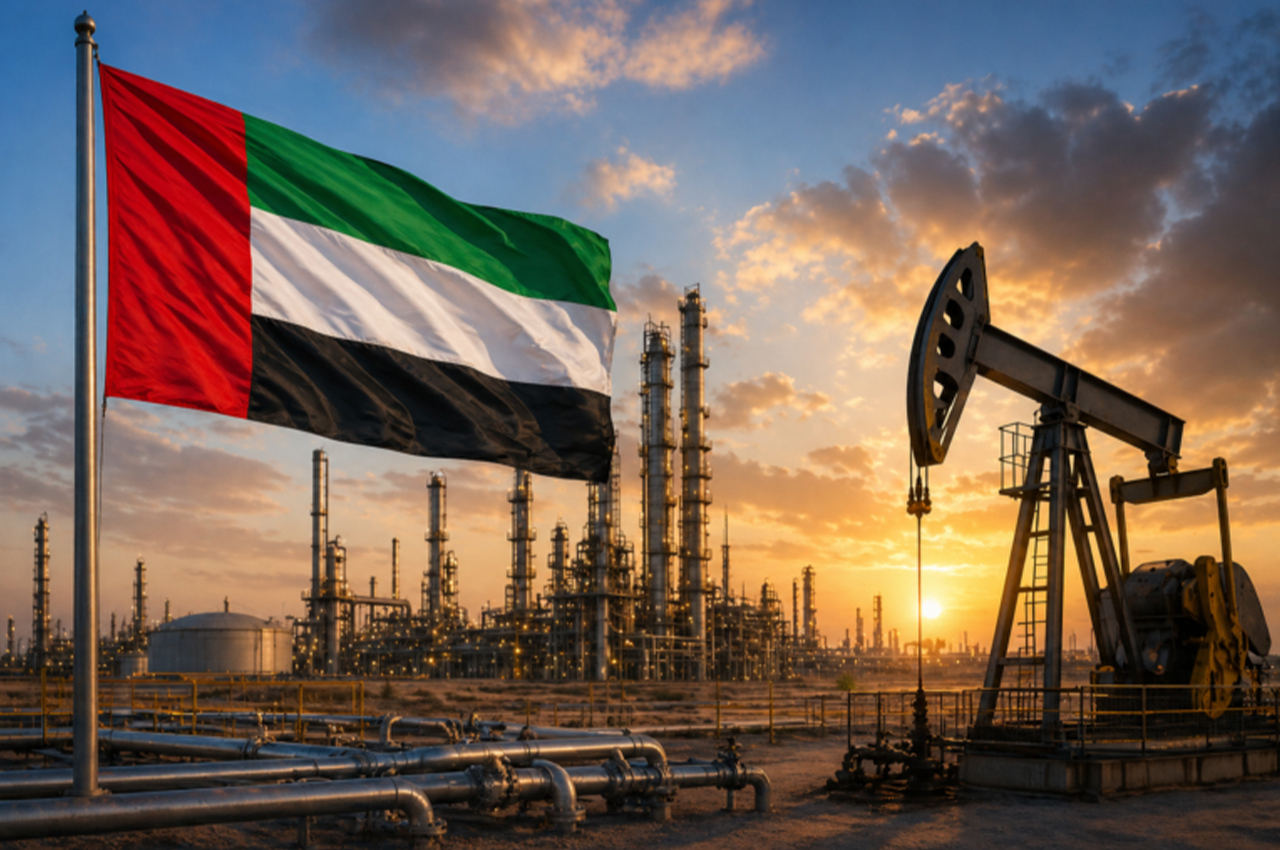
The United Arab Emirates has officially announced its withdrawal from OPEC and the wider OPEC+ alliance, effective 1 May 2026. This historic decision marks the end of nearly six decades of coordinated production policy and signals a seismic shift in how the UAE intends to monetise its energy reserves. By prioritising national production autonomy over cartel-mandated quotas, the Emirates is positioning itself to be a more flexible, market-responsive supplier in a rapidly evolving global energy landscape.
Key Development
The UAE’s exit from OPEC comes after years of underlying tension regarding production baselines and capacity. Under the leadership of the Abu Dhabi National Oil Company (ADNOC), the country has invested billions of dollars to expand its production capacity, reaching approximately 4.85 million barrels per day (bpd) in early 2026. The 2027 target of 5 million bpd is now within reach, yet for years, OPEC+ quotas forced the UAE to keep nearly 1.5 million bpd of this capacity offline.
By decoupling from the group, the UAE regains control over its most valuable asset. The policy shift allows the Emirates to scale production based on its own investment timelines and customer demand rather than the collective needs of the 23-nation alliance. While the move ends a partnership that dates back to 1967, officials have emphasised that the UAE remains committed to global energy security and will continue to supply markets in a responsible and measured manner.
Why It Matters
In the immediate term, the global oil market is grappling with significant supply-side constraints. With the ongoing conflict involving Iran and the closure of the Strait of Hormuz, Brent crude has remained resilient above the $110 mark. Because shipping routes are currently restricted, the UAE’s exit is unlikely to flood the market with oil overnight. The primary bottleneck is no longer production capacity, but the logistics of moving product to international buyers.
However, once regional disruptions ease, the impact will be substantial. The UAE’s ability to add nearly 1.5 million bpd of “idle” capacity back into the global supply chain could act as a natural ceiling on future price spikes. For global consumers and major economies like China and India, an independent UAE represents a more reliable partner that is less likely to participate in artificial supply squeezes to keep prices high.
Bigger Picture
This policy shift is a cornerstone of the UAE’s broader “Vision” strategy for economic sovereignty. By accelerating the monetisation of its 97.8 billion barrels of proven reserves, the UAE is effectively “de-risking” its future against the global energy transition. The logic is clear: with the rise of electric vehicles and renewables, the window to extract maximum value from crude oil is narrowing.
The exit also highlights a growing divergence in regional strategies. While Saudi Arabia has historically favoured high prices to fund its giga-projects, the UAE’s economy is now 75% non-oil. Abu Dhabi’s focus has shifted toward protecting global economic growth—which drives its massive sovereign wealth fund investments—rather than simply chasing the highest possible price per barrel. This independent stance reinforces Dubai and Abu Dhabi as modern, pragmatist hubs that prioritize market stability over geopolitical posturing.
What Happens Next
The formal withdrawal on 1 May 2026 will initially be more symbolic than physical due to the current maritime blockades in the Gulf. However, analysts expect ADNOC to ramp up production gradually as soon as export pathways, including the Fujairah-based ADCOP pipeline which bypasses the Strait of Hormuz, are fully utilised or regional tensions subside.
The most critical factor to watch will be the reaction of the remaining OPEC+ members. Without the UAE’s significant volume and diplomatic weight, the alliance may struggle to maintain the same level of market discipline. Investors should prepare for a period of heightened price discovery as the market adjusts to a new world where one of its largest producers is now a “free agent” focused on volume and long-term customer reliability.
FAQs
Why is the UAE leaving OPEC now?
The UAE has invested heavily in reaching a 5 million bpd production capacity and believes that restrictive OPEC quotas are preventing it from achieving its national economic goals and monetising reserves before the global energy transition.
Will the UAE’s exit cause an immediate crash in oil prices?
Not immediately. Current regional conflicts and shipping disruptions in the Strait of Hormuz are the primary drivers of high prices, limiting the UAE’s ability to significantly increase physical exports in the short term.
Does the UAE still have a relationship with OPEC members?
Yes, the UAE remains a close ally of its Gulf neighbours and has stated it will continue to coordinate on issues of energy security, though it will no longer be bound by their production limits.
How much oil can the UAE produce outside of OPEC?
The UAE currently has an installed capacity of roughly 4.85 million bpd and is on track to hit 5 million bpd by 2027, which is significantly higher than its previous OPEC quotas.
What is the role of the ADCOP pipeline in this strategy?
The Abu Dhabi Crude Oil Pipeline (ADCOP) allows the UAE to export up to 1.5 million bpd via Fujairah, bypassing the Strait of Hormuz and providing a strategic hedge during periods of regional instability.