



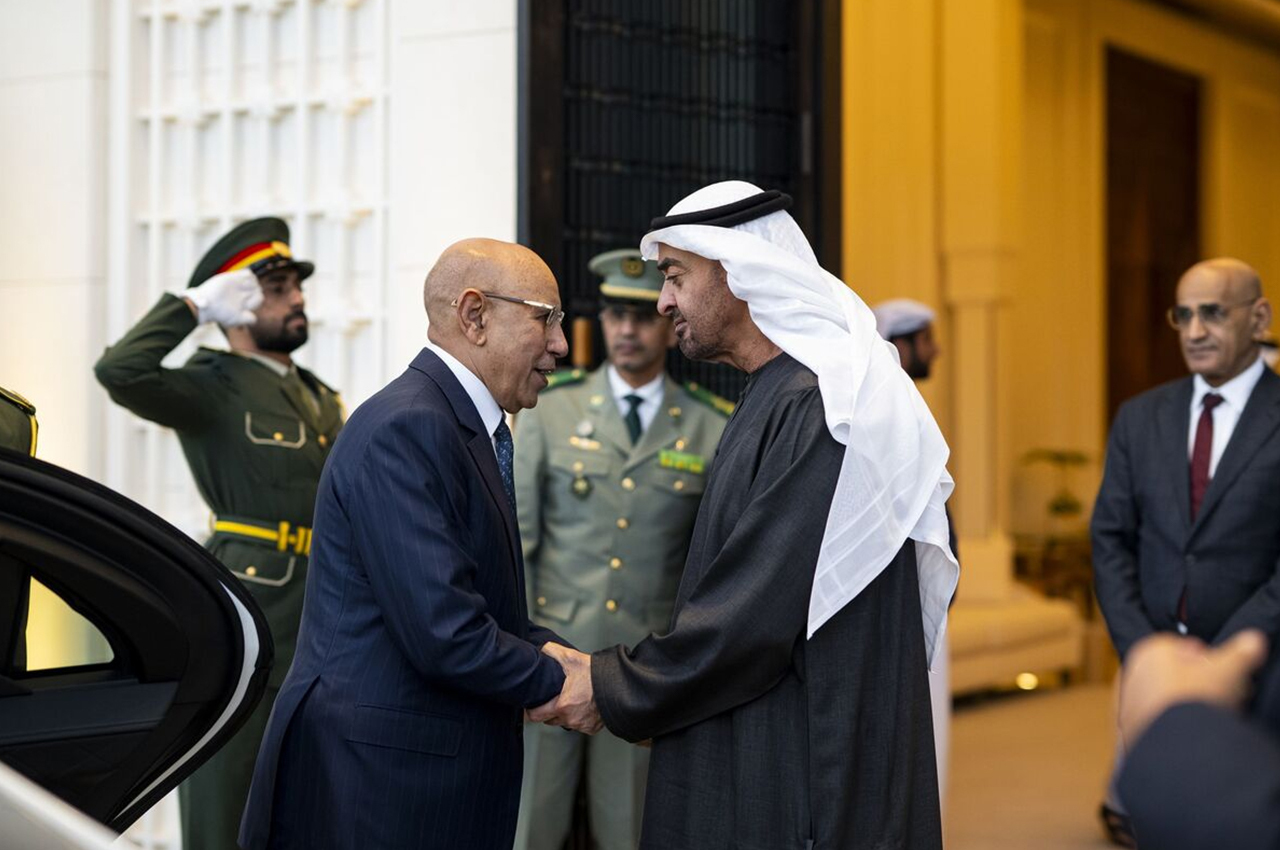
UAE President His Highness Sheikh Mohamed bin Zayed Al Nahyan received His Excellency Mohamed Ould Cheikh El Ghazouani, President of the Islamic Republic of Mauritania, in Abu Dhabi this week to discuss strengthening bilateral ties and addressing pressing regional developments. The high-level meeting, held during President El Ghazouani’s working visit to the Emirates, focused on a shared commitment to regional stability, economic growth, and the expansion of cooperation in renewable energy and infrastructure. Both leaders emphasised the importance of diplomatic coordination to navigate the complex geopolitical challenges currently facing the Middle East and North Africa.
Key Development
The discussions between the two leaders covered a broad spectrum of strategic interests, ranging from economic investment to national security. A primary focus of the meeting was the enhancement of bilateral cooperation in sectors such as renewable energy, agriculture, and digital transformation. Both nations expressed a desire to accelerate development projects that provide mutual benefits to their respective populations, reflecting a partnership that has grown steadily since the early 1970s.
Security was also a central theme of the talks. President El Ghazouani reiterated Mauritania’s firm condemnation of recent regional escalations, particularly those involving Iranian-linked threats against civilian infrastructure in the Gulf. The Mauritanian leader praised the effectiveness of the UAE’s security measures and its commitment to safeguarding its sovereignty, noting that such stability is vital for the continued economic prosperity of the entire Arab world.
Why It Matters
The meeting highlights the UAE’s proactive role as a regional mediator and a major investor in West African stability. For the UAE, Mauritania represents a strategic partner in the Maghreb region, offering significant opportunities for food security projects and green energy initiatives. Conversely, for Mauritania, the UAE serves as a vital source of development financing and technological expertise.
The economic implications of this renewed partnership include:
- Energy Security: Collaborative efforts in renewable energy are set to support Mauritania’s transition to a greener economy while expanding the UAE’s footprint in the global renewables sector.
- Economic Resilience: Increased Emirati investment in Mauritanian infrastructure is expected to create jobs and bolster the local economy.
- Maritime Safety: Both leaders reviewed the impact of regional tensions on global energy supplies and maritime security, particularly regarding trade routes through the Red Sea and the Gulf.
Bigger Picture
This diplomatic engagement is part of a wider UAE strategy to build a network of stable, prosperous partners across Africa and the Arab world. By aligning with Mauritania, the UAE is fostering a corridor of cooperation that extends from the Gulf to the Atlantic coast. This partnership is also highly relevant to the UAE’s broader vision of using “soft power” and economic diplomacy to mitigate regional conflicts.
Furthermore, the involvement of high-ranking officials—including H.H. Sheikh Hamdan bin Zayed Al Nahyan and H.H. Sheikh Hamdan bin Mohamed bin Zayed Al Nahyan—demonstrates the priority the UAE leadership places on these relations. The focus on digital education is also evident through the Digital School’s recent training of over 2,000 Mauritanian teachers, highlighting that the partnership goes beyond politics into the realm of human capital development.
What Happens Next
Looking ahead, the two nations are set to formalize new agreements in the transport and agricultural sectors. Technical teams from both countries are expected to hold follow-up meetings to implement the renewable energy frameworks discussed during this visit.
As Mauritania continues to play a stabilizing role in the Sahel region, its political and security coordination with the UAE is likely to intensify. Observers expect a rise in joint ventures and an increased presence of Emirati firms in Mauritania’s burgeoning green hydrogen and mining sectors over the coming year.
FAQs
What were the main topics discussed by the UAE and Mauritanian presidents?
The leaders focused on bilateral cooperation in renewable energy, economic development, and regional security, specifically addressing stability in the Middle East.
How does the UAE support Mauritania’s development?
The UAE provides significant development financing, invests in infrastructure, and supports human capital through initiatives like the Digital School, which trains Mauritanian teachers.
Why is Mauritania an important partner for the UAE?
Mauritania offers strategic depth in West Africa and holds significant potential for agriculture and green energy, which aligns with the UAE’s food and energy security goals.
What was said about regional security during the meeting?
President El Ghazouani condemned recent attacks on the UAE’s civilian infrastructure and reiterated Mauritania’s support for Emirati measures to protect its sovereignty.
Will there be new investments following this visit?
Yes, the discussions are expected to lead to new projects in the renewable energy and agriculture sectors, with technical teams currently working on implementation plans.