



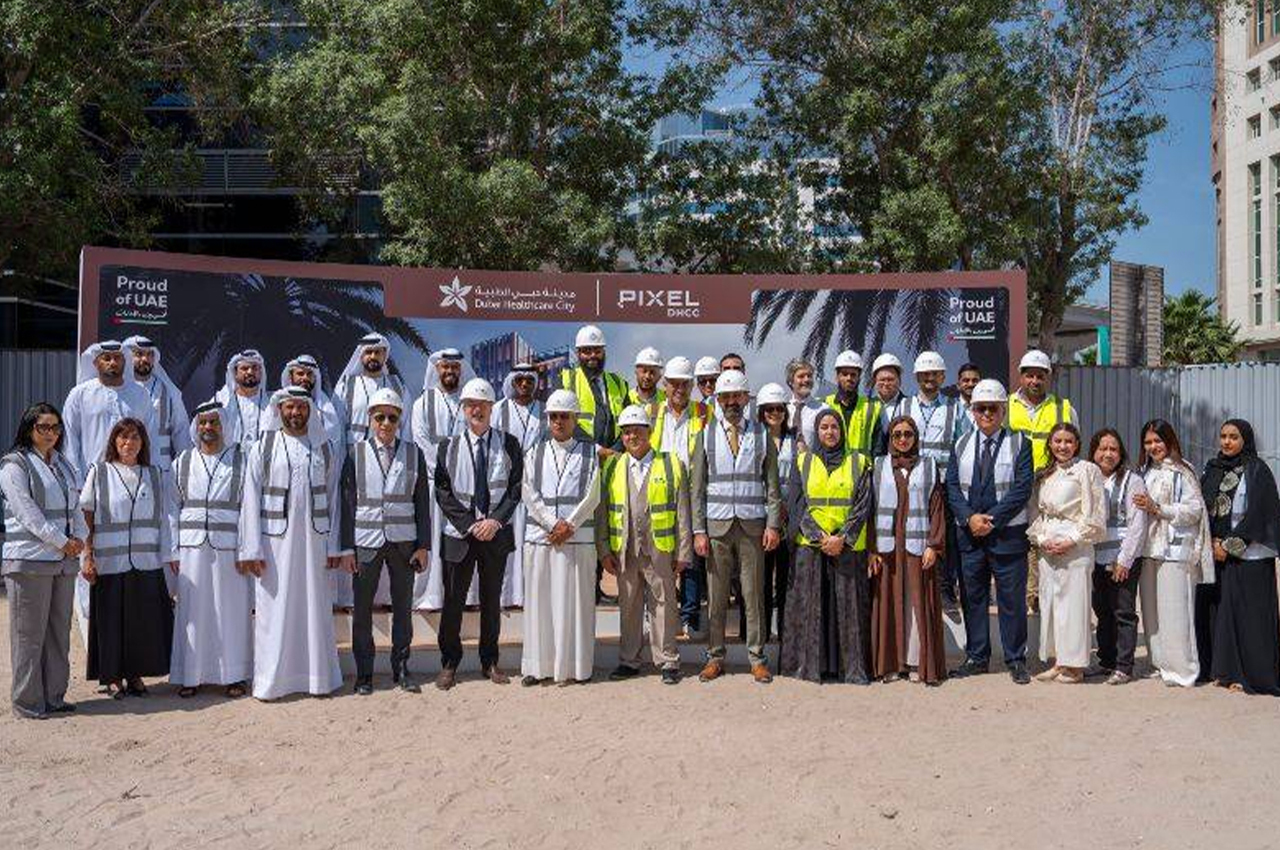
Dubai Healthcare City Authority (DHCA) has officially broken ground on a Dh1.3 billion development programme, marking a major leap forward for the emirate’s specialised medical infrastructure. The expansion began this week with the commencement of two flagship projects, PIXEL DHCC and IBN SINA+, which serve as the cornerstones of a multi-year strategy to increase the city’s clinical and commercial capacity. Scheduled for completion by November 2027, this investment is set to reinforce Dubai’s position as a premier global destination for medical tourism and healthcare innovation, directly supporting the objectives of the Dubai Economic Agenda D33.
Key Development
The groundbreaking ceremony, attended by senior officials including DHCA CEO Issam Galadari, unveiled the specific details of the first phase of the expansion. The project focuses on creating high-tech, sustainable spaces that blend medical excellence with modern business requirements.
The two primary developments include:
- PIXEL DHCC: This nine-storey structure will be the first LEED Platinum-certified office building in Dubai Healthcare City. Spanning 13,000 square metres, it is designed to offer a flexible mix of premium office units and ground-floor commercial spaces, specifically tailored for healthcare and wellness-related businesses.
- IBN SINA+: A purpose-built medical complex covering 5,800 square metres across five floors. It serves as an extension of the existing IBN SINA facility and will provide multi-functional surgical, diagnostic, and outpatient spaces. The facility is being delivered as a “shell-and-core” structure, allowing medical operators to customise the interior to meet highly specific clinical needs.
In addition to these buildings, the Dh1.3 billion programme includes significant upgrades to supporting infrastructure, such as smart parking systems integrated with Salik and electric vehicle charging stations, to ensure seamless accessibility for the growing community.
Why It Matters
This massive capital injection is expected to solve critical supply challenges in the Dubai healthcare market while providing a significant boost to the local economy. The expansion is projected to add approximately 400 patient beds by 2027, addressing a rising demand for high-acuity inpatient services.
Key economic and social benefits include:
- Attracting Foreign Direct Investment (FDI): By providing world-class, sustainable facilities, Dubai is drawing in international hospital groups and clinical partners.
- Specialised Care: The focus on surgical and diagnostic complexes reduces the need for residents to seek elective procedures abroad.
- Sustainability Leadership: The commitment to LEED Platinum certification for new structures aligns with the UAE Net Zero 2050 Strategy, setting a new standard for “green” healthcare facilities in the region.
- Market Resilience: Expanding the integrated ecosystem allows for better data interoperability through systems like Nabidh, improving overall patient outcomes and safety.
Bigger Picture
The expansion of Dubai Healthcare City is part of a broader vision to transform the emirate into a “knowledge-based” economy. While Phase 1 focuses on clinical and commercial clusters, development across Phase 2 is also gaining significant momentum. Currently, 58 per cent of Phase 2 projects are already committed, representing an additional investment of Dh5.4 billion.
This broader strategy includes landmark residential and specialised hospital projects such as the Hamdan Bin Rashid Cancer Hospital and the Prime Heart and Lung Specialized Hospital. By integrating residential, educational, and medical facilities, Dubai is building a holistic wellness district that serves as a global blueprint for urban healthcare planning. This maturity in the ecosystem is evidenced by recent reports showing that nearly one in three business partners within DHCC are currently expanding their operations.
What Happens Next
With the groundbreaking complete, construction teams are now mobilised for the primary structural work on PIXEL DHCC and IBN SINA+. Technical committees are also working on the integration of these new facilities into Dubai’s digital health network, ensuring they are fully operational and interoperable upon their 2027 opening.
In the coming months, DHCA is expected to announce the selection of key clinical partners who will anchor the new medical units. As Phase 2 infrastructure nears 80 per cent completion later this year, the market can expect a steady stream of announcements regarding new specialised centres of excellence, further solidifying the emirate’s role as a leader in the global healthcare and longevity sector.
FAQs
What is the total investment for the new DHCC expansion?
The current phase of the development programme represents a Dh1.3 billion investment by the Dubai Healthcare City Authority.
What are the two main projects launched this week?
The two flagship projects are PIXEL DHCC, a LEED Platinum-certified office building, and IBN SINA+, a specialised five-storey medical complex.
When will the new facilities be completed?
Both PIXEL DHCC and IBN SINA+ are scheduled for completion by November 2027.
How many new hospital beds will be added?
The overall development programme aims to increase the city’s capacity by approximately 400 patient beds by 2027.
What is the goal of Phase 2 of Dubai Healthcare City?
Phase 2 focuses on a mixed-use model that includes residential masterplans, specialized hospitals like the Hamdan Bin Rashid Cancer Hospital, and educational expansions.