




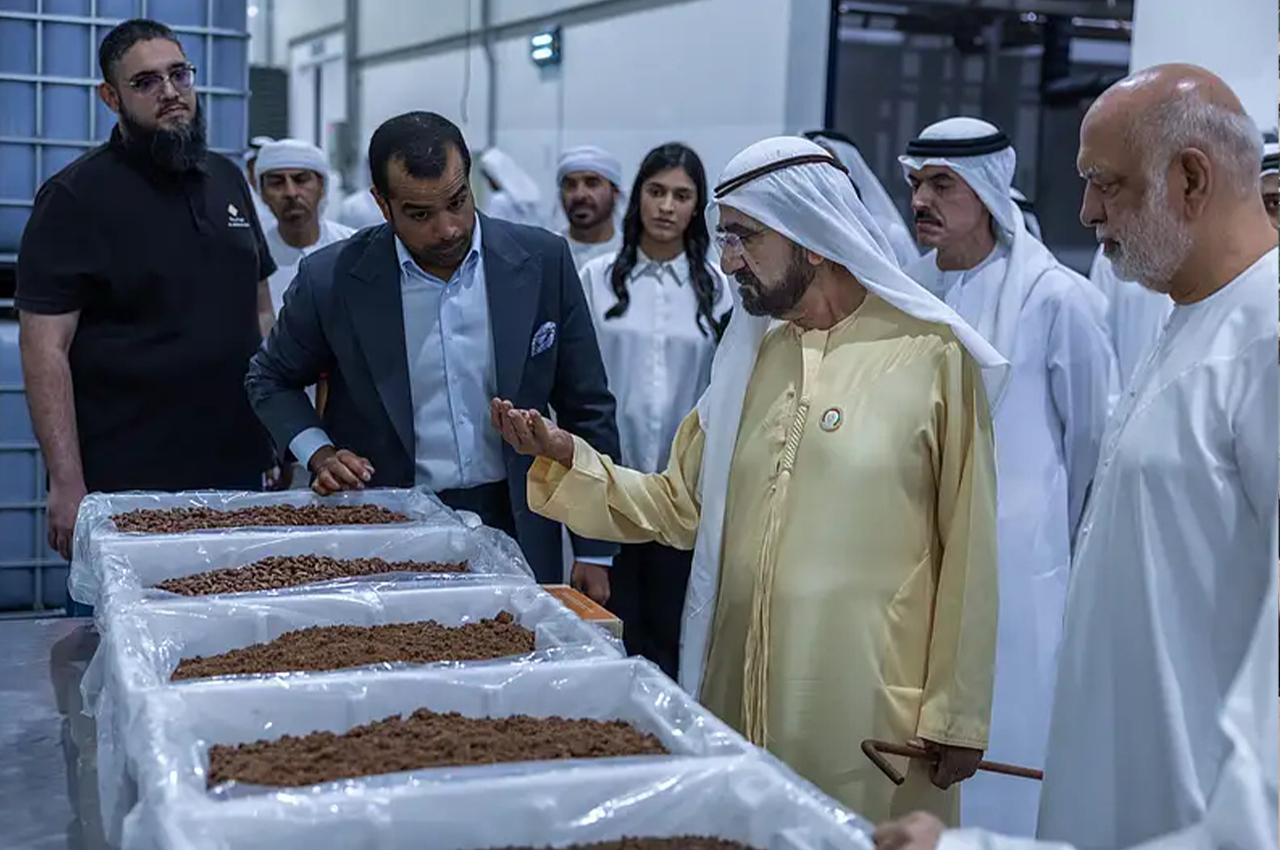
His Highness Sheikh Mohammed bin Rashid Al Maktoum, Vice President, Prime Minister and Ruler of Dubai, visited Al Barakah Dates Factory, the world’s largest privately owned dates processing facility, on Monday, 27 April 2026. Located in Dubai Industrial City, the expansive facility serves as a testament to the UAE’s growing prowess in the advanced food industry. During the tour, His Highness emphasized that the dates industry is a vital bridge between the nation’s agricultural heritage and its modern, high-value economic future, contributing significantly to national food security and global trade.
Key Development
Spanning more than 800,000 square feet, Al Barakah Dates Factory has an annual production capacity of 100,000 tonnes, positioning it as a global leader in the packaging and processing of date-based products. Accompanied by Malek Al Malek, Chairman of TECOM Group, Sheikh Mohammed was briefed on the facility’s state-of-the-art production lines by the factory’s founder, Saleem Mohammed, and Managing Director Yousuf Saleem Mohammed.
The facility’s operations include:
- Advanced Processing: Automated sorting, cleaning, and packaging of various date varieties.
- Derivative Products: Manufacturing high-demand items such as date syrup, date paste, and date powder.
- Global Logistics: Exporting to 97 countries, with major markets including the United States, United Kingdom, and the European Union.
- Economic Footprint: Operating within Dubai Industrial City, which hosts over 350 factories and leverages proximity to Jebel Ali Port and Al Maktoum International Airport.
Why It Matters
The success of Al Barakah Dates reflects the UAE’s broader strategy to enhance its global competitiveness in the food sector. By adopting advanced technologies and improving production efficiency, the factory has turned a traditional agricultural staple into a sophisticated export.
Key benefits of this industrial growth include:
- Food Security: Strengthening the domestic supply chain and reducing reliance on external food processing.
- Export Revenue: The United States is currently the leading destination for processed date products like paste and syrup, highlighting the high demand for UAE-made food ingredients.
- Cultural Identity: Preserving the date palm’s role in Emirati heritage while evolving its commercial application.
- Private Sector Growth: Highlighting the success of long-term entrepreneurship; founder Saleem Mohammed began his career in Dubai in 1983 before expanding into dates in the 1990s.
Bigger Picture
This visit comes shortly after Sheikh Mohammed announced the launch of a new charitable “1 Billion Meals Dates Factory,” set to be completed in 2027. That project, funded by an AED 200 million donation from businessman Mirwais Azizi, will be managed by Al Barakah Dates and aims to produce 150 million date-fortified food units annually to combat global malnutrition.
The integration of humanitarian goals with industrial excellence showcases the UAE’s unique model of social responsibility. By leveraging the expertise of the world’s largest private date factory, the government is ensuring that local resources are transformed into sustainable, life-saving opportunities for underprivileged communities worldwide.
What Happens Next
Al Barakah Dates is expected to continue its expansion by integrating more AI-driven monitoring systems into its production lines to further boost efficiency. The facility will also play a central role in the operational rollout of the humanitarian dates factory project over the next 18 months.
As Dubai Industrial City continues to grow, supported by the upcoming Etihad Rail freight terminal, the factory is well-positioned to increase its export reach. The Ministry of Economy is reportedly looking to use Al Barakah as a case study for other national food industries, encouraging the transition of traditional sectors into tech-enabled, globally competitive powerhouses.
FAQs
Where is Al Barakah Dates Factory located?
The factory is located in Dubai Industrial City, a major industrial hub under TECOM Group that hosts over 350 factories.
How many tonnes of dates can the factory produce annually?
The facility has an annual production capacity of 100,000 tonnes, making it the largest privately owned dates factory in the world.
What kind of products does the factory manufacture?
In addition to packaged whole dates, the factory produces date paste, date syrup, and date powder used extensively in the global food industry.
Which countries are the main export markets for Al Barakah?
The factory exports to 97 countries, with the US, UK, and EU being the top destinations for processed products, while India and Indonesia are key for packaged dates.
How is the factory involved in humanitarian efforts?
Al Barakah Dates will manage the operations of the newly announced “1 Billion Meals Dates Factory,” which will produce fortified food units to fight global hunger.