



The UAE’s aviation sector has hit a significant milestone, with the country’s four home-based airlines collectively surpassing 1,000 daily flights for the first time since regional hostilities disrupted air travel across the Gulf. The achievement signals that the recovery of one of the world’s most important aviation hubs is firmly on track.
The Milestone: What the Numbers Show
The UAE’s four carriers, Emirates, flydubai, Etihad Airways and Air Arabia, operated 1,015 flights on April 23, the highest total since February 27. The local carriers operated 1,513 flights on February 27, a day before the Middle East war started, meaning the UAE carriers have reached nearly two-thirds, or 67 per cent, of their pre-war capacity.
The breakdown by airline illustrates just how quickly each carrier has rebuilt its operations:
On April 23, Emirates operated 410 flights, followed by Etihad Airways with 229, Air Arabia with 190, and flydubai with 186.
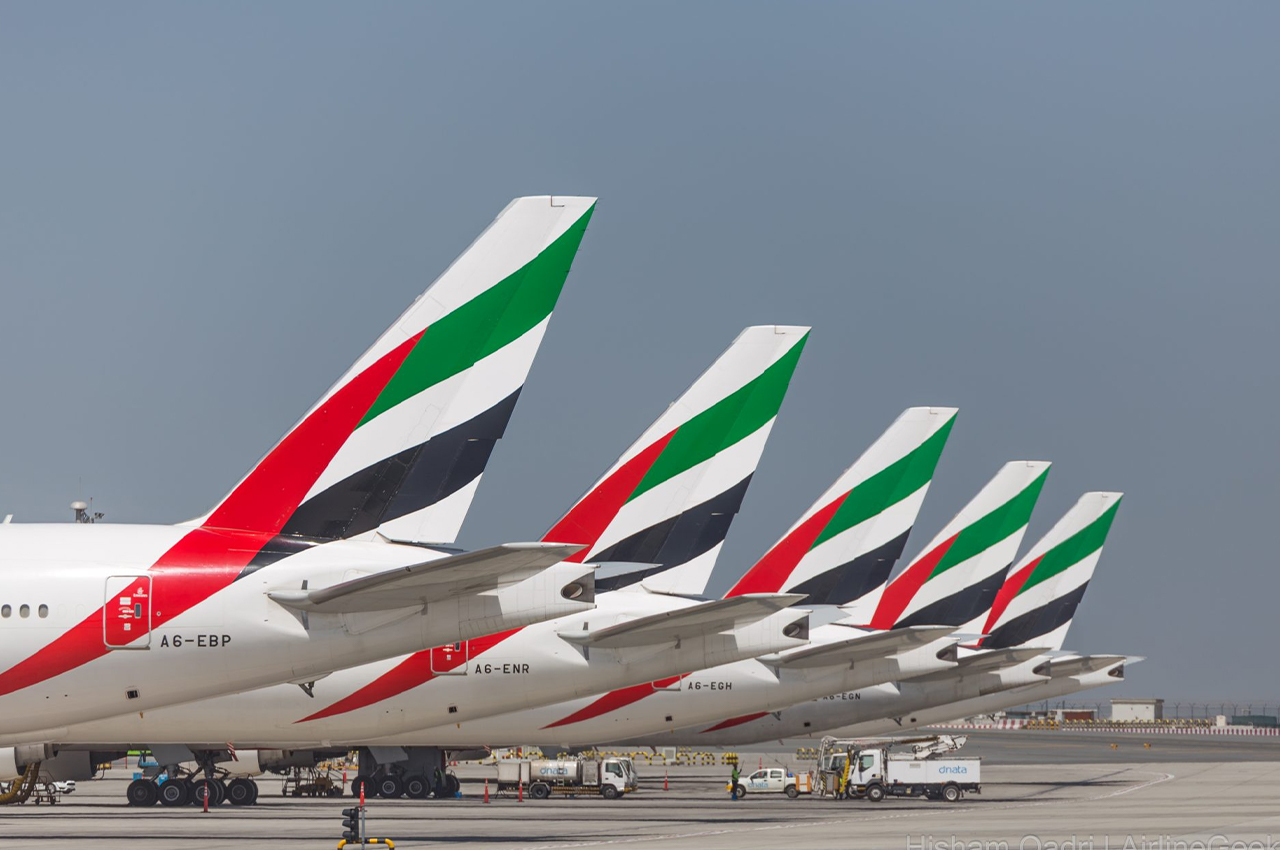
Emirates logged 410 flights in a single day, its first time surpassing the 400-flight mark since February 27, leading the recovery push across all four carriers.
What Caused the Disruption
The figure represents roughly 67 per cent of the 1,513 flights the carriers operated on February 27, the final day before hostilities involving the US, Israel, and Iran broke out. Airlines in the UAE and other Gulf countries experienced airspace closures as demand for travel to the region collapsed due to the war.
The recovery across Gulf aviation has accelerated following the ceasefire declared by the US and Iran after six weeks of fighting, which had shut down airspace across the UAE and neighbouring countries and caused travel demand to the region to fall sharply.
The scale of the disruption was extraordinary. Within days of the conflict beginning, slot caps were imposed at UAE airports, international carriers suspended routes into the region, and passenger demand collapsed under the weight of travel warnings and airspace uncertainty.
Emirates Leads the Charge
Emirates, the world’s largest long-haul carrier and the backbone of Dubai’s global connectivity, has been at the forefront of the recovery effort.
Emirates is back to 84 per cent of its February schedule, with Emirates President Sir Tim Clark telling reporters he expects to restore full capacity by mid-June, subject to airspace stability.
Speaking at an airline leadership summit in Berlin, Sir Tim Clark said he was not worried about losing market share to rivals and that Emirates would still be the most profitable airline by the end of the year.
That level of confidence from the airline’s most senior figure carries weight. It signals not just operational recovery but a strategic belief that Dubai’s position as the world’s premier aviation crossroads remains intact.
The Wider Gulf Aviation Picture
The UAE carriers are not recovering in isolation. The broader regional aviation network is rebuilding simultaneously.
Kuwait announced the reopening of its airspace after two months of closure stemming from attacks. Kuwait Airways and Bahrain’s Gulf Air remain absent from the recovery index, as airspace restrictions had kept both carriers out of the tracked dataset.
Qatar Airways has also moved swiftly to restore its presence in the UAE. Effective April 23, 2026, the airline launched daily operations linking Doha with Dubai and Sharjah, as part of a phased network revival steadily rebuilding its international presence. For travellers, the ramp-up means premium cabin seat inventory is loosening, which should translate into lower corporate fares after weeks of elevated pricing.
Expansion Was Already in Motion
It is worth noting that the UAE’s carriers were not simply recovering lost ground; they were already in an aggressive phase of network expansion before the disruption occurred.
Emirates had announced a second daily service to Tokyo Narita effective May 2026, while Etihad had confirmed landmark new routes to Calgary in Canada and Luxembourg, marking the first time a Middle Eastern airline would serve the Grand Duchy. Air Arabia had launched twice-daily non-stop Sharjah to London Gatwick services using Airbus A321neo LR aircraft.
Dubai International Airport has successfully resumed full operations, opening all three terminals and enabling flights to operate without significant delays, marking a major milestone for the UAE’s aviation sector.
What Happens Next
The trajectory is clear. With the ceasefire holding and airspace progressively reopening across the region, UAE carriers are expected to close the remaining gap to full pre-war capacity within weeks rather than months.
Emirates alone expects to restore full capacity by mid-June, subject to airspace stability. If the broader geopolitical environment remains stable, all four UAE carriers could be operating at or near their February benchmarks before the summer travel peak arrives, a critical window for both leisure and business travel demand.
For Dubai and Abu Dhabi as global aviation hubs, crossing the 1,000-flight daily threshold is more than a recovery statistic. It is a declaration that the UAE’s skies are open, its airlines are resilient, and the country’s ambition to remain the world’s most connected aviation market has not wavered.
FAQs
How many daily flights are UAE carriers now operating?
The four UAE carriers, Emirates, flydubai, Etihad Airways and Air Arabia, collectively operated 1,015 flights on April 23, 2026, crossing the 1,000-flight daily mark for the first time since the regional conflict began.
How does this compare to pre-war levels?
Before the conflict began on February 28, 2026, the four carriers operated a combined 1,513 daily flights. The current 1,015 figure represents approximately 67 per cent of that pre-war capacity.
When does Emirates expect to return to full capacity?
Emirates President Sir Tim Clark has stated that the airline expects to restore its full pre-war schedule by mid-June 2026, subject to continued airspace stability across the region.
Which airline is leading the recovery?
Emirates is leading the recovery, operating 410 flights on April 23, representing approximately 84 per cent of its pre-conflict schedule. Etihad, Air Arabia and flydubai have also made strong progress in rebuilding their operations.
Is Kuwait’s airspace now open for flights?
Yes. Kuwait announced the reopening of its airspace after approximately two months of closure. However, Kuwait Airways and Bahrain’s Gulf Air are still in the process of fully restoring their tracked operations.