




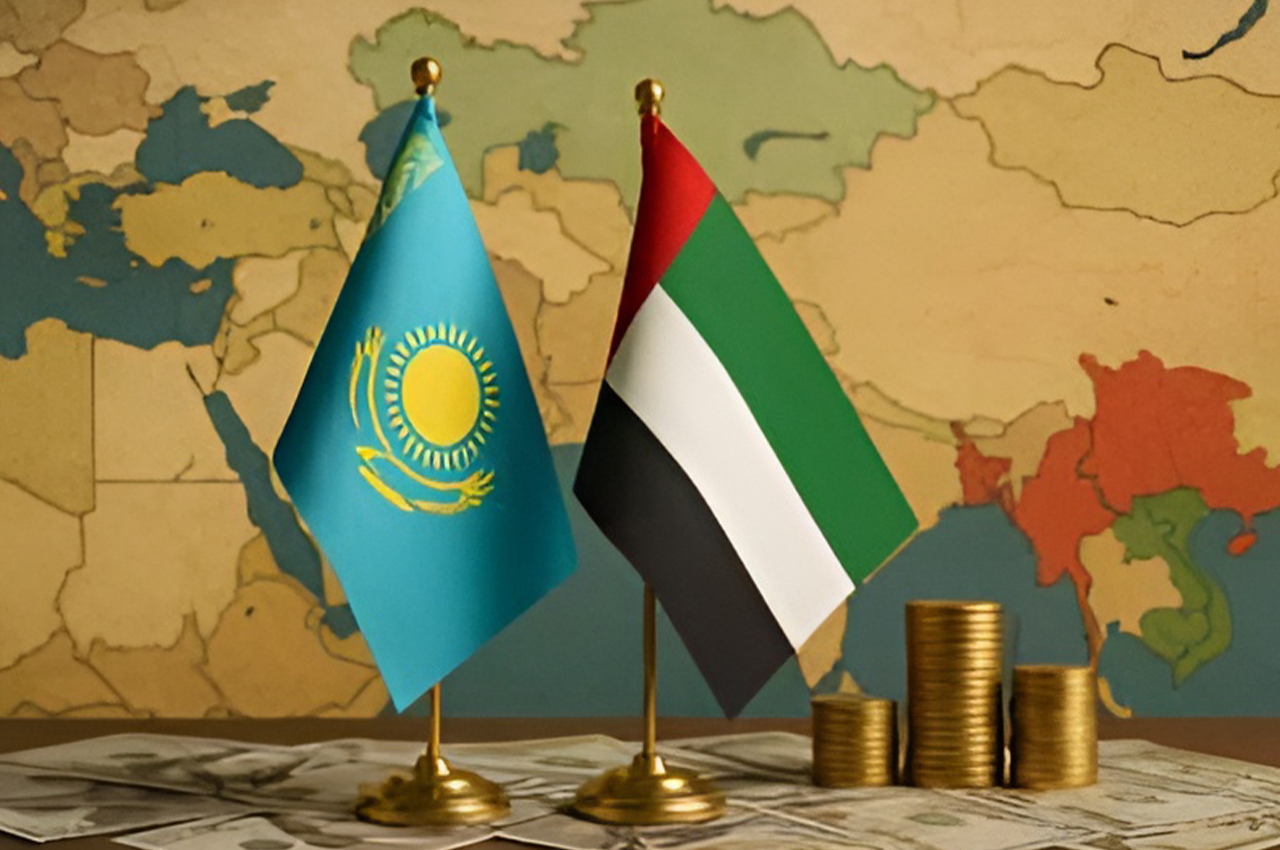
The United Arab Emirates and Kazakhstan have taken a significant step toward deepening their diplomatic and economic ties following a high-level meeting in Abu Dhabi this week. UAE President His Highness Sheikh Mohamed bin Zayed Al Nahyan received a written message from Kazakhstan’s President Kassym-Jomart Tokayev, delivered by the Kazakh Minister of Foreign Affairs, Yermek Kosherbayev. The discussions underscored a shared vision for a more stable and interconnected Eurasia, focusing on multi-billion dollar investments in renewable energy, food security, and digital infrastructure. This engagement comes at a critical time as both nations seek to diversify their economies and strengthen regional security frameworks amidst a shifting global landscape.
Key Development
A central pillar of the recent talks was the acceleration of large-scale infrastructure and energy projects. A standout initiative is the 1 GW wind power plant project in Kazakhstan’s Zhambyl region, currently being implemented by the UAE-based Masdar. During a meeting between Minister Kosherbayev and Dr Sultan Ahmed Al Jaber, UAE Minister of Industry and Advanced Technology and Chairman of Masdar, both parties explored expanding this project to include advanced battery energy storage solutions.
The scale of financial cooperation between the two nations has reached historic highs. In 2025, the UAE emerged as one of the top five largest investors in Kazakhstan, with total investment volumes reaching approximately £1.27 billion (USD 1.64 billion). The current discussions aim to build on this momentum by localizing production and creating new value chains in high-tech industries. Additionally, President Tokayev has officially invited Sheikh Mohamed bin Zayed to attend the upcoming Eurasian Economic Union Summit in Astana, scheduled for late May 2026, further signaling the high level of political trust between the two capitals.
Why It Matters
The strengthening of UAE-Kazakhstan strategic cooperation is expected to have far-reaching economic and security impacts. For the UAE, Kazakhstan serves as a vital gateway to Central Asian markets and a key partner in securing long-term food supply chains. For Kazakhstan, the UAE represents a primary source of advanced technology and capital for its ambitious “Green Economy” transition.
The strategic benefits of this partnership include:
- Energy Transition: Joint projects in green hydrogen and wind energy help both nations meet their respective Net Zero targets.
- Geopolitical Solidarity: Kazakhstan has reaffirmed its full support for the UAE’s sovereignty and territorial integrity following recent regional escalations.
- Trade Growth: By streamlining logistics and transport corridors, the two nations are set to reduce the cost of moving goods between the Gulf and Central Asia.
- Technology Transfer: Collaboration on Artificial Intelligence and digital transformation is expected to modernise public services in both countries.
Bigger Picture
This diplomatic surge aligns with the UAE’s broader “Vision 2031” strategy, which prioritizes the expansion of international partnerships beyond traditional oil-based alliances. By investing heavily in Kazakhstan’s energy and tech sectors, the UAE is positioning itself as a central player in the development of the “Middle Corridor” a trade route connecting China and Europe via Central Asia and the Caucasus.
Furthermore, the focus on “Water Diplomacy” and food security highlights a growing trend in Gulf-Central Asian relations. The UAE is actively supporting Kazakhstan’s initiative to establish an International Water Organisation, while Kazakhstan is looking to the UAE’s “S’hail” and “Digital School” models to enhance its own education and transport infrastructure. This multi-sectoral approach suggests that the relationship is evolving from a simple investment-for-resources model into a sophisticated, integrated strategic alliance.
What Happens Next
In the coming weeks, technical committees are expected to finalize the expanded framework for the Zhambyl wind project. High-level delegations from the UAE’s 2PointZero investment platform will reportedly visit Astana to identify new opportunities in artificial intelligence and sustainable mining.
Following the Eurasian Economic Union Summit in May, a new set of bilateral trade agreements is anticipated, focusing on the removal of trade barriers and the enhancement of maritime and rail connectivity. As Kazakhstan aims for 15 per cent of its electricity to come from renewable sources by 2030, the UAE’s role as a primary energy partner is set to intensify.
FAQs
What was the purpose of the recent UAE-Kazakhstan meeting?
The meeting focused on delivering a strategic message from President Tokayev to Sheikh Mohamed bin Zayed regarding bilateral relations, regional security, and expanding investment in green energy.
How much has the UAE invested in Kazakhstan?
As of late 2025, the UAE is one of Kazakhstan’s top five investors, with annual investment volumes exceeding £1.27 billion (USD 1.64 billion).
What is the Zhambyl wind power project?
It is a massive 1 GW renewable energy project in Kazakhstan being developed by Masdar, which is set to include advanced energy storage systems to boost the national grid.
How does this partnership impact regional security?
Both nations are coordinating closely on maritime safety and regional stability, with Kazakhstan reaffirming its solidarity with the UAE regarding its sovereignty and peace efforts in the Middle East.
What are the future areas of cooperation?
Key future areas include green hydrogen production, food security initiatives, Artificial Intelligence development, and the expansion of trade corridors between the Gulf and Central Asia.